

Protect Your Tomato Plants With A Simple Upgrade You Can Sprinkle Over Soil
We may receive a commission on purchases made from links.
Few vegetables are as popular as tomatoes in home gardens. And honestly, it makes sense. Tomatoes are usually easy to grow. Plus, they are tasty, nutritious, and versatile. The problem, however, is that tomatoes have a number of problems, too. From diseases to pests and fungal infections, to environmental stressors, the list just goes on. Environmental stressors like high heat and freezing conditions, in particular, are very damaging to tomatoes as they can inhibit flowering, interfere with growth, and reduce both the quality and quantity of crops. Don't worry, though! You can easily protect your tomato plants from extreme temperatures using plastic mulch.
Plastic mulches are cheap, and they are available easily. You can also get them in different colors, like black and white. Black plastic mulch will protect your tomato plants from cold, whereas white plastic mulch will keep the plants and soil cool. That is because black naturally absorbs light, which then gets converted to heat and helps raise the temperature of the soil and root zone of tomato plants. White, on the other hand, reflects sunlight, and it keeps the soil and roots cool during the summer heat.
There are other benefits of plastic mulches, too. For example, it could also help reduce weeds and moisture loss from the soil, reducing herbicide and water use in the garden. You just need to make sure that you do not use too much mulch and know how to choose the best type of mulch for your project. Using too much mulch, for instance, can lead to a pest problem in the garden and also starve your tomato plants of oxygen and water.
How to use plastic mulch to help your tomato plants
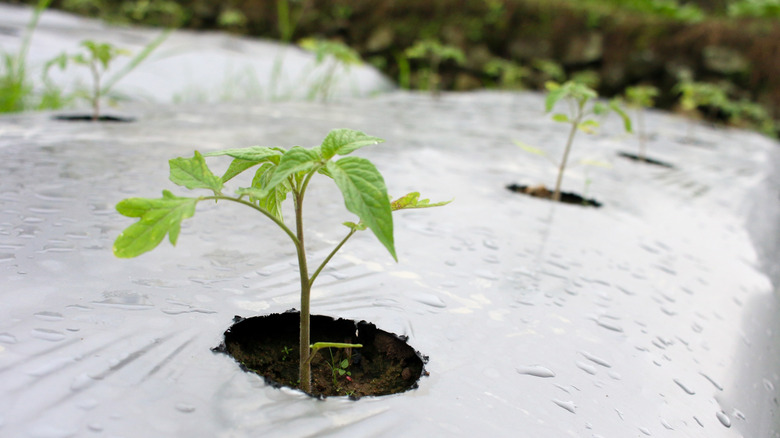
Plastic mulches are only as good as how you use them. And when it comes to using plastic mulch to protect your tomato plants, it is very important that you prepare the soil properly first. This involves getting rid of any grass or weeds that might be growing in the soil, as well as raking the vegetable bed surface flat. Once the soil is ready, spread the plastic mulch over the bed tightly and make sure that it has proper contact with the soil underneath. Also, make sure to secure the mulch with something heavy, like wooden planks and rock. It will keep it from flying away when the wind blows.
Other than that, install a drip irrigation system underneath the mulch, if you can, as plastic stops the water from reaching the soil, and you will need to water each plant individually through the openings in the plastic. Also, keep the openings in the mulch only as large as necessary. If you make them too big, weeds could still grow through them, or your soil and plant root zone could still be exposed to the temperature extremes.
Also, use a soil thermometer like Luster Leaf 1625 Digital Soil Thermometer to skip the guesswork. Tomatoes grow best when the soil temperature is maintained around 70 to 77 degrees Fahrenheit. So, if the soil temperature is too low, use black plastic mulch, and if the soil is too warm, use white mulch to protect your tomato plants from the extreme heat of the sun. And lastly, remove the mulch at the end of the season, as old mulch can harbor pests and diseases.