

Not Gravel, Not Mulch: The Landscaping Material Commonly Used In Hawaii Yards
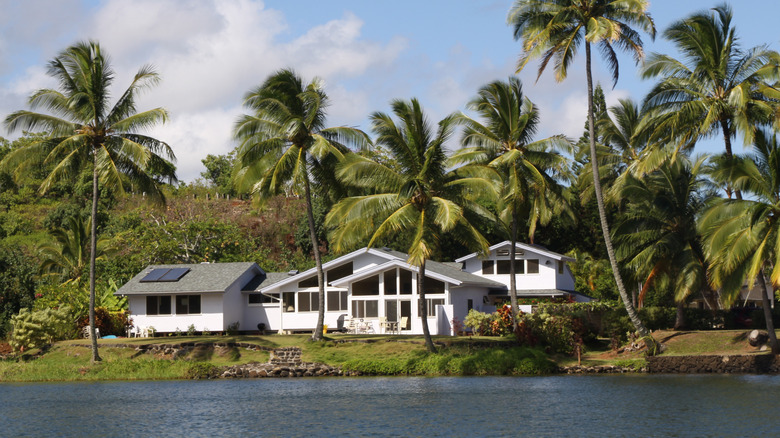
When you think of Hawaii, you probably conjure images of lush tropical landscapes, verdant mountains, and swaying palms. But while greenery abounds in Hawaii, it is often framed by the harsh-looking landscaping material, lava rock.
The Hawaiian Islands were formed by volcanic activity, and one of the materials left behind by eruptions is scoria, a lightweight igneous rock filled with holes where gas escaped as molten lava cooled. Abundant throughout the islands, scoria appears everywhere in Hawaiian landscaping, from street medians to botanical gardens. In residential yards, lava rock is a common natural landscaping material used in garden beds and pathways. Known as pōhaku pele in the Hawaiian language, lava rock is more than just a practical, low-maintenance ground cover. These rocks represent the power of Pele, the goddess of fire and volcanoes, and symbolize the energy that created the islands themselves.
Whether you live in Hawaii or elsewhere, you can incorporate this symbol of Earth's power in your own yard for a low-maintenance, xeriscape look. Lava rock is readily available at home and garden stores in a variety of sizes and textures, from small, jagged pieces akin to gravel to smoother, rounded pebbles. It is available in natural shades ranging from dark gray to reddish brown. Lava rock isn't the cheapest option, costing a bit more than similar materials like crushed granite and limestone. Still, its distinctive appearance makes it an appealing choice if you're looking to create a tropical landscape inspired by Hawaii.
Where to use lava rock in your own gardens
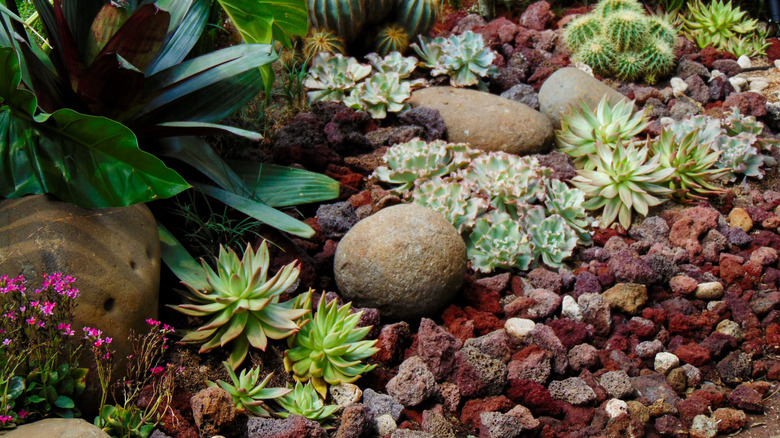
Lava rock has many benefits when used as a ground cover or mulch. It provides excellent drainage, so if you have trouble with clay or compacted soils that hold too much water, incorporating lava rock can help. Conversely, lava rock's porous texture can also help retain some needed moisture if you mix it into very dry, sandy soil.
When used as mulch, lava rock is great at weed suppression and lasts much longer than bark, wood chips, or other natural mulches. It won't need constant replacing, but it also won't enrich your soil with nutrients as it slowly breaks down over time. It also won't introduce the harmful toxins associated with some plastic or rubber mulches, making lava rock an eco-friendly choice. As a bonus, its rough texture naturally discourages slugs and snails.
Because lava rock is so lightweight, it's easy to lay in borders and pathways where you don't want greenery to grow. Just place it in areas that can be kept relatively free of debris, since it's too lightweight to use with a leaf blower. If you want some greenery mixed in for a lush Hawaiian look, many plants grow well in lava rock, which gives roots plenty of space and aeration. Plants that thrive in lava rock include a variety of succulents and palms, as well as hardy herbs like rosemary and thyme.