

Ditch Traditional Blinds: The Sleek, Modern Solution To Cover Windows
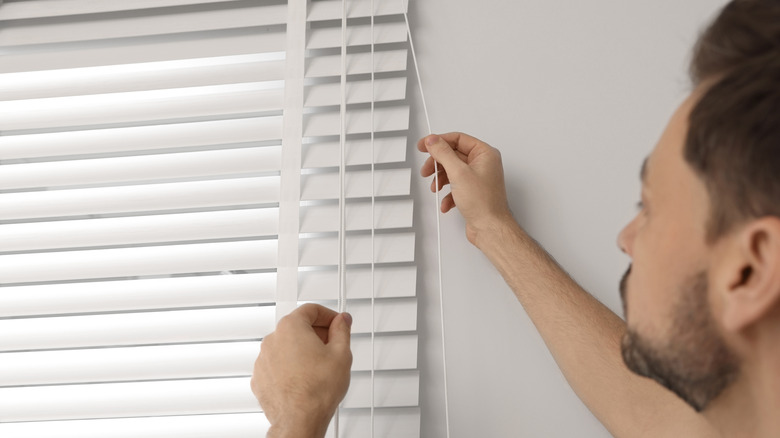
It can be tiring to get up from your sun-kissed couch each time your blinds need adjusting. If you're in a similar situation and want a window treatment you can control remotely, opt for motorized roller shades. These smart options are incredibly convenient, as you can roll them up or down using a remote, a compatible smart app, or a voice assistant. Plus, unlike some traditional blinds, they add a modern, minimalistic look to your interiors. If you're worried about the look of the motor, don't — the built-in electric motor is hidden in their headrail.
With these motorized blinds, you can choose battery-powered, solar-powered, or hard-wired, depending on the features you want. The lithium-ion-powered ones, for example, have a battery motor that runs for months without needing a recharge. On the other hand, solar-powered shades come with a small solar panel, making them an energy-efficient option if you get abundant sunlight. Further, motorized blinds are relatively easy to install, depending on the type. Their installation needs are similar to those of battery-powered shades. Hard-wired motorized shades, however, are directly connected to your home's power circuit and usually require professional installation.
You can choose a shade based on its roller type. With standard roller shades, the fabric rolls down from the back of the tube. This is better for windows with limited window frame space. But for accessorized windows, reverse roller shades are a better option. Here, the fabric rolls down from the front of the tube, making it a frictionless affair between the hinges or cranks and the shades. Overall, motorized roller shades are super versatile. However, they aren't as economical as traditional blinds.
Common types of motorized roller shades
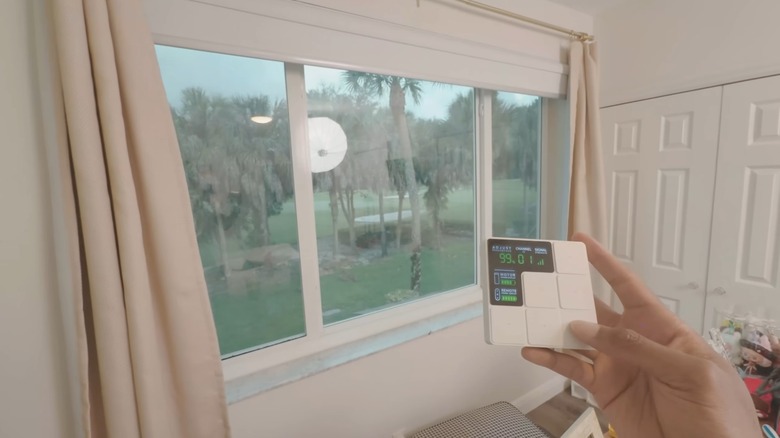
Battery-powered shades don't require any wiring or electricity to function, making them an easy option. However, their battery must be recharged or replaced every few months. Solar-powered ones are energy efficient as they absorb sunlight and convert it into energy. There are even a few that feature both solar panels and a lithium-powered battery that charges itself from the trickle of solar energy. As a result, these batteries don't undergo severe charge-and-discharge cycles and last longer. However, their dependence on sunlight makes them unfit for places where it's cloudy or where very little sunlight is available, as their energy reservoir may get depleted quickly.
Coming to hard-wired shades, they offer a smooth smart home integration, don't use much power, and require the least maintenance. Plus, they're well-suited for large windows. However, they won't work when there's no electricity running to them. Manual operation is a no-go as well since they get locked in place until the power is restored.
The type of roll you prefer will also define the overall look of your home. For instance, a standard roll will visually expand your room by clinging to windows. And you can pair them with curtains in rooms where you want total blackout. However, if your windows feature hinges or cranks, then this type of shade will not work. In such instances, reverse roll shades can come in handy. They look sleek and won't get stuck on hardware. They do take up considerable room as they fall away from your window, however. Also, they block less light than standard rolling shades.
The pros and cons of motorized roller shades
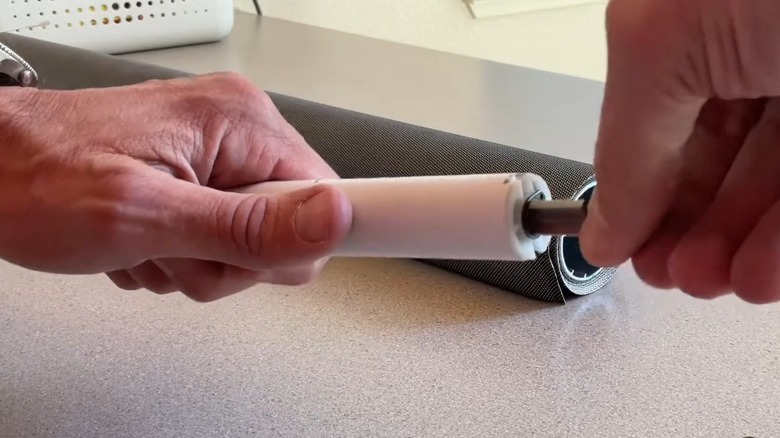
These alternative window treatments are taking over in 2026 because they offer ease of use and can be controlled remotely. Bonus advantage: they're noise-free, so you won't disturb anyone when using them. Plus, you won't have to worry about your kids' and pets' safety. So, you can say goodbye to your traditional curtains with their dangling cords and chains. And if you spring for advanced motorized roller shades, you can program them to open and close based on light intensity, or simply set a timer. A few models even have a built-in motion sensor and can close and open automatically upon detecting movement. You also don't need hours to clean these shades. Simply swipe accumulated dust and debris with your vacuum (don't forget to attach the crevice tool) or use a damp microfiber cloth.
Despite their pros, motorized shades aren't fit for everyone. Though they're a good investment if you wish to make your home smart, these shades are costlier than traditional blinds. You'll also have to bear installation costs if you opt for hard-wired motorized shades. As such, be prepared to spend anywhere from $400 to $900 per window. You'll also have to shell out between $100 and $400 if the battery or motor malfunctions and requires repair or replacement. These costs are in addition to electricity use, battery replacement, and subscription fees for smart blind systems.