

Not Eggshells: The Overlooked Kitchen Scrap You Should Add For Rich Compost
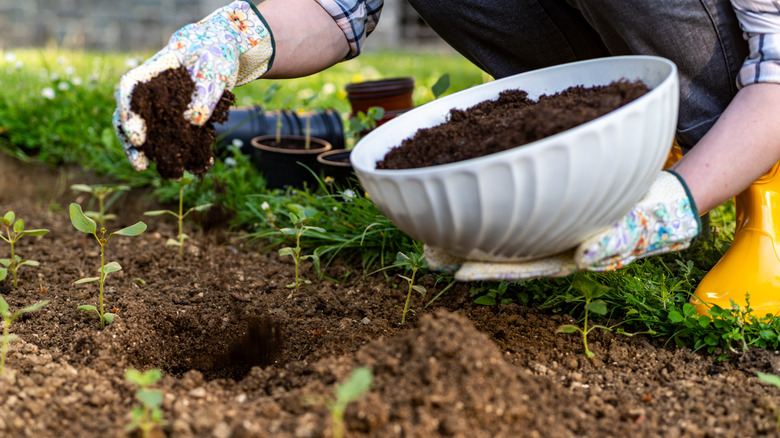
Seasoned composters know the usual suspects when it comes to kitchen scraps. Carrot peels, coffee grounds, and eggshells are some of the first things added to compost bins. Eggshells in particular are a good source of essential macronutrients, like soil-enriching calcium carbonate, phosphorus (an essential nutrient for growth) and potassium for strong roots. But there's one more kitchen scrap offering similar benefits that is often overlooked when it comes to composting, and it's from one of the most flavorful ingredients in the kitchen. That's right, we're talking about garlic peels.
The outer layers of garlic is the first thing to go when slicing and dicing delicious bulbs for your meal. But these can actually be an essential help in enriching your compost. The peels of garlic contain beneficial nutrients found in eggshells, like phosphorus and calcium, along with sulfur for faster growth in plants and allician precursors that aid in fungal prevention. And unlike eggshells, the thin, papery peels break down quickly in compost.
Successful home composting involves layering green materials (like grass, green leaves, veggies) and brown materials (like hay, cardboard, brown leaves) to create rich organic fertilizer for your plants. The layers of garlic peels are considered a brown material when it comes to home composting, as they are the drier discarded parts of the vegetable, much like onion or potato skins. Simply add the peels to your next brown layer.
The best ways to incorporate garlic peels into your compost
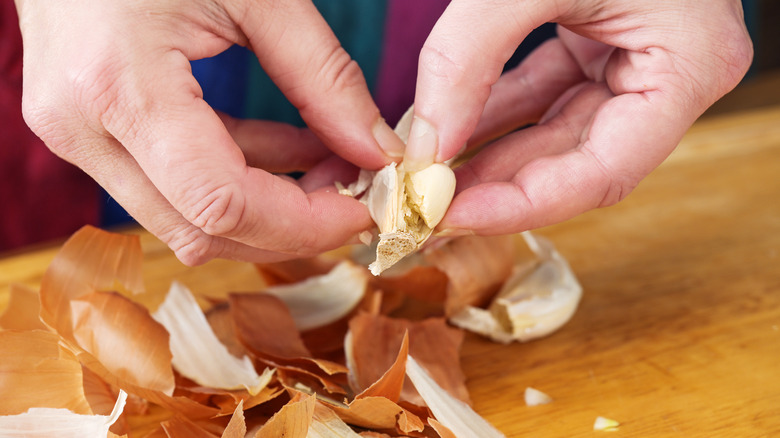
Garlic peels are removed in the first steps of cooking. When first preparing your garlic, make sure there are no grocery stickers or tags attached to the peels. Unless they are advertised as biodegradable labels, the glue and paper of these tags could disrupt the integrity of your compost and cause unwanted chemicals to leak into your soil.
Slicing your peels into smaller pieces may help them break down easier but is not required. The scraps can be added to your compost pile as they are and take up very little room. This makes garlic peels ideal for smaller bins as well. The peels are light, flaky, and have little to no odor, so they will not cause an unwanted smell, another reason they're a practical thing to add to compost.
To take your garlic composting to the next level, try adding both peels and skins. Everything from peels to cloves to sprouting or older bulbs are compostable and add vital nutrients to your garden. Cloves do carry that pungent odor, but the stronger smell could help repel certain unwanted critters. However, compounds in the cloves can also be off-putting to beneficial organisms, such as earthworms (if you're preparing vermicompost), so unlike the peels, these should be added sparingly.