

The Antique Silverware Brand From New York To Hunt For At The Thrift Store
We may receive a commission on purchases made from links.
What if we told you that one of the most iconic American silverware brands originated from a free-love, utopian community founded in upstate New York in the mid-19th century? That's exactly the beginnings of Oneida Limited, which still produces stainless steel flatware so pretty you almost don't want to eat with them. While you can buy brand new Oneida flatware online, it's the antique stuff from the late 1800s and early 1900s, as well as the vintage pieces manufactured over half a century ago, that are really going to hold some value. So, be sure to look for these pieces the next time you're at the thrift store.
The Oneida Community was founded in 1848 by John Humphrey Noyes, a wealthy Yale graduate who developed his own brand of Protestant Christianity known as "Perfectionism." The idea was that sin could be eradicated through personal selflessness and behavior modification. The community set up shop in Oneida, New York, in a large mansion that would eventually house 300 people who would share everything.
Despite the socialist nature of the commune, they still needed to produce income. They embraced manufacturing and began producing silver spoons out of a commune-connected factory in Wallingford, Connecticut. Though the Oneida Community disbanded in 1879, the Oneida Limited company was established the following year and eventually returned to New York for production. It would become one of the largest American flatware manufacturers in history. So, hunting down antique Oneida silverware could just be one of the most historic and valuable thrift store hauls you ever come across. However, do bear in mind that, while Oneida is an antique brand, many pieces you may find in thrift stores are likely to be vintage (under 100 years old).
How to spot antique Oneida flatware and how much it's worth
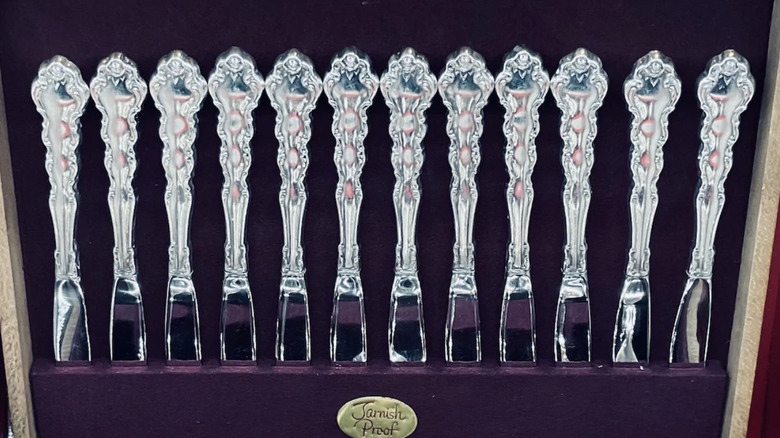
Since the founding of the company, Oneida has produced hundreds of different patterns of flatware, which can make identification a little involved. The biggest thing to understand about how to identify Oneida flatware patterns is that they will all have back stamps that contain the Oneida company name and the grade of silver or stainless steel used to make the specific flatware. Some common stamps include "OC Sterling," "Oneida Heirloom," or "Oneida Sterling." The word "plate" may also appear on the back stamp as a Sterling silver identifier.
Obviously, those Oneida flatware pieces that are made out of proper silver are going to have more value than newer stainless steel models. However, there are also certain Oneida patterns that are worth more than others. The Afterglow pattern, which has a vase-shaped handle decorated with flowers, was made in 1956 and an entire set can run $6,000 on auction sites. Other vintage sets will range anywhere from $61 to $500 or even more. The value of antique sets also varies, with some worth around $150 and others, such as the Glenrose from the early 20th century and the Grosvenor from the 1920s, listed for over $1,400. It all depends on what pattern you find, the year it was made, and whether or not it is genuine silver. To know which pattern you've found, you can use online resources like Replacements, Ltd.
So, if you think you've stumbled across some old Oneida flatware at a thrift store or estate sale, know you may have come across a valuable collectible item that could bring beauty, history, and monetary value to your collection.