

Ditch The Tomato Cage: A Smarter Way To Grow Tomatoes In Small Gardens
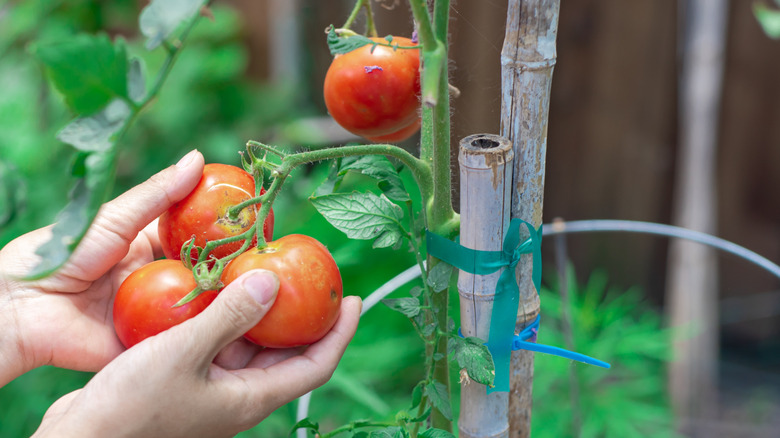
Having a small garden doesn't have to mean growing fewer plants. Sometimes you just have to get a bit creative with the way you're growing them. Tomato cages work well enough at keeping your tomatoes upright, but they can be a bit bulky. You can reuse your tomato cages for something else and grow your tomatoes (Solanum lycopersicum) upside down instead. It may sound strange if you're unfamiliar, but this alternative to a cage is actually a tried-and-true method for growing tomatoes. If you're trying to grow tomatoes at home to avoid the tomato shortage, but don't have anywhere to plant them, this may be the perfect method for you.
There's no need for tomato cages when gravity keeps the tomato plant from falling over, and hanging planters can be grown in places where there's no access to gardening space. There are specially designed planters you can buy, but it's incredibly easy to make your own. You can use any hanging planter, or any light plastic planter that you can add a rope or wire to for hanging. Feel free to experiment with other containers such as buckets or baskets. As long as it's light enough to hang and sturdy enough to support your tomato plants, it should work fine. Cut a hole in the bottom, and thread your tomato plant through so that the roots are inside the planter and the rest of the plant is beneath it. Add a semi-permeable material to cover the hole around the tomato plant's stem, such as coco coir. You want to let water through, keep soil in, and not damage your tomato plant with sharp edges. Add your soil and the planter is ready to hang!
How to grow tomatoes upside down
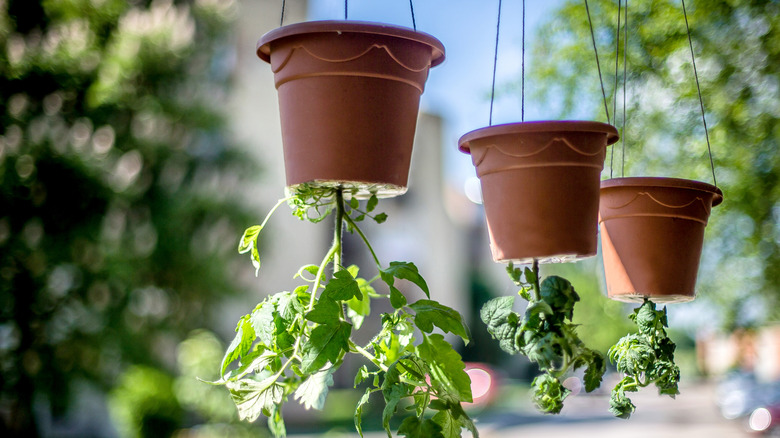
Once you have your hanging planter set up, you may be wondering what to do next. The good news is that, if you already know how to grow tomatoes, the basics aren't much different. Since they're typically grown as annuals, you don't need to worry about hardiness zones, but make sure to plant them after the last frost. Make sure to use soil that is rich and well-draining, ideally with a slightly acidic pH. Amend the soil with a fertilizer or compost before planting if the soil is lacking nutrients. Try to position them so that they're hanging in the sun and water your tomato plants deeply to keep the soil moist but not soggy. However, while the basics are the same, there are a few things specific to growing tomatoes upside down.
If possible, choose a determinate or bush tomato, as they're smaller. Ensuring they get enough light can be tricky, particularly if you're hanging them from the roof of your porch or patio. Since they may be receiving light at an angle and plants grow towards the light, you might see some curves to your tomato plant that you wouldn't otherwise. You may be able to mitigate this somewhat by rotating your plant, so that each side receives light equally. Finally, wind may become an issue. If you live in an area prone to storms, you may need to take your hanging planter down. You can flip the container over so that the tomato plant is growing straight up out of the bottom, but place something underneath it first. That will make it easier to flip it back over without losing too much soil.