

DIYers Turn Outdoor Planters Into Elegant Coffee Table That Looks Expensive
Feeling uninspired at the furniture store? Even when you do find a coffee table that might work for your home decor, the price tag may be shocking. Some DIYers are turning to homemade coffee tables by repurposing other items as the base or top. One woman turned IKEA metal serving bowls into an elegant coffee table, for example. So it should come as no surprise that you can use large outdoor planters as the base for a DIY coffee table. That's what the creators behind chopitlikeitslott did when they wanted an elegant furniture piece on a budget. A piece of wood serves as the top of this customizable handmade coffee table.
Two large planters provide the stability you need for the structure, effectively becoming the legs. A height between 16 and 18 inches is common for coffee tables. The wood thickness used for the inspo project is 1 inch thick, which means you'll want your planters to be between 15 and 17 inches tall. Fiberglass, metal, and concrete planters are all durable options. Choose a shape and style that creates the overall vibe you want. You can always paint them if you love the shape but not the finish.
The tabletop is also flexible — coffee tables usually fall within the 36-to-56-inch-long range, but you can adjust that based on your seating and available space. For the width, aim for 18 to 30 inches. For a sturdy, upscale option, use solid wood for the tabletop. But if you're trying to save money, MDF is usually the cheapest option — though plywood can also save you money. You can cover the tabletop with joint compound like the original creators did. Grab Liquid Nails or a similar adhesive and paint to finish the table in your preferred hue.
Planters and wood make a solid DIY coffee table
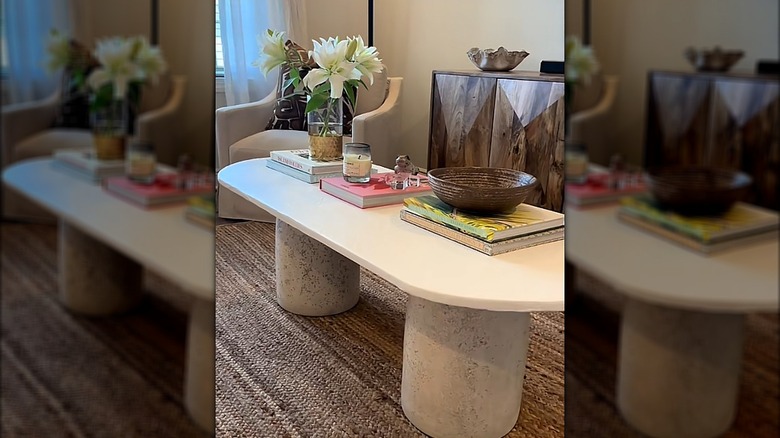
Position the planters how you want them to get an idea of the spacing and the necessary size for the tabletop. Two planters, one toward each end, work well to create a sturdy, balanced table if you want a long, rectangular, or oval top. If you've been looking for coffee table alternatives for your small living space, you could go with a smaller round or square table with a single planter as the base.
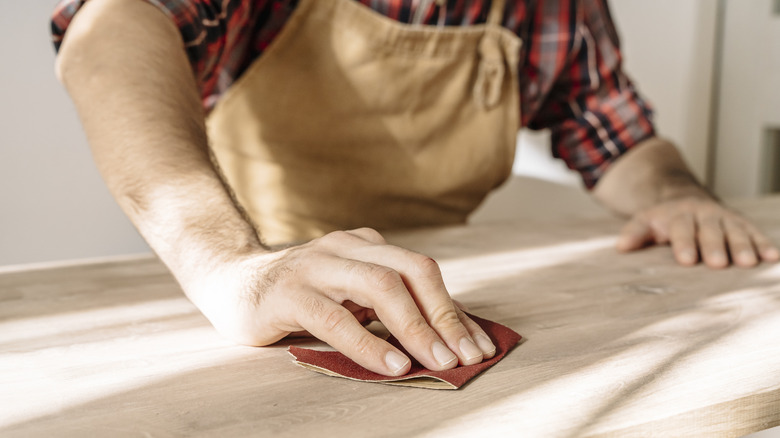
Once you have the dimensions for your tabletop, cut the piece down to size. You can round the ends to create an oval shape. Or, make the table a little more modern and quirky with an organic shape with various curves on all sides. Sand the tabletop and edges. If you want curved edges to soften the lines, use a round-over bit on a router. Or, apply edge banding in a coordinating wood tone or white to finish off the table edges smoothly.
You can leave the wood as-is, or stain or paint it. Alternatively, follow the lead of the original creator and add a thin layer of joint compound to create a textured look. Once it's dry, sand it lightly and paint it. Place the planters in position, apply adhesive to them, and lay the board over them, ensuring it's centered. You can also add another board that's slightly smaller than the top as the base underneath the planters. That gives you an extra shelf where you can use decorative accents to style your coffee table elegantly.