

The Stunning '70s Design Trend That Outshined Plain Drywall Accent Walls
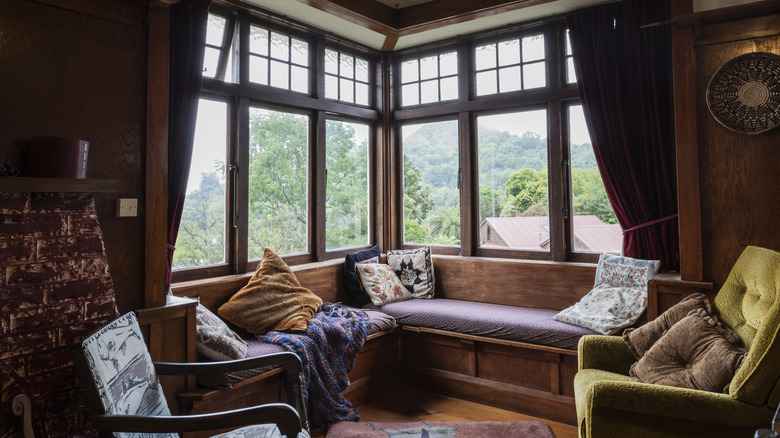
No matter the year, people are always drawing inspiration from the past, whether it's for fashion, art, or, in this case, interior design. And a wonderful perk of looking backwards is that we can pluck the best parts of a decade and discard the worst. The 1970s are a prime example. We get to ditch the water beds and shag carpets while taking the '70s best design trends, one of which is beautiful exposed brick walls.
Best described as a happy accident, the popularity of exposed brick began in the mid-20th century, when old warehouses and factories were turned into loft apartments. Nine times out of ten, these buildings featured brick walls from their industrial past, which designers chose to preserve rather than conceal with drywall. As brick researcher Will Quam, the face behind brickofchicago, explained, "Designers in the 1970s responded to the grays of the '50s and bright colors of the '60s with a full-hearted embrace of warmth, wood, and dark brick." As a result, exposed brick quickly became a chic look associated with city dwellers. It was even a selling point for apartment listings during the decade.
Exposed brick has never really gone out of style since, even though it has some practical disadvantages like reduced energy efficiency and susceptibility to moisture. In the '90s, for example, many envied Monica's brick-accented Greenwich Village apartment in "Friends," and the same happened in the 2010s with the spacious loft featured in "New Girl." Many design experts consider exposed brick a timeless feature. Its natural warmth and texture, plus its seamless evocation of the past into the present, add immense character to a room -– and that's something that some drab, one-note paint jobs can fail to emulate.
Styling exposed brick interior walls
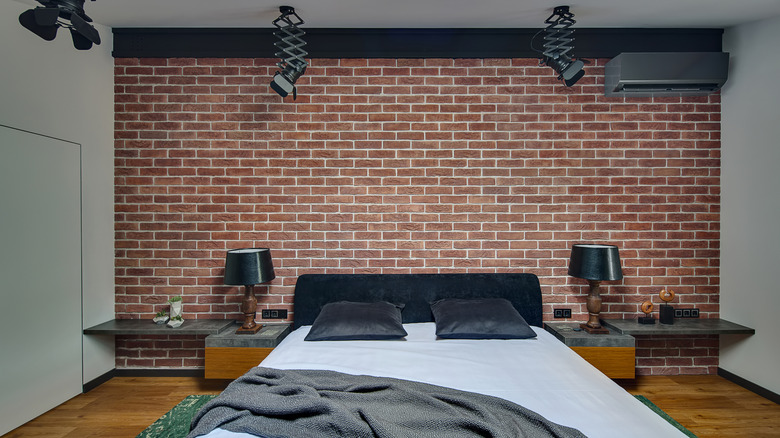
In recent years, plain accent walls have been on their way out. Instead, textured accent walls are trending, with examples like reclaimed wood, floor-to-ceiling curtains, 3D wall paneling, and more. Exposed brick functions as a built-in accent wall, drawing the eye and adding dimension to a room. Considering exposed brick is widely associated with lofts and apartments, it can be a savior to renters who don't have the option to paint their walls and want to avoid the lifeless colors their landlord chooses. For those who want to expose interior brick that's covered in drywall, that can be a tricky endeavor. It's best to expose a small section first, especially with the help of a professional, to make sure the brick is in suitable condition.
If you're lucky enough to have exposed brick in your home, there are many ways to style brick walls. One option is to paint the brick, which is a nice way to add a color you like while retaining the texture and depth that a drywall accent wall lacks. Another easier idea is to hang artwork and plants. In this case, you can either drill directly into the brick or go the renter-friendly route by using brick clips. Adhesive hooks, washi tape, and sticky putty can also work for hanging lighter items. Other than that, consider playing around with heavy fabrics like velvet and warm, layered lighting to dial up the cozy factor.