

Skip Mums: There's A Better Fall Beauty To Plant In July
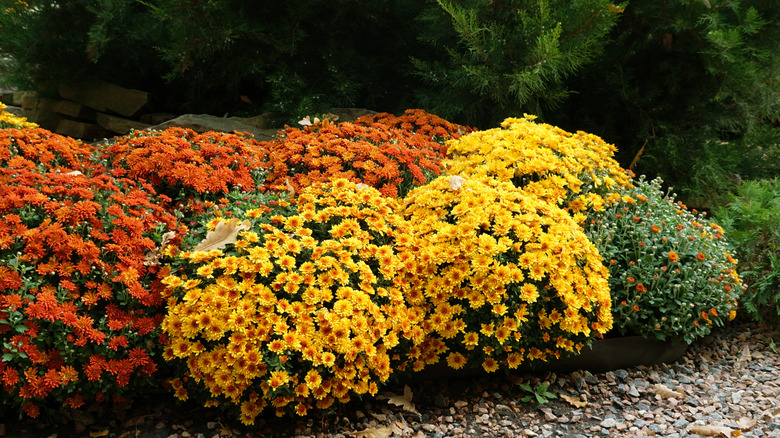
Autumn color. A garden buzzing with bees. That's exactly what many gardeners are planting for in July, and when it comes to fall flowers, mums are a popular choice. They are easy to grow, and they come in different sizes and colors. Also, they can bloom in less-than-ideal conditions and even with minimal care. There is, however, another flower worth planting in July for beautiful fall color: calendula (Calendula officinalis). Depending on the climate, it blooms throughout the year. From late fall through spring in warmer regions and from spring until fall where winters are colder.
Even better? Calendula attracts many beneficial insects and pollinators, and it is a perfect plant to grow if you want to make your garden a pollinator paradise. Also known as pot marigold, the flowers are 3 to 4 inches wide, and they come in both single and double flower forms. As for the size, calendula grows about 1 to 1.5 feet tall and wide, and they work well as groundcover, container, and flower bed plants.
Just keep in mind that calendula has a habit of reseeding itself. It is not invasive, but it can still create problems for people who are trying to maintain a flower bed. There is no reason to worry, though! The issue can be easily solved by deadheading the flowers before they set seed. Deadheading calendula also helps it bloom for longer. Other than that, calendulas are easygoing plants.
Growing and taking care of calendula in a garden for fall color
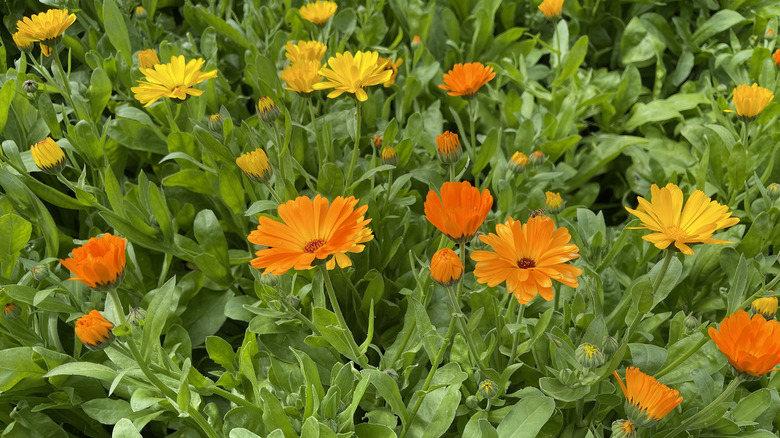
When it comes to growing calendula, you can use both seeds and transplants. Its transplants, however, are not easier to find. Seeds can be started nearly 6 to 8 weeks indoors before the last frost date of your area, and they need to be kept away from light, as it could inhibit germination. The seeds take around 5 to 15 days to germinate. Then, once the danger of frost has passed, transplant the seedlings outside and make sure to space them at least 8 to 12 inches apart.
It is also a good idea to pinch the new growth once the plants are a few inches tall. It helps them grow bushier. Also, water the plants regularly, but do not overwater the soil. Calendula prefers well-drained soils. Also, make sure to grow calendula in a spot that receives either full sun or partial shade. If grown in heavy shade, they don't flower well and also become leggy. And in case your place does not get enough sun, you might want to skip calendulas and look for some other flowers and landscaping solutions for shady areas.
As for fertilizing, calendulas are not heavy feeders. Light applications of a balanced fertilizer about once a month are usually more than enough. Just make sure to follow all the label instructions when fertilizing and do not overfertilize. Calendulas do not like over fertile soils. Lastly, keep an eye out for aphids and powdery mildews. Even though calendula does not have many pest problems, these can sometimes be a problem.