

What To Do If You Find Birds In Your Chimney
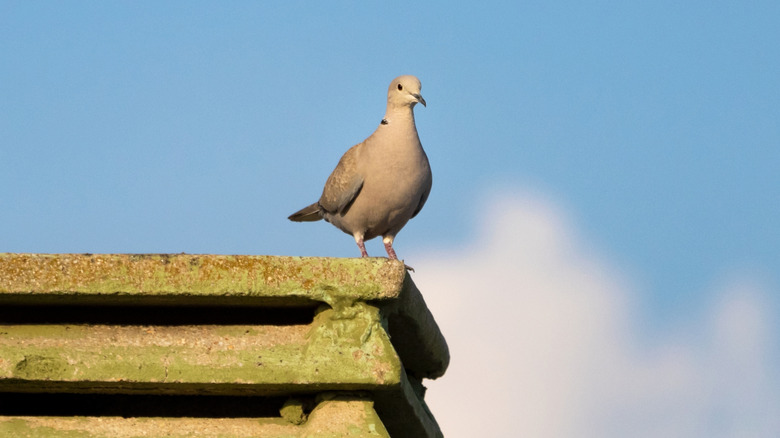
People are always thinking of creative ways to keep critters out of their gardens. But how much are we thinking about keeping them out of our homes? The chimney is a prime location for birds to nest in, as it mimics their natural sheltered habitats. And if you find some birds have made their way into your chimney, you'll need to figure out a way to humanely remove them yourself — or call in a professional to do it for you.
But how can you tell if you've even got birds in your chimney? The easiest way is to see if any are actually flying in and out. Inside the house, you can listen for scratching, chirping, or flapping. If the flu smells rotten, or you see feces or fallen nesting twigs in your fireplace, it's a surefire sign that you've got a bird, either living or dead, taking up residence in your chimney.
That said, certain species are more likely to nest in chimneys than others. The appropriately named chimney swift seeks out chimneys to build nests, for example. European starlings, which are one bird you don't want around your yard due to their aggressive nesting habits, are also known to occasionally nest in chimneys. Even larger birds like owls can find themselves flying into chimneys and getting stuck. How difficult it is to remove them will depend on the bird you're dealing with and how entrenched they are in the space.
How to remove and prevent birds in your chimney
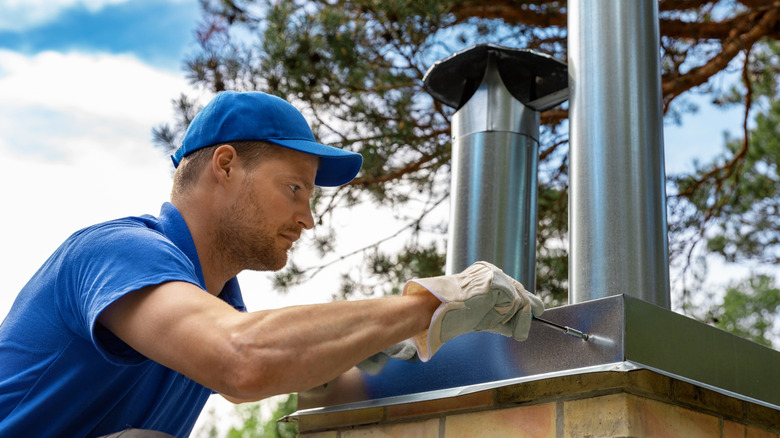
The best way to keep birds out of your chimney is to prevent them from getting in there at all. If your chimney is not capped, it's an open door allowing birds to fly in and out at their leisure. A secured flue cap will allow the chimney to have adequate ventilation when in use while creating a secure barrier that keeps birds out.
If you find that you need to remove a bird from your chimney, there are a few ways you could go about it. One would be to shut off all the lights in your home, then open a door and the flue damper. In theory, the bird should see the light and make towards it. This is not ideal, however, because the bird could end up becoming lost — and then you'd have to deal with getting the bird out of your house. Another method is to just wait until they leave. This is actually what you must do with nesting chimney swifts, as they are federally protected species that you are not legally allowed to remove.
After the birds have left, call a chimney sweep to have any nests removed and the chimney cap installed. If a larger bird is trapped or has died, contact a professional animal removal service. While these options do cost money, they're the best way of making sure you never have to deal with this problem again.