

Don't Let Looks Fool You: This Vintage Animal Decor Could Be Worth Thousands

If you're one to search for valuable collectible items at estate sales and thrift stores, it's time to get your ducks in a row and review your finds. There are plenty of antiques that not only make a statement on mantles and bookshelves, but also in your bank account. Items like retro lunch boxes, RCA radios, and cast-iron doorsteps can cost hundreds to thousands of dollars. Arguably, one of the most unassuming antiques is also one of the most valuable: duck decoys.
A mid-20th-century staple, the feathered friends in wooden form make the perfect accompaniment to any rustic decor attempts or conversation starters for those tackling trends like the eccentric aunt aesthetic decor trend. Originally, Native Americans used duck decoys when hunting, a practice colonists later copied for their own pursuits. In time, those copycats became highly collectible, particularly in the 1950s. A few things have remained consistent since then: They're cute, they're quirky, and they're worth a pretty penny, to say the least.
How to spot an authentic duck decoy
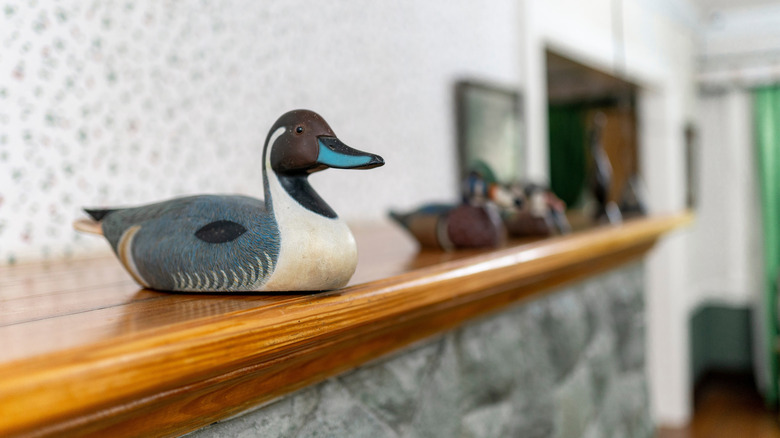
In 2003, during a Guyette & Deeter sale, a duck decoy sold for for $803,000. Several years later, the most expensive sale of a duck decoy to date clocked in at $856,000. But if it looks like a duck and quacks like a duck, that doesn't necessarily mean it's a duck. These decoys vary in value based on a variety of factors, including the regions in which they were made, the species of ducks — shorebirds being among the priciest picks — the size of the piece, and the condition, to name just a few. Elmer Crowell is a sought-after creator and often the most expensive. Should you want to capture the rustic look of these darling ducks without taking out a loan, pieces on eBay average in the hundreds.
Finding vintage and antique treasures like these isn't always easy. If you have one you think might be valuable, consider getting your little waddler appraised and, if you're not attached to it, perhaps selling it. If you have a decoy you'd like to hold onto, or even a faux duck decoy, embrace the bird in all of its glory. Style this antique alongside natural materials, antique textiles, or wallpaper, and always start small, opting for a locale like a shelf or an end table to display your feathered friend. No matter where your duck ends up in your home, it's guaranteed to make a (figurative) splash.