

Ditch The WD-40: Here's A Nonstick Solution To Keep Grass Off Mower Decks
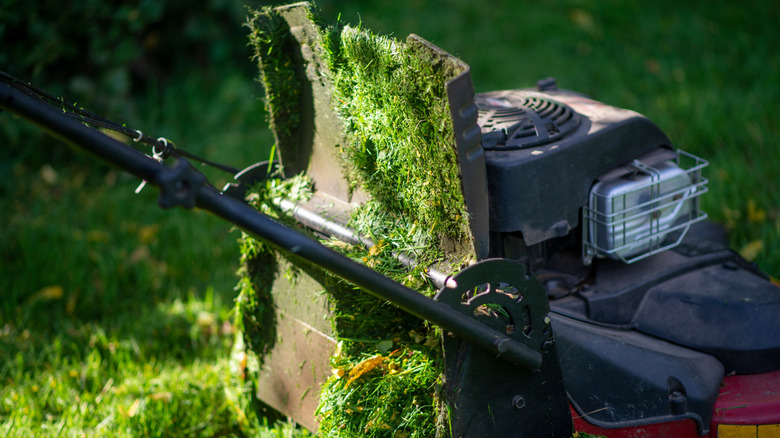
If you've ever had to scrape thick wads of gloopy grass out from your mower deck, you'll know it is one of the most frustrating aspects of mowing the lawn. While you can always use the old standby trick of spraying WD-40 on the blades and mower deck interior, that is only a temporary fix, and usually needs to be reapplied each time you mow. While some people note that Sta-Bil Ceramic Pro Guard from Menards is a cheap and effective option that isn't WD-40, it too needs to be reapplied after a few mowing cycles. If you want a more permanent solution, try using something like dry graphite lubricant instead.
While it is definitely a more expensive option at $42 dollars for a one quart can, Slip Plate No. 1 graphite dry lubricant is a great potential option, as users note that it's easy to apply and lasts a long time in a variety of situations. This is a thick lubricant composed of graphite and other solvents. When applied as a coating to the interior of mower decks, the cured lubricant creates a slippery, water-resistant surface that wet grass won't stick to.
If you're wondering why dry graphite lubricant lasts longer, the reason that something like WD-40 does not work as well is that it is a light solvent as opposed to a proper lubricant. Even the company itself points this out. It will easily clean away debris and reduce some sticking, but needs to be reapplied consistently, thereby making it ineffective as a long-term solution. The question is, though, is the graphite lubricant any better?
How to use dry graphite lubricant on your mower deck
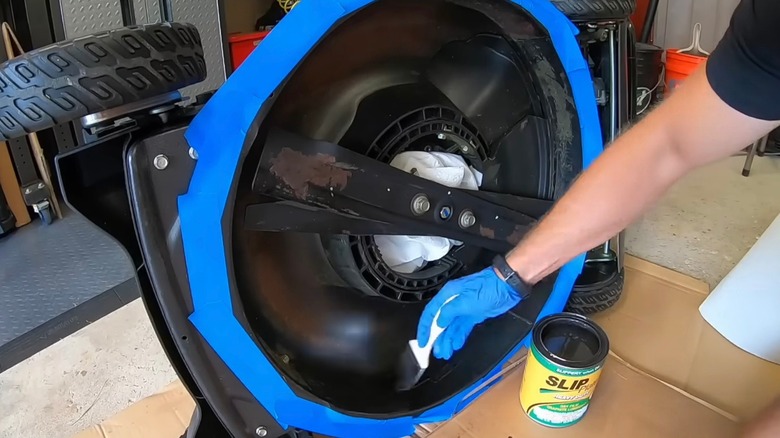
One of the important things to note before beginning, is that Slip Plate No. 1 comes in either an aerosol can or a solid container. In a video review using the product on one of his own lawn mowers, YouTuber Garage Gear noted that the viscosity of the lubricant is such that it could potentially clog the nozzle. Therefore, opt for the solid container and a paint brush instead.
Cleaning away debris and grease is essential before applying dry graphite lubricant, as a clean surface will help it bond better to the deck. Tape off any sections of the lawn mower where you don't want the lubricant to get onto, and stuff some paper towels or rags into the center shaft so you don't get any into the belt that controls the blade. Using a paint brush, apply a thin coating around the entire bottom of the mower deck, allowing to cure for at least 8 hours.
Later in Garage Gear's review, he created a test simulating mowing through tall and wet grass conditions. His findings showed no major grass accumulation in the mower deck. In a follow-up video, Garage Gear said the coating lasted 18 mows before needing to be reapplied. In this case, he applied half a can of the spray product, providing two coats of protection. If you opt for one coat, that could be 50 to 70 mows from a single can. Contrast that with spraying WD-40 with each mow, and it's possible the Slip Plate is more economical than it seems. While results may vary, that kind of lifespan definitely makes dry graphite lubricant a must-have lawn care tool.