

Stamped Concrete Vs. Pavers: What's The Difference And Which Is Better?
Boosting curb appeal can feel like a sport. It takes labor, a keen eye, and a bit of friendly competition amongst neighbors. But if you're looking to catapult your abode to the top spot on the block, you'll have to choose clever landscaping ideas that are not only eye-catching, but functional and long-lasting. That might lead to a few debates, one being whether you should use stamped concrete or pavers for your walkway, porch, or patio. Before you head to the hardware store and map out this undertaking with the pros — or even attempt it yourself — it's crucial to weigh the pros and cons of each surface to determine which is better for your home.
Stamped concrete, which can be used for walkways, patios, pool decks, and more, involves imprinting patterns and textures onto a uniform slab of wet concrete to achieve the homeowner's aesthetic of choice. Patterns designed to look like herringbone bricks or interlocking flagstone are customizable and can be mixed, antiqued, as well as dyed any number of colors. Concrete pavers are individual components used to build a surface, and can be utilized for the same purposes. They are also available in a wide variety of colors, styles, and textures. To come to fruition, a wet mixture of cement, gravel, and sand, among other elements, is poured into molds and cured, creating dense, sturdy pavers that can be interlocked for easy installation. While both options have similar qualities, their differences will ultimately sway you in one direction versus another, depending on your needs and preferences.
The pros and cons of stamped concrete and pavers
Stamped concrete for patios or walkways is durable, aesthetically pleasing, and relatively maintenance-free, only requiring regular sweeping and hosing. It can withstand 3,000 pounds per square inch of pressure. However, you can't use salt or de-icer on it in the winter, as that can cause deterioration and cracking. And if it cracks, you may be replacing the entire slab of concrete. Costs range from $10 to $25 per square foot— about $3,000-$6,000 for patios and $6,000 to $12,000 for driveways — and the lifespan is roughly 30 years or so.
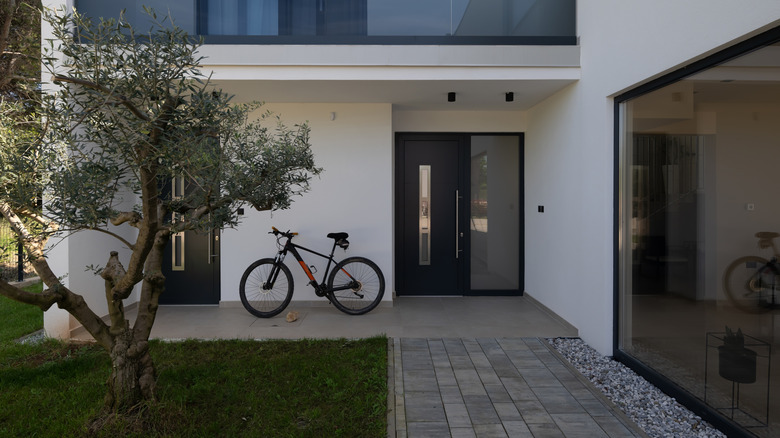
Instead, if you're considering building a concrete paver walkway, patio, or driveway, one big plus is that pavers come in a much wider variety of shapes and colors, than stamped concrete and the dye is mixed throughout each paver, rather than just on the surface. But they need to be sealed in order for colors to stay vibrant, can be disrupted by roots or shifting soil, and they will likely require frequent weeding. However, they are significantly more durable than their counterpart, withstanding 8,000 pounds per square inch of pressure. They offer better traction in slippery conditions, are more easily repaired, and boast a lifespan of roughly 50 years. Concrete pavers cost up to $30 per square foot, hitting $6,000 and above for professional installation.
Labeling one option as better is subjective, depending on the space, weather, and other conditions homeowners might face, along with your aesthetic preferences. For many homeowners, though, pavers are the better choice. You have more design options, they're easier to DIY if you want to save money, they're sturdier, and easier than stamped concrete to repair. Ultimately, pavers have the potential to outlast stamped concrete by decades, arguably the most compelling feature for your abode.