

How Soaring Fuel Costs Are Changing How People Care For Their Lawns
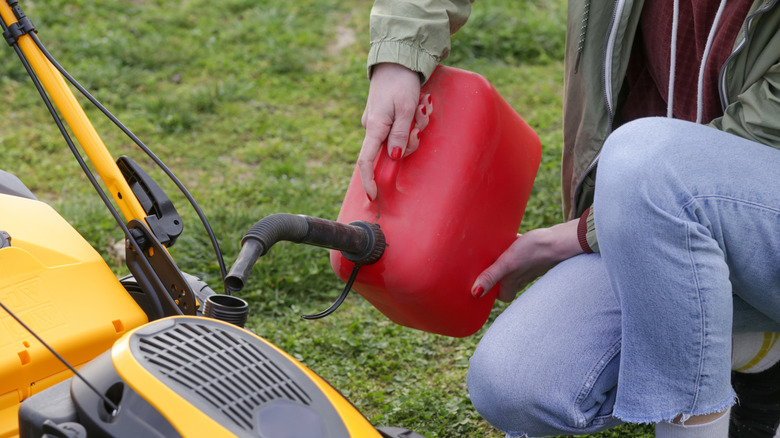
Did the cost of fueling up your lawnmower make you decide to extend "No Mow May" by a few weeks? Soaring fuel costs haven't just impacted the number of cars on the road; they're also forcing homeowners to rethink how to care for their lawns. Gas prices rose 40.5% between May 2025 and May 2026, according to the Bureau of Labor Statistics. In May 2026, when asked about rising prices, President Trump stated (via Time), "I appreciate everybody putting up with it for a little while. It won't be much longer." Unfortunately, despite a potential end to the Iran war on the horizon, many experts don't expect meaningful relief at the pumps anytime soon.
One way homeowners are responding to higher fuel costs is by switching to electric lawn equipment. Along with avoiding the need for gas altogether, battery-powered lawn mowers tend to be quieter, lower maintenance, and more environmentally friendly. Popular state rebate programs and higher electric mower sales in recent years suggest more consumers are exploring battery-powered alternatives.
As of June 16, 2026, gas prices have dropped below $4 per gallon, making it a bit less painful for DIYers to fill small push mowers that typically hold less than two gallons. However, fuel costs become more noticeable when topping off weed whackers, hedge trimmers, and other landscaping equipment. Determining how often to mow used to depend on what type of grass you had and how quickly it grew. Now, homeowners looking to reduce lawn care expenses may be paying less attention to their mowing schedule and more on tune-up and maintenance tasks that impact efficiency, like replacing dirty air filters and old spark plugs to avoid costly fuel waste.
Professional lawn care costs are also skyrocketing

Homeowners may notice the impact of fuel costs when they get the bill from professional lawn care companies. Because commercial and zero-turn mowers hold between two and five gallons of gas, fuel expenses are one factor that can contribute to the overall cost of professional lawn care services. The same goes for other equipment, including higher-powered commercial chainsaws and backpack blowers that use more gas than residential versions and must be refilled throughout the workday.
But there's another fuel-related factor that may have you incredulously asking yourself, "How much does landscaping cost?" While DIYers can just run to the corner gas station for a gallon or two every few weeks, professional landscaping companies have to continuously gas up not just equipment but crew trucks as well. Along with hauling heavy equipment trailers, some of those trucks run on diesel, which remains above $5 per gallon. Landscaping companies also have to contend with inflationary pressures impacting other overhead costs. Still, many professionals are resistant to raising their base prices. Some are responding by reducing the geographic area they serve. For homeowners, that means your regular guy may no longer be willing to drive to you. Meanwhile, other landscaping companies are simply absorbing the higher costs to avoid losing customers.
According to Angi, the average price for mowing a lawn is currently $123 per visit. That's nearly twice what RealGreen reported in 2024. If you need to save a little on your lawn care until prices stabilize, consider reducing the frequency of professional services or taking the extra time to compare prices. Unfortunately, until gas prices go down, you'll have to choose between saving time or saving money on your lawn care.