

Skip Boring Curtains And Blinds: There's A Cuter Way To DIY Privacy For Your Windows

If your current windows are feeling a little bland, ditch outdated curtain trends and boring blinds in favor of DIY curtains inspired by traditional Korean pojagi. Pojagi, more recently Romanized as "bojagi," is a type of textile that has been used to wrap or cover objects for centuries. They're often made in the jogakbo style, a form of patchwork that features a more asymmetrical or free-form arrangement of pieces. You can take inspiration from them to make curtains that offer privacy and beauty. Part of what makes pojagi so unique is the stitching used. Traditional pojagi uses a flat felled seam, which is both durable and clean-looking. The raw edges of the seam are hidden under a flap of fabric, meaning your curtain will look just as nice from inside or outside.
As a patchwork artform, a pojagi-inspired window cover can be made from any fabric you like. If you have any fabric scraps from other projects, this is a great way to use them, since you don't need your pieces to match. Bright, contrasting colors will give your DIY curtains a joyful and cute look, but you can just as easily stick to pastels, neutrals, earth tones, or any other color scheme. Likewise, you can use fabrics of any weight. Lighter fabrics will let more sunlight through, letting you enjoy the natural light and making your curtains look like stained glass. Heavier fabrics will block more light, making them a good fit for rooms that need both soothing darkness and a cute window covering, like your bedroom. However, pojagi can also be a living room curtain idea that will instantly elevate your space; just go with a lighter fabric.
Creating pojagi-inspired curtains
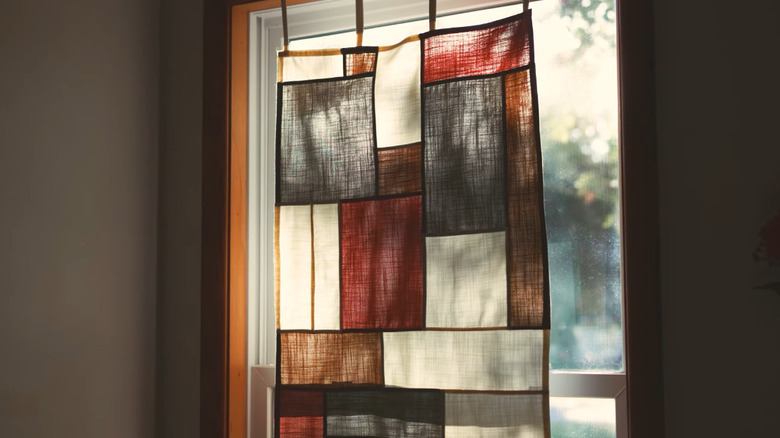
Start by collecting your fabric pieces and seeing how they look together. If you don't have any scrap fabric from prior projects, or don't think you have enough, consider using other old textiles from around your house. You can repurpose old bed sheets instead of getting rid of them, along with pillowcases, blankets, or even clothes. If you'd rather purchase new fabric, consider the color, weight, and sturdiness. You won't want it to fall apart too quickly and leave your window exposed, so choose durable fabric.
You don't need to fully plan out the pattern of your pojagi-inspired curtains; simply place one piece at a time based on where you think it will look best. You aren't limited to manufactured options like with traditional curtains or blinds, so have fun and create a look that's fully personalized. You can measure as you go, adding and trimming pieces until your curtain is the right size and shape to completely cover your window. You can also trace an outline of the goal onto a large sheet of paper to use as a guide.
If you want to use a felled seam for your curtains, it's surprisingly simple. Lay two pieces on top of each other, with the right sides facing each other. Sew them together along one side, leaving space between the edge of the fabric and the stitching. When you unfold them, you should have two flaps of fabric along the seam. Trim one, then fold and press the remaining one, covering the seam. Sew that flap down and you're done! You can add loops of fabric to the top or use curtain rings with clips to hang your new window covering. Then just step back and enjoy the beauty and privacy of your pojagi curtain!