

How To Repel Carpenter Bees Naturally With A Fragrant DIY Solution
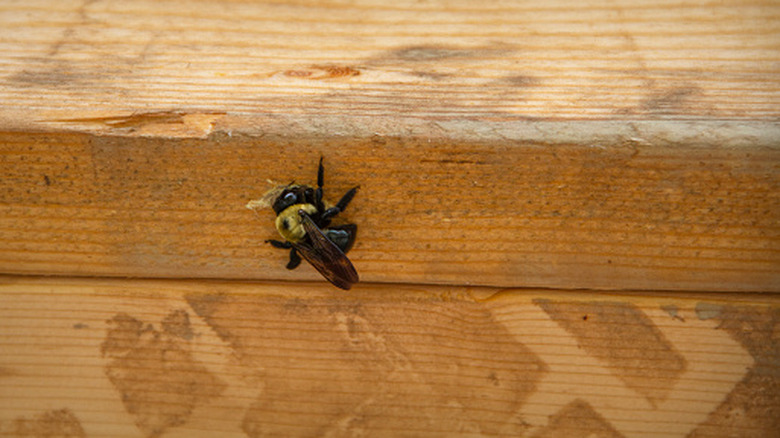
It's too late to avoid carpenter bee damage if they have already bored into a fence post of part of your deck and turned it into Swiss cheese. But there are ways to stop carpenter bees and keep them away. The best options are non-lethal, because carpenter bees are pollinators — maybe not as important in this regard as honeybees, but entomologists still consider them beneficial. The fact is, the world needs all the bees it can get, so if you want to keep them away safely, a number of essential oils can help.
One of the most commonly mentioned is peppermint oil, which is effective against ants and other insects. It's harmless, so there's no reason not to give it a try. A number of bee-related sites recommend it, with some saying that its pungent scent is known to repel bees. However, what science seems to indicate is that the effect of peppermint oil on bees is more complicated. According to research reported by Oil Sensei, peppermint oil can actually support bee activity instead of discouraging it. Beekeepers have noted that honeybees pollinate peppermint flowers and even make peppermint honey, and since carpenter bees like many of the same things as honeybees, peppermint oil could actually attract them. This isn't to discourage the use of peppermint oil, because many bug experts recommend it, so if you want to give it a try, we'll describe some ways to use it recommended by bee experts.
How to repel bees with peppermint oil
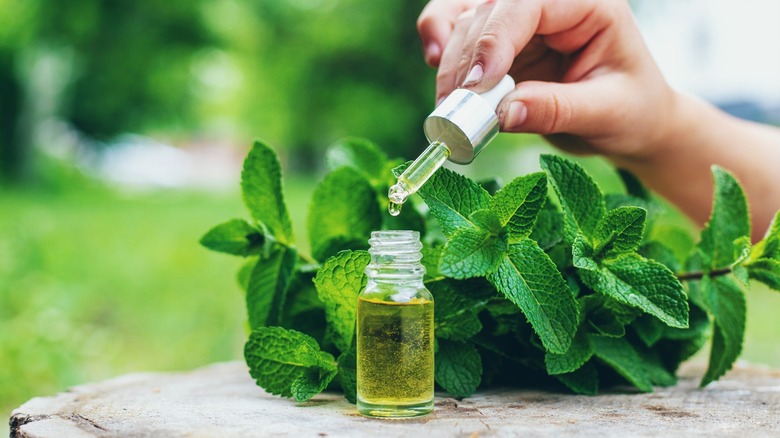
At a little over $3 per ounce, peppermint oil is too expensive to use on its own, and it could be too pungent for some people. While some believers in peppermint oil's repelling power recommend simply diluting it with water, other professionals present a more detailed application protocol: Fill a spray bottle with water, add 10 to 20 drops of peppermint oil and then top off the mixture with two tablespoons of liquid castile soap or Murphy's Oil Soap. Presumably, this makes a longer lasting bee barrier, because peppermint-scented soap doesn't evaporate as quickly as peppermint-scented water.
If you like the idea of infusing wood with the pleasant aroma of peppermint, and you aren't on a budget, you might consider wiping the oil full-strength onto wood rather than diluting it to make a spray. The stronger odor may be a better deterrent. If the beekeepers are right, however, and the oil actually attracts bees, other essential oils have a better record of repelling carpenter bees.
One is citrus oil derived from orange peels (and to a lesser extent lemon peels). It contains d-limonene, a compound with known insect deterrent properties. You can make your own citrus spray by boiling orange or lemon peels in a pot of water and putting the water in a spray bottle after it has cooled down. Two other essential oils that beekeepers often recommend to repel carpenter bees naturally are eucalyptus oil and almond oil.