

Plant This Easy-To-Grow Flower By Your Birdbath To Attract Birds & Butterflies All Summer Long
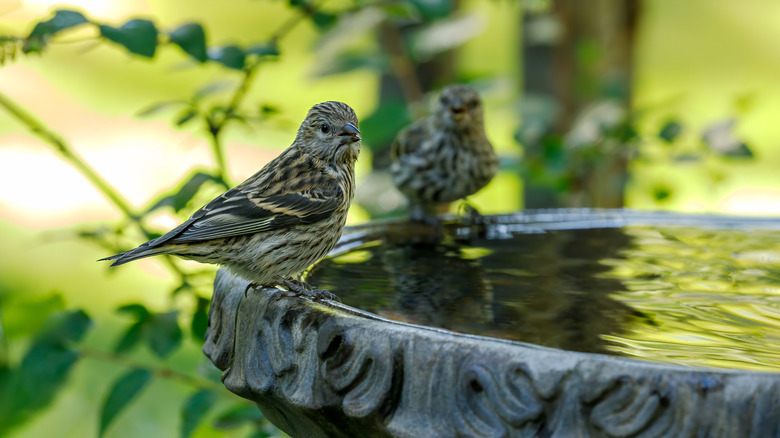
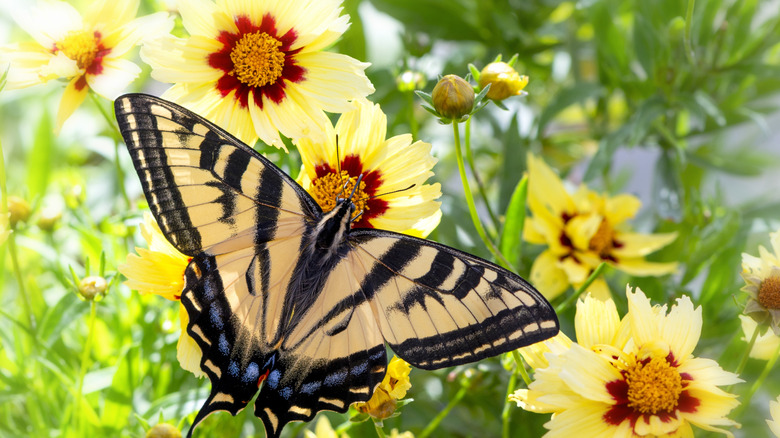
If your birdbath has been neglected by your feathered friends, planting flowers is a simple way to make it more enticing to both birds and butterflies. Though many types of flowers are alluring to these beneficial and beautiful critters, a common wildflower that's native to the United States can attract a variety of birds and pollinators to your yard. Tickseed flowers (Coreopsis lanceolata) are in the same family as daisies and are easy enough for beginners to grow. These beautiful, simple wildflowers have bright yellow petals with a splash of red around the center of the flower and nectar that draws pollinators like butterflies and bees to your garden. However, the plants' seeds, for which tickseed flowers are named, are a delicious food for several types of birds. Cardinals, finches, sparrows, and other birds love to feast on the seeds that drop when the flowers wither away.
There are a ton of species of coreopsis, and many are notorious for having a rather long bloom time. Some tickseed flowers will start blooming at the end of spring and keep producing their vibrant blossoms throughout the summer season. Other types may flower throughout summer and into the start of fall. By growing coreopsis flowers near your birdbath, you'll create a habitat with food and water to support butterflies and birds. Plus, some tickseed varieties get rather tall, providing a bit of natural cover around the bath as well.
Caring for tickseed flowers to support butterflies and birds
When planting tickseed by your birdbath, make sure that the location of your bath is suitable for the plants. Coreopsis flowers love full sun, though they will still grow with a bit of shade. While adequate sunlight is necessary, tickseed flowers can handle various types of soil, including poor ones that are rocky, sandy, or loamy. Because of this, the wildflowers are great for planting directly in the ground, though the yellow blossoms can also be kept in containers. There are a few qualities that make coreopsis stunning plants that are easy to grow. Tickseed flowers are not prone to diseases or issues with pests. They are capable of handling heat and drought, too, not needing as much water as some other flowers. While a little fertilizer in the spring can help the plants thrive, too much food or water can cause tickseed to produce fewer blooms.
Because coreopsis varieties are self-seeding flowers you enjoy for years, the blossoms will eventually start to die and go to seed. If you want your plants to keep producing more blooms, deadhead the flowers. This allows you to keep supplying nectar to butterflies for longer. Once you're done helping beneficial insects, allowing coreopsis to go to seed will provide a tasty snack for the birds that visit your bath. Plus, letting the stalks of the plants sit as they are allows birds to have access to food in the winter as well.