

What To Put In The Bottom Of Large Planters To Keep Them Lighter
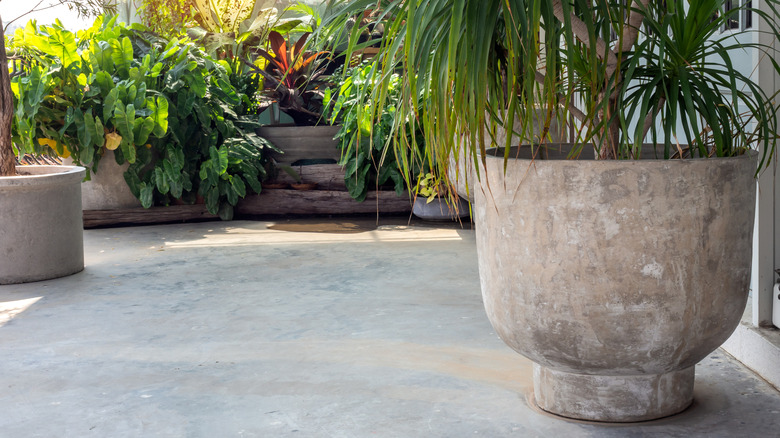
Super-sized planters make the perfect statement piece for any backyard. They are elegant, bold, and polished, and have the power to transform a standard patio into a luxury retreat. But boy, are they heavy. A large stone or clay planter can weigh a hundred pounds or more, and the largest can max out at over a thousand! But even lightweight large plastic pots or fabric grow bags get heavy and difficult to deal with as you fill them to the brim with potting soil. Fortunately, you don't need to deal with an annoyingly heavy planter. Instead, there is a simple trick you can use so those large planters can be moved with ease: Add a lightweight filler to the bottom, so you'll need less dirt.
One of the best ways to keep your planters lighter is to fill them with something other than dirt. Don't plants need dirt, you ask? Well yes, but unless you are planting something with a deep root system, filling the whole planter with soil is entirely unnecessary. From sticks to empty milk jugs, there are a lot of different materials you can use for filler in large pots. One of the best options is to use cardboard and old newspaper as filler at the bottom of the planter, adding soil on top. This keeps the planter much lighter, and can even help to save money because you're using significantly less potting soil to fill your pot. While some people fill the bottom of their planter pots with plastic water bottles or foam packing peanuts, this method is more eco-friendly, because the newspaper and cardboard breaks down into compost over time. It's a great way to reuse materials that might otherwise end up in a landfill.
Fill the bottom third with shredded cardboard or paper
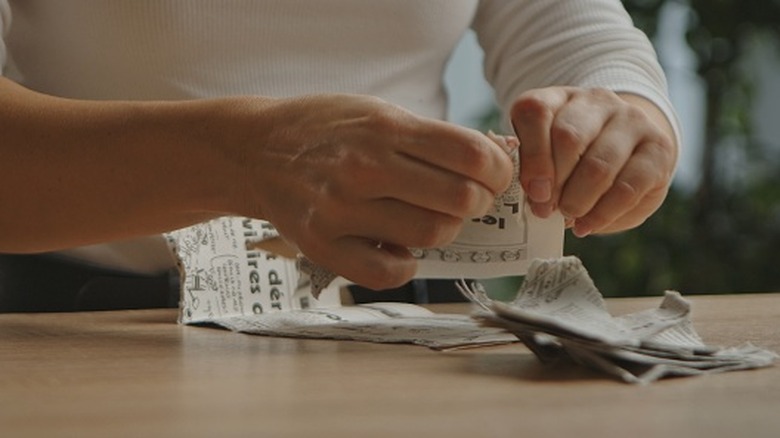
Once you've found the perfect planter that matches your design style, it is time to start filling! The process of using newspaper and cardboard as filler is relatively straightforward, though there are a few considerations you'll want to take note of along the way. The first step is to prep your filler. Perhaps the best strategy is to rip the newspaper or cardboard you are using into small pieces to help create volume and allow drainage. After you've prepped your material, wet your filler (so it doesn't draw up water from the potting soil), and pack it loosely on the bottom of the planter and fill the rest with soil. Then, you can go ahead and place your plants. For most annual root systems, you will want to ensure that you have 12 to 24 inches of soil in your pot. The rest of that space can be filled with your filler material.
This method of filling planters is essentially a small-scale version of Hugelkultur, a method of gardening that involves filling the base of raised beds with old, rotting wood. Because newspaper and cardboard break down over time, this hack is best for planters that will be replanted regularly. In other words, it is a great option for annuals. Perennials shouldn't be planted this way because the soil will eventually start to sink as your filler material decomposes and compresses. You will also want to be mindful of what materials you choose. The dyes used in newspapers are considered safe, but the glossy pages of magazines or some newspapers may contain chemicals that are harmful to your plants.