

Skip Standard Gravel: Here's A Better Alternative That Adds Contrast To Your Landscape

Are you ready to give up on gravel? Even though it's a functional way to landscape certain areas, it's not always visually appealing. The light gray color doesn't really stand out, either. Fortunately, there are plenty of gravel alternatives, like seashells – a beautiful, eco-friendly driveway option. But the coastal vibe of seashells doesn't always align with a landlocked Midwestern home, for example. One alternative to gravel in those instances is pumice rock.
If the first thing that comes to mind is abrasive block hanging on a string in your shower, you've got the right material (incidentally, you can use a pumice stone to remove rust and stains on a shower floor in addition to smoothing your skin). For landscaping, the rock comes in smaller, irregular pieces that can cover the ground just like gravel. The lightweight volcanic stones are highly porous — you can see lots of little holes all over the rock. Not only are they attractive, but the rocks offer moisture and soil health benefits.
Pumice might not be ideal for all situations. It's often more costly than other materials, and it will break down over time (it's still a durable, long-lasting option, though). While some people love the natural, rough, hole-filled look, others prefer a more polished look.
Landscape with pumice for contrast and other benefits
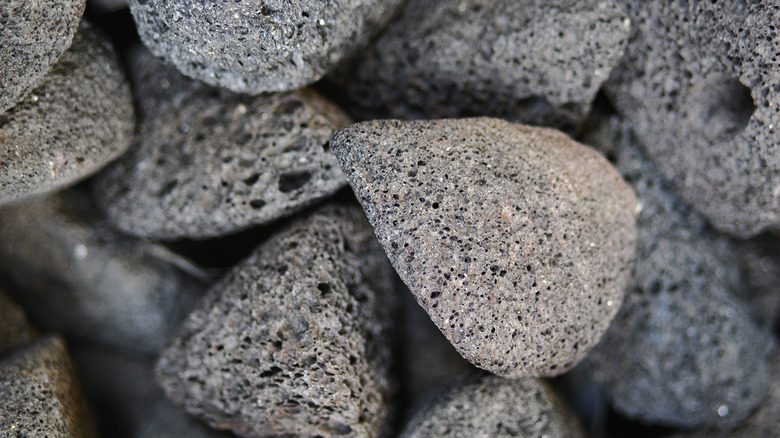
Since pumice is lightweight, it won't compact the soil like heavier materials will. The porous nature of the rocks also helps plants — rainwater can run through the holes and help keep the soil moist. While other types of rocks allow water to filter around them, they don't hold onto the moisture like pumice does, which is another reason it could be a better choice than gravel. Pumice also insulates against heat and makes it tough for weeds to grow in your landscaped areas.
The appearance also sets this option apart. You get a natural color, but the stones themselves look different than gravel due to all of the little holes and craters on the surface. That creates a textured look in your landscaped areas, which offers visual contrast. Because of its natural look, pumice is a versatile option that often blends well with all styles of homes.
Pumice rocks work well in your landscaped beds, including those with flowers. To dress up your container garden, sprinkle a layer of pumice stones over the soil. If you're designing a rock garden, plan to add pumice stones to the layout as a filler with contrast to the smoother boulders and rocks you use.