

Not Basil, Not Rosemary: The Fast-Growing Herb That Pollinators Can't Resist
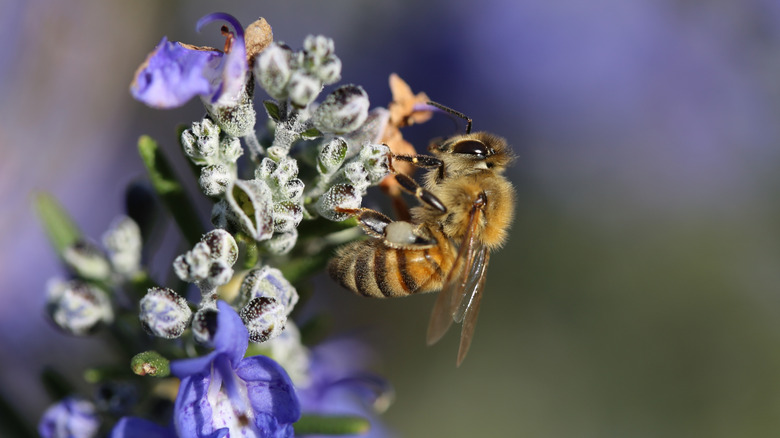
Pollinator-friendly gardening is all the rage, and choosing plants that attract butterflies and other pollinators is a major gardening trend. While you may first think of wildflowers when considering plants that butterflies and bees flock to, the truth is, herbs are also a big draw. Some herbs, like parsley, act as host plants for larvae, who feed on their leaves. Others, like oregano (Origanum vulgare), produce flowers that provide nectar and pollen for a variety of pollinating insects.
The evolutionary design of oregano's flowers may make it particularly appealing to bees and other pollinators. The flowers grow on spikes, in clusters, providing basically an easy-access, all-you-can-eat buffet to hungry pollinators. Instead of having to fly from flower to flower, bees, moths, butterflies, and other insects can stop at one flower cluster, conserving energy and feasting away.
On top of being a hit with beneficial insects, oregano is also relatively easy to grow, either in the ground, a raised bed, or a container. It's hardy in zones 5 through 9 — meaning it will die back in winter but new growth will appear in the spring. When growing oregano, plant more than you think you'll need, so that there is plenty to share with the birds and bees. To boost your garden's appeal to bees and butterflies, consider planting oregano alongside other flowering herbs, like rosemary and thyme, which also attract pollinators to the garden.
How to grow oregano to attract pollinators
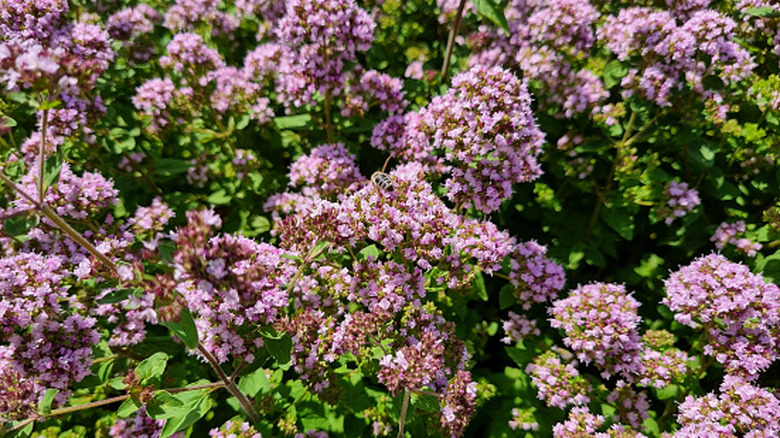
Oregano is native to the Mediterranean, and like other plants in a Mediterranean garden, does well in sunny, slightly dry conditions. The fastest way to enjoy oregano in your garden (both for you and your pollinator friends) is to plant a cutting or seedling, although you can also start oregano from seed. Set the plant outdoors, ideally in a raised bed or container, after the final frost. Choose a site that gets full sun and make sure your garden soil or container mix drains well, as oregano doesn't tolerate soggy soil. Water only when the soil is dry.
To harvest and use the plant's leaves in your cooking, cut sprigs from the plant and either pluck off the leaves or hang them up to dry in your kitchen. While the leaves will taste best before the plant flowers, to attract bees and other pollinators, you do want the oregano to bloom (another good reason to plant extra). Oregano will typically start flowering in the middle of summer. Depending on the variety, the blooms may be purple, white, or pink.
You can continue harvesting oregano's leaves even after it blooms, just know that the flavor may be milder than before it flowered. While you may want to leave plenty of blooms for the pollinators, don't be shy about taking a few flowers for yourself. They have a flavor that's similar to, but milder than, the plant's leaves.