

The Rare '60s Pyrex Dish You'd Be Over The Moon To Find At A Thrift Store
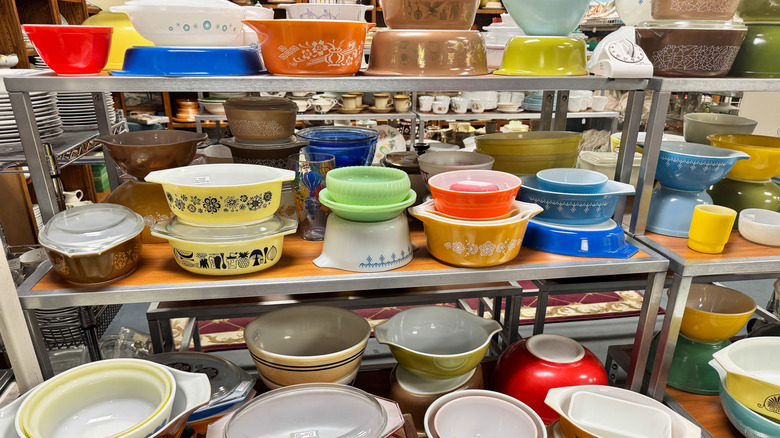
If you spot any patterned Pyrex while browsing a thrift store or estate sale, it never hurts to stop and take a closer look. Corning Glass phased out its Pyrex patterned cookware in the 1980s, so any authentic piece you see for sale is a vintage find. But if you're really, really lucky, you might stumble upon a true treasure: the elusive blue dianthus pattern.
There are plenty of highly-prized vintage Pyrex patterns out there, but the blue dianthus pattern is incredibly rare — so rare that it's not included in Corning's library of Pyrex patterns. There are few examples of pieces from this collection online. In fact, the history of this pattern was a total mystery for a long time, and so far there's only been one good clue about its origin.
Pyrex collectors wondered about the rarely-seen pattern for many years, until one such collector shared some new info in 2014. That's when a Flickr user named Heather M. posted an image of a blue dianthus bowl, along with a few images of an old Pyrex box that is stamped with words including "1963" and "sales test." In a comment, Heather says they bought the set in a lot with other Pyrex dishes. Sleuths will notice that the words "blue dianthus" aren't visible on the box, though! Maybe someday another vintage box with more information will turn up? For now, the general assumption within the Pyrex community is that the blue dianthus pattern was made as a sales test in 1963. Heather bought their haul from the estate of a long-time Corning employee, so it stands to reason that these pieces were distributed to employees and not sold to the general public.
How to spot Pyrex blue dianthus cookware
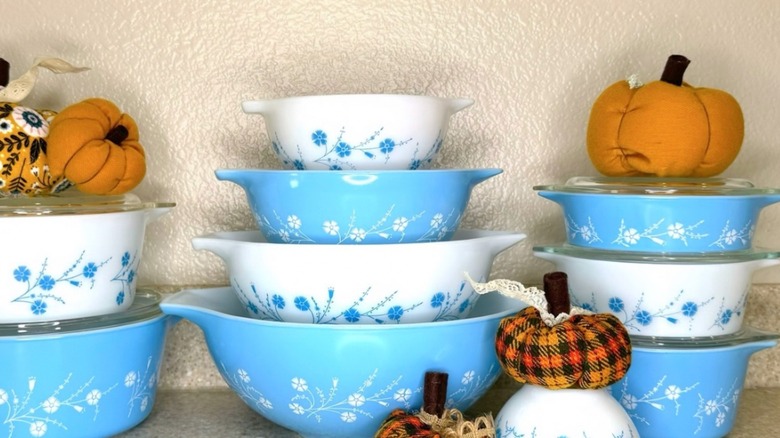
When you're browsing thrift stores and other spots to score vintage Pyrex, there are a few key things to look for. Knowing what dianthus flowers look like makes it easy to identify this pattern out in the wild. Just like the real thing, the flowers in the pattern feature five distinct petals with frilly edges, set among flowering vines. The vivid, cheerful shade of blue used is comparable to robin's egg or sky blue. Pieces were made in both white and blue, each decorated in the alternating color.
Dish type could also be an identifier, because blue dianthus was only produced in a few styles of dishes. You're not going to find authentic mixing bowls in blue dianthus, for example. The only pieces known to be produced in this pattern are the famous four-piece Cinderella bowl set (model numbers 441, 442, 443, and 444) and the three-piece casserole set (model numbers 473, 474, and 475).
Finally, there's the question of the stamp. Identifying authentic Pyrex cookware is typically easy because most pieces have a backstamp molded into the glass, including the word "PYREX" and a model number. Because they rarely come up for sale, there aren't many pictures of these dishes online that can verify they were stamped. If you're looking for vintage Pyrex dishes and manage to find a piece you think might be the real deal, but it isn't stamped, always check with an appraiser. Single blue dianthus bowls have sold for more than $2,500 in recent years — but a copycat design won't be worth splurging on.