

The Smart Reason People Are Spraying Their Windowsills With Vinegar
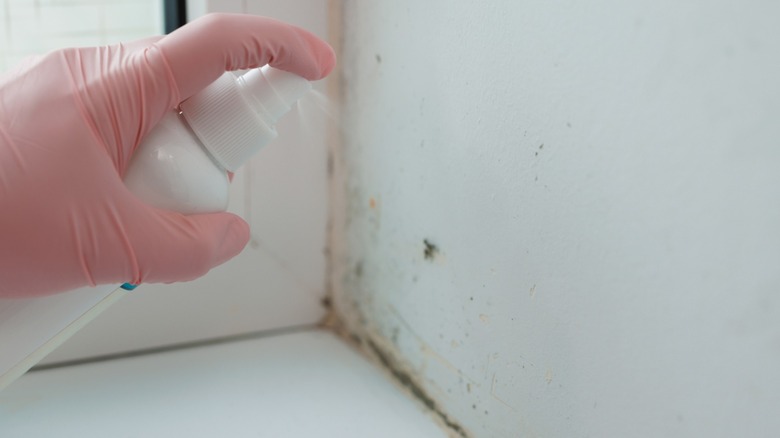
Acids have a scary reputation, mainly because the strong ones can do all sorts of other damage. But weaker ones like vinegar (yes, vinegar is an acid) have all sorts of helpful qualities. Household white vinegar is typically a 4% to 7% solution of acetic acid in water, and besides adding tartness to salads and French fries, it can kill many types of pathogens (not all, though) and dissolve dirt and grease. That's why some people like to use it to clean their windowsills.
A windowsill is a horizontal surface close to glass, and because of that, it's a specialized environment. Condensation that forms on the window can drip onto the sill, and mold loves to grow in that kind of condition. Not only that, bacteria-laden dust and dirt can collect there from the rest of the house — and from outside. An acidic disinfectant cleaner like vinegar is perfect for such an environment.
Not only can vinegar do the job of cleaning and disinfecting your windowsills, but it can do it safely. Although it has a pH of roughly 2.5, which makes it quite acidic, household vinegar is safe enough to use in food, so you generally don't have to worry about exposure. You might not like the pungent smell, but it will go away as soon as you're done cleaning, and it won't leave any residue. If you don't like the smell, try making your own Pine-Sol by infusing a vinegar solution with pine needles.
How to use vinegar for cleaning windowsills
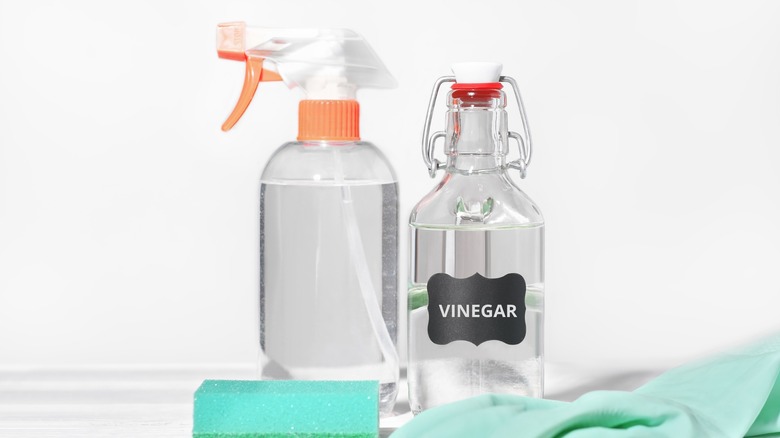
To make a cleaning solution that will degrease and disinfect while being safe for most surfaces, you need a 50:50 solution of vinegar and water. White distilled vinegar (the kind you're most likely to have in the cupboard) is best, but it's a little pungent, so if you're sensitive to smells, you may prefer organic apple cider vinegar, which doesn't have such a strong odor. However, apple cider vinegar does have a dark coloration and may stain some surfaces, so be sure to test on a small area before using it.
Mix vinegar with an equal amount of water in a spray bottle, then mist it generously onto the windowsill. Don't wipe it up right away, because it needs a little time to dissolve grease and dirt and to kill mold and bacteria. Give it a minute or two, and perhaps five minutes for particularly dirty sills. Don't forget to wear gloves because, after all, vinegar is an acid.
Because it's an acid, vinegar can dull glossy paint or finishes, and you may want to think twice before using it to clean stone or stainless steel. If your wood windowsills have a nice shiny finish and you want to keep them shiny, you're better off cleaning with something else, such as dish soap and water or a commercial "green" cleaner. To kill bacteria, consider using a natural disinfectant like thymol, an essential oil made from thyme that's actually more effective than vinegar.