

Not Just For Glass Doors: The Product You Should Use To Degrease Kitchen Appliances
We may receive a commission on purchases made from links.
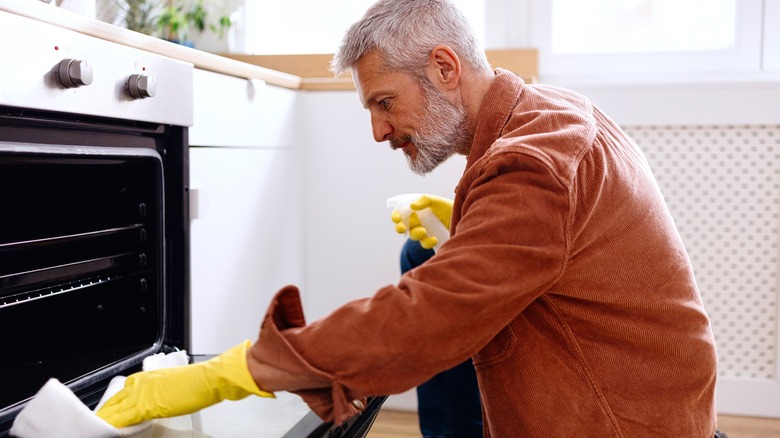
Grease and oils are a fact of life in the kitchen, and when the appliances start feeling grimy, it's hard to feel comfortable. It's no good trying to just rub them away with paper towels, because that spreads the grease around and makes a thin, dust-collecting film. You need a cleaner that actually cuts through the grease, and as luck would have it, the good old class cleaner you use for your glass doors may turn out to be as effective as any specialty appliance-cleaning agent.
One reason that this is effective is that, when you're using most glass sprays, you're cleaning with ammonia. Ammonia (NH3) is a gas, but it can dissolve in water. When it does, it becomes ammonium hydroxide (NH4OH), an alkaline solution that combines with grease to make a soapy emulsion that's easy to wipe away. It's so good at doing this that it's a common ingredient in soap products and also able to leave windows streak-free.
Not all glass cleaners contain ammonia, and those that do, like Windex Glass and Window Cleaner, give off an unmistakably pungent odor. Since there are some surfaces you should avoid cleaning with Windex, like granite, some wood finishes, and stainless steel, it's important to test an ammonia-based window cleaner on an inconspicuous part of what you want to clean before wiping it on the whole surface. If the cleaner leaves noticeable wear on the appliance or you aren't sure how it will react, you can still use a window cleaner that doesn't contain ammonia, such as Zep Ammonia-Free Glass Cleaner.
Using window cleaner as a general degreaser in the kitchen
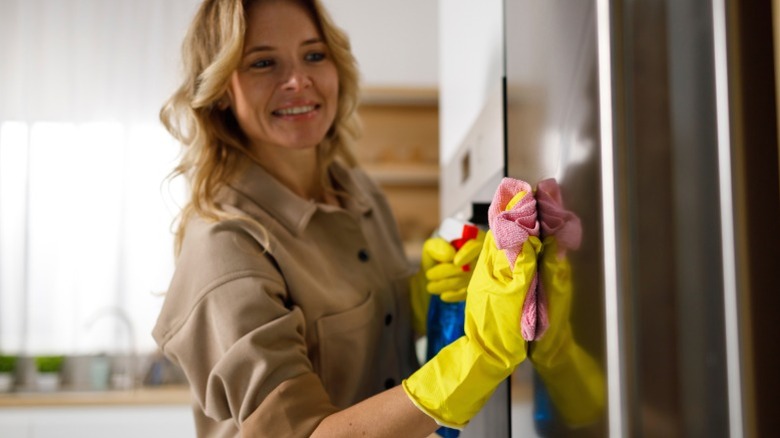
It turns out that there are all kinds of surprising uses for Windex and other window cleaners — you can use them to clean up in the bathroom, remove stains from carpets and upholstery, and restore sparkle to faucets and doorknobs. When you use one as an appliance degreaser, you need to give it time to work. So, you wouldn't just spray it and wipe it off immediately as you would if were cleaning a window. Instead, wait about 10 minutes after spraying before you wipe it down.
If you use an ammonia-based cleaner, it's important to remember that ammonia is a hazardous substance. When dissolved in water, it creates a caustic solution, and while the 5% to 10% concentration in glass cleaner isn't very strong, it's strong enough to require the use of gloves. Ammonia gas that evaporates while you're cleaning is also hazardous, so keep the area well ventilated and wear a mask if you're particularly sensitive.
Also very important: Never combine a cleaner that contains ammonia with one that contains bleach. The combination produces chloramines, which — fun fact — also give chlorinated swimming pools their distinctive odor. These gases can cause illness and even death when inhaled in high concentrations. If you want to disinfect your kitchen appliances after cleaning them with ammonia-based cleaners, hydrogen peroxide and isopropyl (rubbing) alcohol are safer choices than products containing bleach.