

The French Garden Secret You'll Want To Try In Your Own Backyard
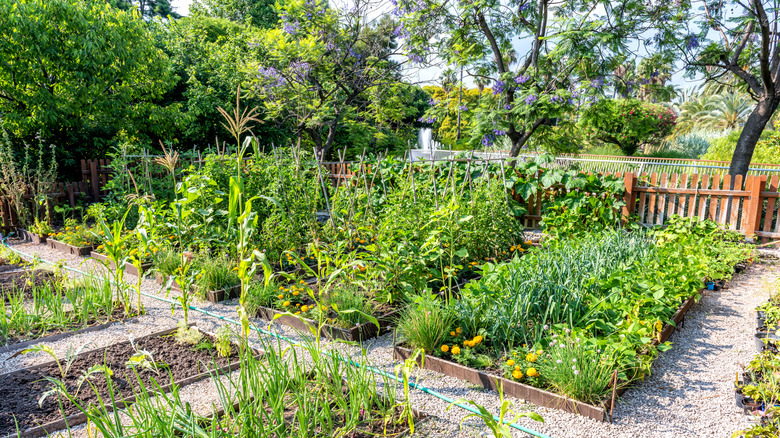
It's no secret that the French have mastered the magic of wine and cheese. But did you know that they have also developed a method of gardening that lets you grow more in a small space? French-intensive gardening, also known as market gardening, has been around for centuries. It's believed that it was the method used by gardeners with small plots who wanted to sell their crops at the local market.
At the heart of French-intensive gardening is the idea that less is more. You don't need a big garden bed to grow a lot of plants. In fact, spacing your plants closer together can be beneficial, as large, sun-loving plants can shield smaller, shade-loving ones from the sun's rays. Similarly, shallow-rooted plants can share the same space with deeper rooted plants, without competing for nutrients or moisture.
French-intensive gardening shares some features in common with square foot gardening, a method developed in the early 1980s. Both methods focus on the use of raised beds, using the right soil for a raised bed, and trading rows of plants for a square formation. The plants are close together in the garden, but not so close together that they crowd each other out. Both methods are an ideal way to make the best use of a small space and to cut down on water use in the garden. If you'd like to boost your garden's yields, give the French-intensive method a try.
Hallmarks of French intensive gardening
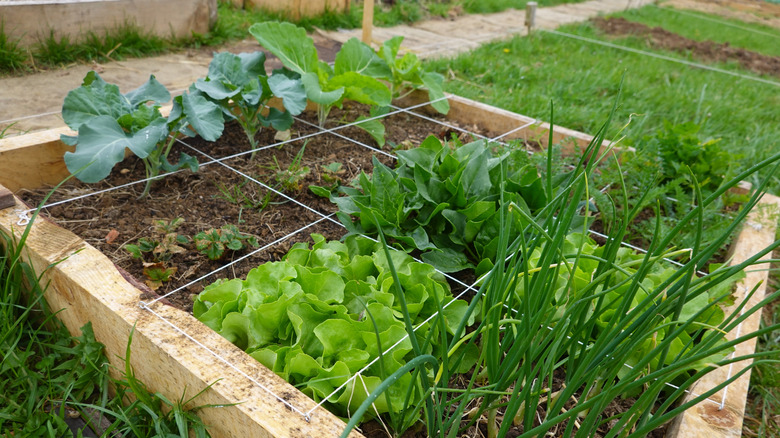
Companion planting and intercropping are two hallmarks of the French-intensive method. With companion planting, you plant two different types of plants near each other, with the belief that the two plants help each other out. For example, you may companion plant thyme near tomatoes. The thyme may help support the root system of the tomato plants and deter pests. The taller tomato plants can provide some shade to the thyme. The same is true if you plant other types of herbs, such as basil, near tomatoes.
Intercropping is similar to companion planting, but involves growing plants with different needs or maturity rates in the same area. For example, you might plant lettuce or radishes between tomato, eggplant, or pepper plants. Another common example of intercropping is planting beans with corn. The beans add nitrogen to the soil, which the corn needs. As the bean plants grow, they can use the corn stalks as a trellis.
The soil is another hallmark of the French-intensive method. Old-school French gardeners mixed manure into the raised bed at the start of the season to warm it up. Instead of manure, you might choose to add compost to your raised bed. Ideally, the compost will make up half of the soil. Finally, placement of the garden is critical when using the French-intensive method. Since you'll be relying on some of the plants to provide shade to others, pick a site that gets at least six hours of full sun per day.