

Don't Toss Old Plant Saucers — Use Them To Create Budget-Friendly DIY Pavers Instead
We may receive a commission on purchases made from links.
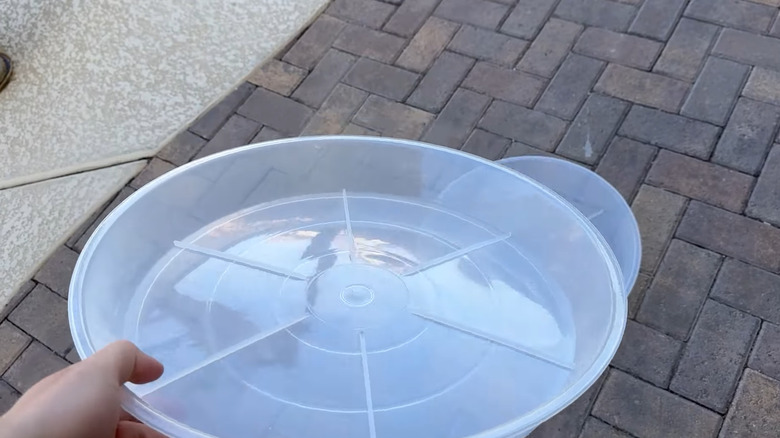
Going round and round about how to make an affordable paver path? If you're not afraid of a little manual labor, the answer could be in a bag of cement mix and that old plastic plant saucer you're thinking of tossing. It's an idea proposed by TikTok creator gardenwiththando, and the results are both visually stunning and affordable. This creative DIYer uses round plant saucers as forms to pour concrete circles that become homemade paver stones. If you don't have old saucers on hand, you can buy an inexpensive pack, like these Ovzilki Plastic Plant Saucers.
An 80-pound bag of Quikrete High-Strength Concrete Mix costs less than $7. The amount you need depends on the size and number of pavers you're making, but for standard 2-inch-thick pavers, a bag is enough for about 4 square feet of them. That means you can make a small paver walkway inexpensively. You'll need a container for mixing concrete and a drill with a paddle attachment for easier mixing. Another important part is cooking spray ... yes, the stuff you use to keep cakes from sticking! Or, use form release oil. Optional concrete pigment and embellishments, like pebbles, let you customize the stones. You can also add fiber reinforcement to prevent chipping and strengthen the concrete, similarly to wire mesh, but more sustainably.
Unlike traditional square and rectangular pavers, round stones offer a unique look with softer lines. They won't sit close together like straight-sided pavers, though, so they're not ideal for solid areas, like a fully paved patio. But what they do work well for is a whimsical path weaving through grassy areas of your backyard. You can leave the gaps grassy or fill them in with pea gravel.
Use pot saucers as molds for DIY stepping stones
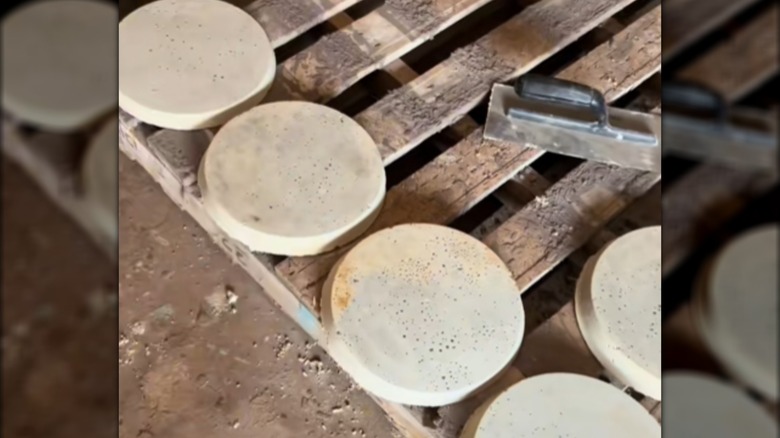
The process will go much faster if you have multiple plant saucer molds — the concrete needs to stay in the mold until it's solid. If you only have a few saucers, plan on taking a slow, multi-day approach to making your pavers. Mix the concrete according to the package instructions, making sure to mix it well to a thick (but not dry or crumbly) consistency. If you're using concrete pigment, mix it into the concrete at this point. The method can depend on the type of colorant you choose, but using an integral color that's stirred into the mix gives your stepping stones a consistent color throughout.
Prepare the plastic saucers by applying cooking spray or form-release oil to them. Pour the prepared concrete into the saucer until it's about half full. Then, shake or tap the saucer to release air bubbles in the concrete before pouring more concrete into the mold. If you want to use small rocks or pebbles to decorate the pavers, add them to the wet concrete.
Wait until the pavers dry completely to take them out of the mold. The timing depends on the type of concrete you use and the weather conditions. Turn the saucer upside down carefully to release each paver. Once you have enough, you can turn your ordinary pavers into the cutest DIY garden path with the extra satisfaction of having made those pavers yourself.