

She Turns Ordinary Pavers Into The Cutest DIY Garden Path
Is your garden a mucky mess every time it rains? Adding garden paths, walkways, and steps in your landscape can be a beautiful and functional way to avoid being up to your ankles in mud while weeding your favorite plants or sending the kids outdoors to play. However, bringing in the professionals can make hardscaping costs skyrocket, with Angi reporting that the average cost of a project lands around $9,000. If you need something more budget-friendly, look no further than Instagrammer karleegailbowman's DIY sunflower solution. She turns ordinary concrete pavers into the cutest garden path by painting them, then arranging them into sunflower shapes and surrounding them with mulch.
While this project is surprisingly customizable depending on the type of flower effect you want to achieve, prep work is key to ensuring your garden path holds up over time and is safe from trips and falls. Although you don't necessarily need to excavate your entire path, making sure you have a level base is important so your pavers lay completely flat. For the best results, plan your path route, remove unwanted plants and soil, and use a weed mat to help with weed control.
Once you've finished your site work, head to your local home improvement store for supplies. The DIYer used a large circular concrete paver for the center of her flowers, surrounded by trapezoid-shaped ones for the petals. You'll quickly discover there are dozens of paver colors, styles, and shapes that can inspire your own final results!
Create flowers for your DIY garden path with various paver shapes
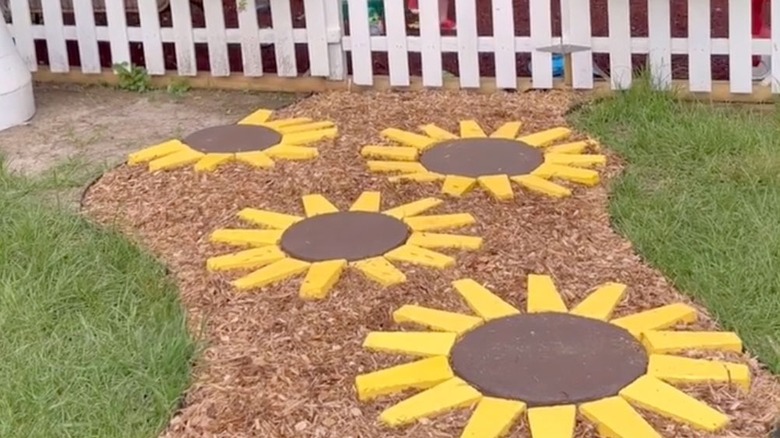
Proportion and scale are two of the most important principles of landscape design, and they're the key to making sure your new DIY paver garden path is functional. You can use either one large circular paver or a circle kit made of several smaller pavers designed to fit together (and that resemble seeds!) Whichever approach you choose, each circle should be at least 18 inches in diameter and, ideally, provide a little texture for extra stability in wet conditions.
Trapezoid pavers work perfectly to create a sunflower effect, but oval, crescent, or bullet-shaped ones can help you mimic other flower shapes. Other DIYers have created similar flowering footpaths by skipping concrete pavers altogether in favor of irregularly-shaped flagstone ones. While you can use whichever materials you prefer, your garden paver material choices will determine which types of paint work best if you decide to customize the color. Concrete pavers require specialty paint or stain designed for outdoor masonry. Low-luster acrylic latex paints can also work well for adding a pop of color to concrete pavers, since it provides some flexibility as temperatures change throughout the year.
To create your DIY garden path, start by setting your painted circular pavers into place. Then, surround them with your petal-shaped pavers. Finally, cover the entire path with a thick layer of mulch. Pay close attention to filling in the gaps between each petal, since this will help hold the pavers in place, create a smoother overall appearance, and minimize the risk of tripping.