

Forgotten '60s Kitchen Gadgets And Decor No One Uses Anymore
We may receive a commission on purchases made from links.
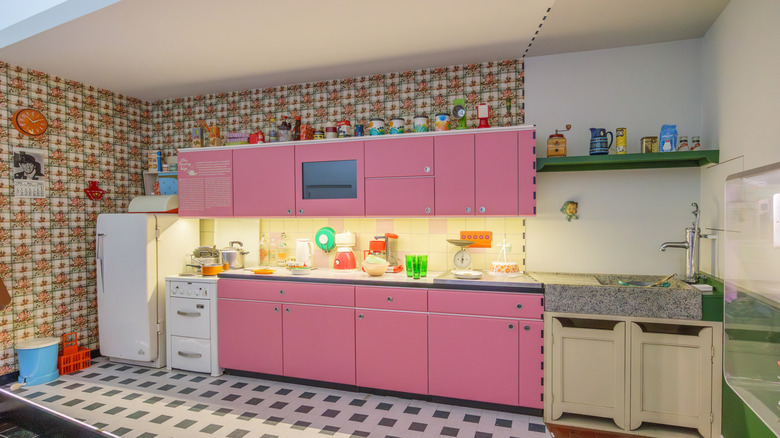
The 1960s were a time of great innovation, marking the rise of items still in use today, like color TV, the microwave, and children's car seats. Of course, for every still in-demand item, there are gadgets and decor choices that were everywhere nearly seven decades ago, yet nowhere to be found today. In some cases, that's for the best — there are quite a few 1960s kitchen design trends that should never come back, like wall-to-wall kitchen carpeting.
For the most part, some forgotten kitchen must-haves from the swinging sixties have been replaced by more efficient or easier to use items. The old rotary phone gave way to portable landline phones and eventually to smartphones, for instance (rotaries aren't exactly ideal if you've got a tiny kitchen and are looking to maximize your counter space). Many canned foods today have pull tab openers, meaning the old wall-mounted can opener is no longer needed. But, if you'd like to give your kitchen a '60s vibe, consider adding one or more of the following forgotten items to your decor.
Rotary phone
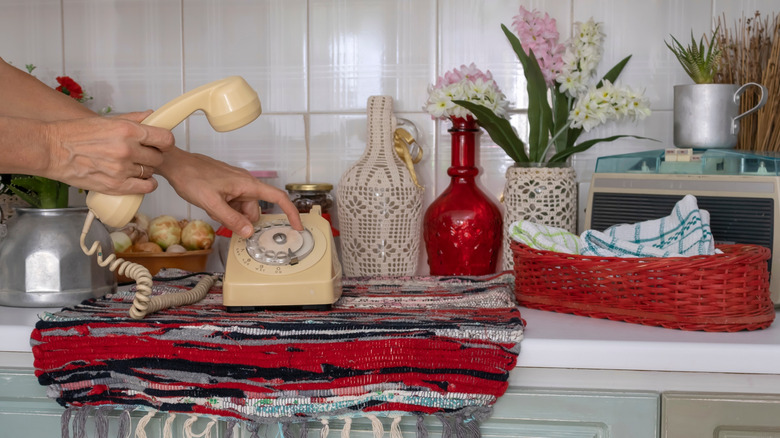
Back before everyone had a smartphone in their pocket, the kitchen was a popular place for the home's phone. That's right, phone in the singular, as many households had just one — and it was a big deal to get a second one, known as an extension, added. While rotary phones were a staple of 1960s kitchens, push button models started to come on to the market, too.
Having a phone in the kitchen makes sense. Housewives could chat with their friends while making shopping lists, prepping meals, or tidying up. After school, kids could phone up their classmates for homework help or to invite them over for playdates. And, as food takeout and delivery became more popular, having a spot to call for pizza or another meal in the dining space just made sense.
One thing those vintage phones got right was their sense of style. Often, they were in pretty pastel colors, such as mint green or sky blue. While you don't need a working rotary phone in your kitchen these days, you may want to put one there anyway, just for its looks.
Knotty pine
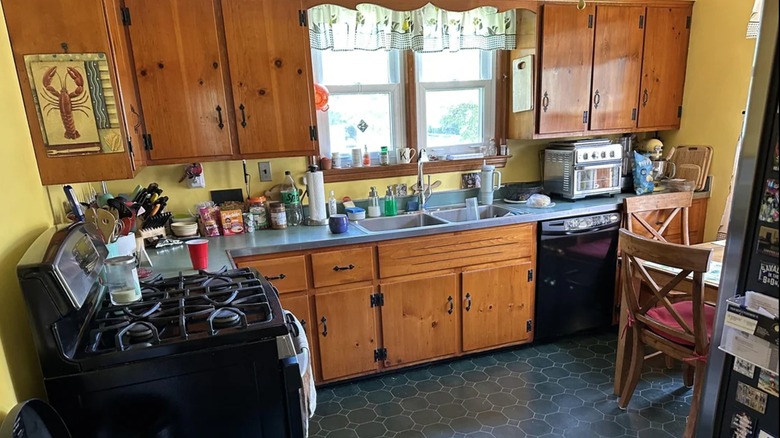
When you think of 1960s decor, what typically comes to mind is the space age aesthetic, like starburst clocks that you'd love to find at the thrift store or geometric prints. Popular woods for furniture and cabinets included teak and walnut. But, for all its focus on the new and modern, the '60s weren't shy about a little throwback. Plenty of homeowners — and kitchens – embraced the rustic farmhouse style, and with it, knotty pine.
Knotty pine is a divisive topic, with some people loving it and others, well, not loving it. The wood is often stained with a shellac that gives it a distinct orangey hue. Paired with Formica countertops or used as wall paneling, knotty pine can look a little dated as a decor choice. It's often the case that when someone buys a home with knotty pine in the kitchen, one of the first things they do is update it, such as by giving the wood a coat of white paint. But if you love the rustic look, knotty pine cabinetry may be something worth trying in your kitchen.
Swag lamps
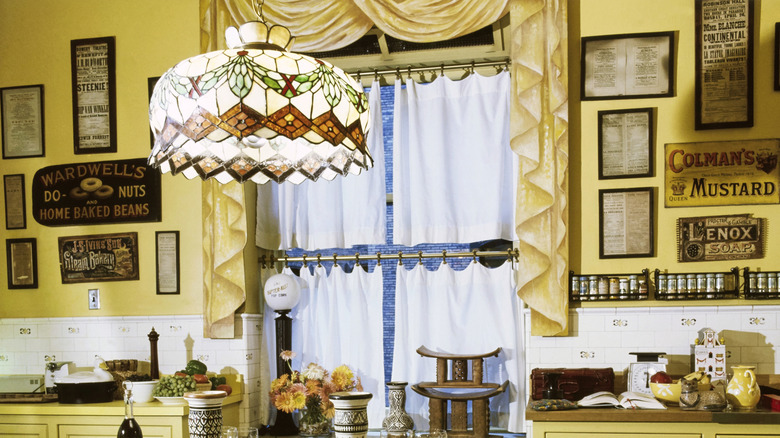
Hanging over many kitchen counters or tables in the 1960s was a swag light, a type of pendant lamp that isn't hardwired into the ceiling or walls. Instead, the cord of the lamp was visible and often woven through a chain that was draped across the ceiling or walls with hooks. Swag lamps could be simple, featuring just a plain white globe, or much more elaborate. A style that resembles a cluster of grapes, and made up of Lucite balls, has become a popular collector's item, with plenty of people showing off their grape lamps on social media. Tiffany-style lamps were also popular, thanks in part to an exhibit at the Museum of Modern Art in New York.
Swag lamps still exist, but you don't often see them in kitchens these days. Their flexibility makes them a great option for renters, since you can take them down and take them with you when it's time to move. They're also a great pick if you like to change up your kitchen decor regularly.
Wall-mounted can openers
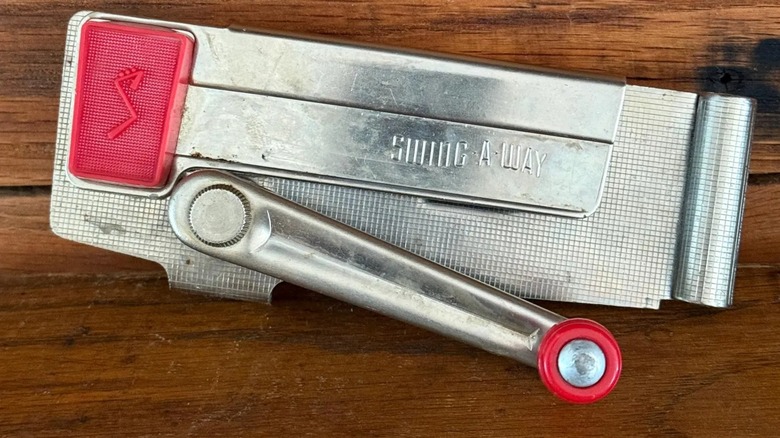
When you need to open a can of beans or cat food, where do you turn? Nowadays, you can most likely pull a tab on the can to pry off the lid. But, once upon a time, you needed to get out the old can opener to get into your beans. Plenty of kitchens in the 1960s skipped the step of opening a drawer by placing the can opener directly on the wall.
A popular wall-mounted model was the Swing-a-Way, which came in several colors, such as red. True to its name, the can opener swiveled out of the way when you weren't using it. And, when you were, a little magnet gripped the top of the can so you didn't have to hold on while opening it. Interestingly enough, you can still get your hands on a new Swing-a-Way wall mounted can opener, although some recent reviews suggest that they don't make 'em like they used to.
Built-in appliances
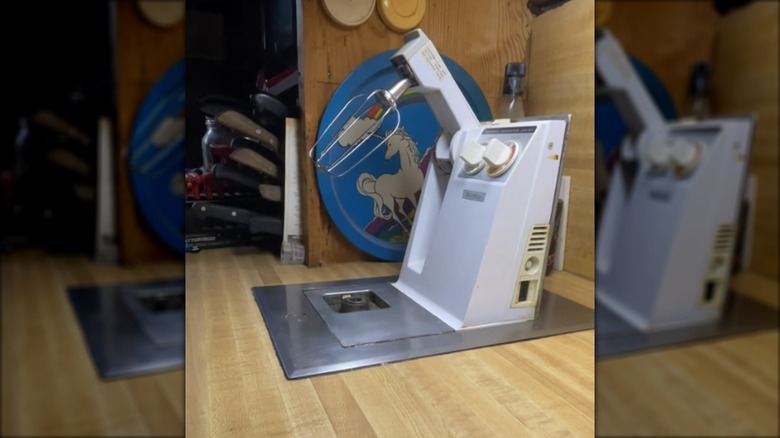
Small kitchen appliances, like your stand mixer, blender, food processor, and coffee grinder tend to be space hogs on the counter. This makes sense, because who wants to lift a heavy mixer out of the cabinet whenever it's time to make a cake? Now, imagine that instead of cluttering up your countertops, those same appliances were integrated in the surface and folded away neatly when not in use. That's what you'd get with the Ronson Foodmatic, a multi-purpose appliance that performed a neat party trick, folding down flat on the countertop.
The standard Foodmatic came with 14 attachments, letting you grind meat or coffee, crush ice, juice citrus, slice vegetables — you get the idea. Since the entire thing was built into the counter, there was even storage space below for all the accessories. While you may still find the Foodmatic if you happen upon a home with a kitchen that hasn't been updated, the company that made it, Ronson, faced financial difficulties in the 1970s and ended up shuttering its appliance division.