

The Smart Way To Reuse Vintage Doilies In Your Cabinets & Drawers
We may receive a commission on purchases made from links.
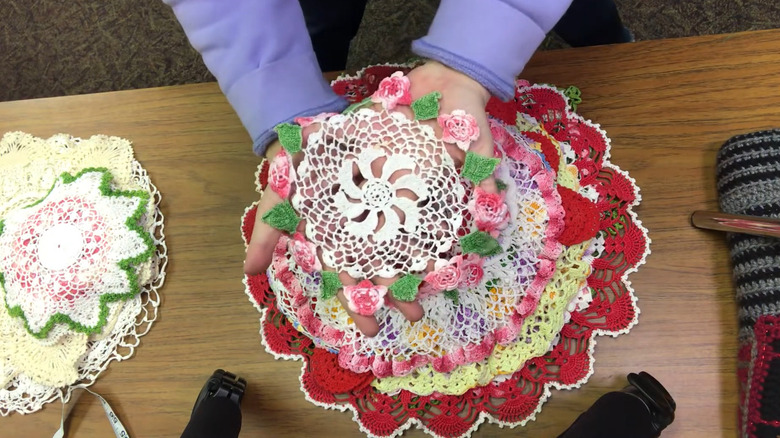
A charming relic from the past, hand-crocheted doilies often bring back memories of trips to granny's house. Whether sourced from a thrift store or inherited from family, these items carry a strong sense of nostalgia and comfort. In some cases, you'll use them the way they were intended — on tables or draped over sofas. Other times, there's room for creativity. In this case, the idea is to use vintage doilies as decorative protectors for fine china when you store them in cabinets or drawers.
Ceramic pieces create beautiful place settings, but the material can also be fragile. When you stack plates or cups (which is common for space-saving reasons), you could unintentionally cause scratches, cracks, or chips. While those issues affect the looks of your fancy dishware, they can also weaken it and force you to toss part of the set. Properly storing fine china helps minimize those damage risks. That's why many people use some type of protectors between the pieces.
You can buy premade versions, like these Imncya Felt Plate Separators, but putting a vintage doily between each plate, bowl, or cup adds a homespun twist on the idea. It's a little more decorative and unique than the uniform felt versions. Plus, round crocheted doilies match the shape of most dinnerware, and the thick fabric keeps the pieces from scratching one another. It's also a layer of padding between the fragile pieces. If that weren't enough, you can always style the vintage doilies on the table when you break out the china.
Layer doilies between china for protection
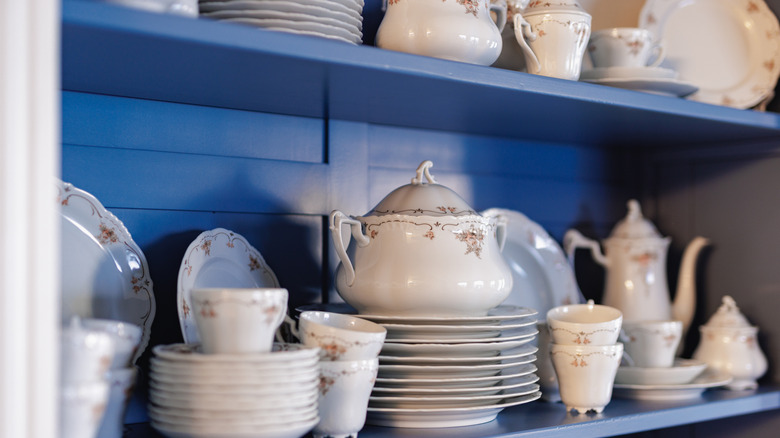
If you didn't inherit a stockpile of doilies from your grandparents, buy them from someone else's relatives at thrift stores, flea markets, or estate sales. There are plenty of ideas for repurposing thrifted vintage doilies, so you'll find a new use for any you buy. You likely won't find enough matching doilies to place between all of your plates, but you can at least find several in the same color. Or, if you're up for it, dye the doilies a new color to coordinate with your dinnerware.
Sizing is important to maximize protection. You want the doily to be roughly the same size as the piece you're protecting to get adequate coverage without a lot of excess around the edges. Small 4-inch doilies fit saucers perfectly, while 5-inch rounds align with the dimensions of butter plates. For cups and salad plates, set aside 6- or 8-inch doilies. Dinner plates take the largest size, usually 8 to 10 inches. Count how many doilies of each size you need before you go thrifting.
At home, gently clean the old doilies by soaking them in warm, soapy water. Machine washing can be too rough on older fibers. Make sure they're fully dry before using them as china protectors — they could grow mold if they're sandwiched between plates in a dark cabinet or drawer. Alternate between china pieces and doilies as you stack the dishes.