

Say Goodbye To Ground Wasps With A Natural Solution They Can't Stand
We may receive a commission on purchases made from links.
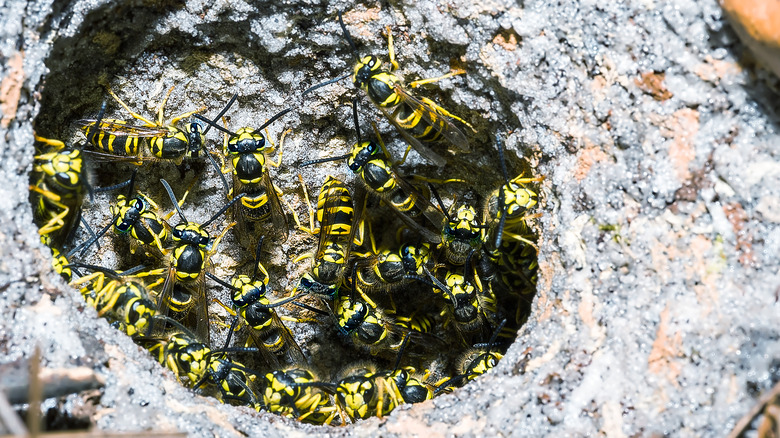
Of the more than 100,000 types of wasps in the world, only some species build nests in the ground. These are known as ground wasps, and they can include both social wasp species and solitary types, like sand wasps and cicada killer wasps. Ground wasps aren't inherently problematic, but there are several reasons why you might not want them around your yard. This is especially the case with social types such as yellow jackets, which can become aggressive if you, a child, or a pet accidentally encounter their nests. From an ecological standpoint, it's usually best to leave these nests alone, but you might need to consider eradication if they pose any danger to your household. Instead of using chemical-based wasp repellents, which often do more harm than good, you might consider applying diatomaceous earth as a natural alternative.
Diatomaceous earth is a powder made from the fossilized shells of aquatic algae known as diatoms, which are found in the sediments of fresh and saltwater sources. This flour-like substance works against pests by damaging their exoskeletons and eventually killing them through dehydration, but it won't harm other outdoor wildlife, such as birds. While there are some concerns about the efficacy of diatomaceous earth against outdoor pests, this mostly comes down to weather. The powder works best on dry surfaces, which can be challenging during periods of wet weather or in more humid regions. Nevertheless, diatomaceous earth may still be worth a try if the conditions are right.
Tips for using diatomaceous earth for ground wasps
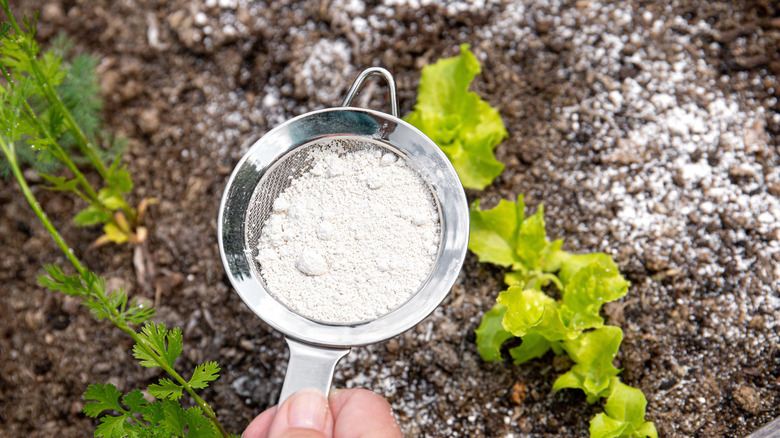
Diatomaceous earth has garnered a reputation as a natural pest control solution to keep bugs at bay. With ground wasps, the powder is primarily used to help get rid of active nests built around yards and gardens. For the best results, apply diatomaceous earth in the evening, when the wasps are less likely to be active. You can dispense the product into a disposable cup and pour it into any properly identified ground wasp nest openings, but you'll need to do so quickly and leave the area immediately.
Be patient as you wait for the diatomaceous earth to take effect, as it can take up to a few days to fully work. You might also need to reapply diatomaceous earth to see the full results, particularly if it rains. Keep any kids and pets away from the area until you are certain the ground wasp problem has been completely resolved.
While diatomaceous earth can be an effective natural solution for ground wasp control, you may need to take other steps if you find a ground wasp nest in your yard. If you feel the situation has become dangerous for the people and pets in your home, for example, you should consider enlisting the help of a professional pest management expert. It's also worth noting that ground wasps don't typically reuse their nests from year to year. This means that, when the wasps vacate their nest after the end of summer, you can physically remove them without having to waste your diatomaceous earth.
Buying the right diatomaceous earth formula for wasps
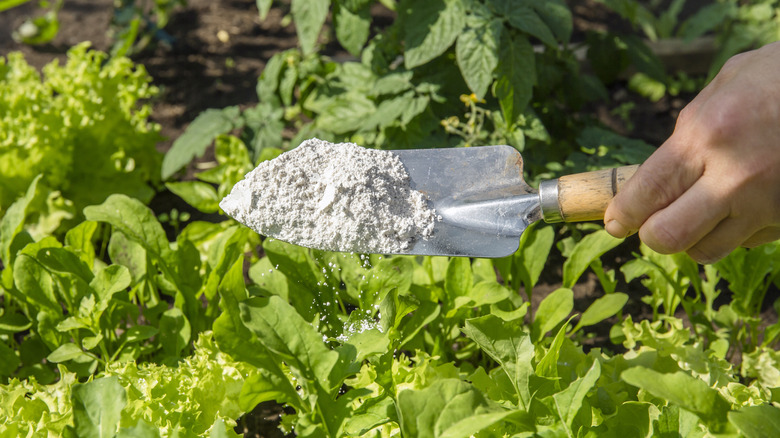
Diatomaceous earth is widely available both in home improvement stores and at online outlets. One example is RobiGuard Diatomaceous Earth Peppermint Powder, which is specifically designed for pest control. Always make sure any diatomaceous earth product you buy for pest control purposes is labeled as food grade, and wear dust masks to reduce the possibility of respiratory and nasal irritation. Never use pool-grade versions, as these are formulated with toxic crystalline silica that can be extremely dangerous when inhaled.
Keep in mind that, while diatomaceous earth is considered a mineral insecticide, not all products on the market are intended for pest control use; these may lack the appropriate cautionary labels for such purposes. Many are also labeled for use against crawling (not flying) insects, so results may not be 100% guaranteed. As with any wasp control method, extreme caution must be used to avoid the wrath of the angry wasps you're trying to eradicate. You might also consider using diatomaceous earth to control other kinds of pests. For example, if you do find a version of the product designed to be used against crawling insects, you could sprinkle it around doors and windows to help keep ants out of your home.