

Prevent Future Carpenter Bee Nesting Along Your Roofline With A Smart DIY Solution
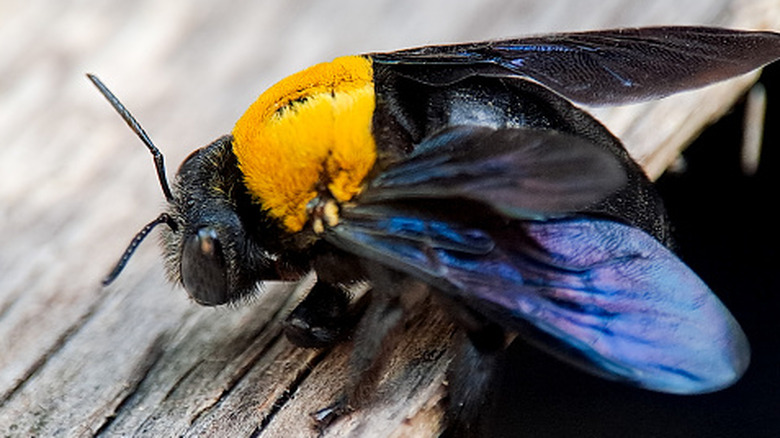
If you find a carpenter bee nest in your yard after a previous roofline nesting problem, don't panic. You can still prevent future carpenter bees from burrowing along your roofline with a smart DIY solution. Having a carpenter bees problem along your roofline can be frustrating. On one hand, the critters are great pollinators and helpful to have around if you want a thriving garden. Yet, on the other hand, they really live up to their name, burrowing into rooflines to build extensive tunnel networks to lay their eggs. The worst part is that once carpenter bees start nesting somewhere, they often come back to the same spot annually. Although the bees don't tend to cause any structural damage to your roof, only cosmetic, the damage is still a pain. Luckily, all you need to do to prevent them sticking around for years to come is to wrap aluminum or vinyl siding around the boards on your roofline. This prevents the bees from having access to their previous nests.
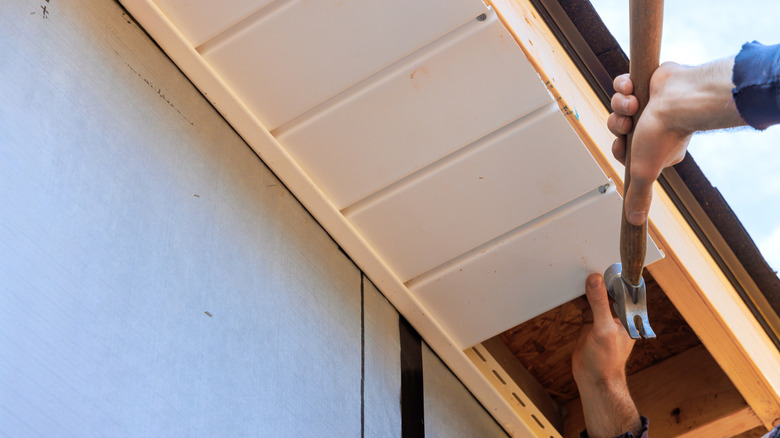
Installing or replacing vinyl siding is easy, as is any aluminum option. Even newer DIYers can complete this task in an afternoon, making it an accessible, durable solution. Carpenter bees can't really chew through these other materials — just wood. So, by placing this siding between them and where they want to be, the bees will likely move on.
How to use siding to prevent carpenter bee nesting
The first thing to know is the best time of year to add the siding. Carpenter bee nesting season varies across the country. The farther south you are, the earlier it starts. In Texas, start preventive measures in February. If you live in Michigan, you should typically start by April. Next, know that if you would like to replace the damaged boards along your roofline before adding the siding, that's fine. However, the bees will then just bore into the new wood if it's not protected, leaving you right back in the same spot. Instead, to save yourself a little hassle, it's easy enough to simply work with the existing, damaged board since you are going to cover them up anyway. Just remember to treat the area with some sort of insecticide or natural pest control method before you begin the sealing process. This way, you don't trap any of them (or their eggs / pupae) inside. They can chew their way out and cause more issues.
Finally, pest control experts warn that this easy DIY solution won't work unless you cover all three exposed faces of the wood with siding. If you only cover the two clearly vulnerable faces, the bees will just seek out the wood on the bottom. So cover the front, back, AND bottom of the fascia boards for permanent results. The top is attached to the roofline, so it is not vulnerable to the bees.