

Keep Brown Recluse Spiders Out Of Your Home With An Easy DIY Solution
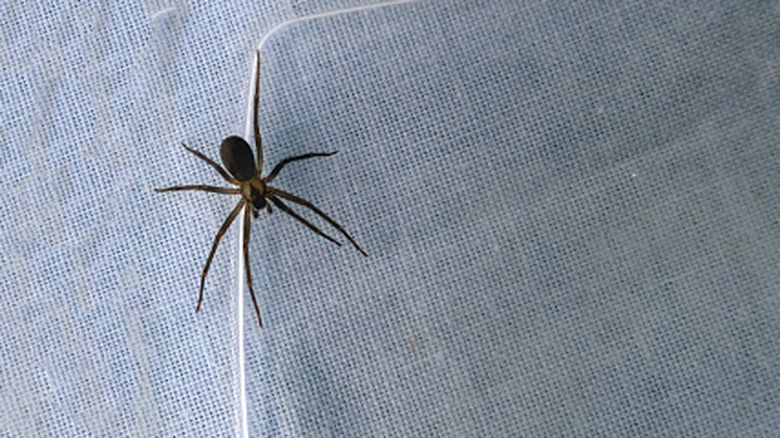
If there's one spider you don't want to find when you pull back the bed covers, it's a brown recluse (Loxosceles reclusa). Also known as the fiddleback or violin spider because of the violin-shaped markings on its back, this spider's small size belies the severity of its bite. It's only about 1/3 inch (9 millimeters) — not including the legs — and its light brown coloration allows it to blend with the background, so it's easy to miss. If you want to keep your home recluse-free, the best DIY method is to seal entry points and to keep your space clean.
The South Central and Midwestern parts of the United States are the brown recluse's natural habitat and the places where you're most likely to encounter one. Other parts of the country aren't necessarily safe, because an individual spider may sometimes hitch a ride on a parcel or food container. Besides that, other closely related species may be endemic, such as Loxosceles deserta in the Southwest, and Loxosceles devia in Texas. These relatives also have potent bites.
Forget about swatting a brown recluse before it bites you, because there's a good chance you won't even see it. It's called a recluse because it likes to hide, and it's good at it, typically choosing tiny, confined spaces where insecticides sprays and dusts can't reach it. The best way to get rid of spiders is to eliminate those hiding spaces as best you can.
Discourage brown recluse spiders by sealing and cleaning your home
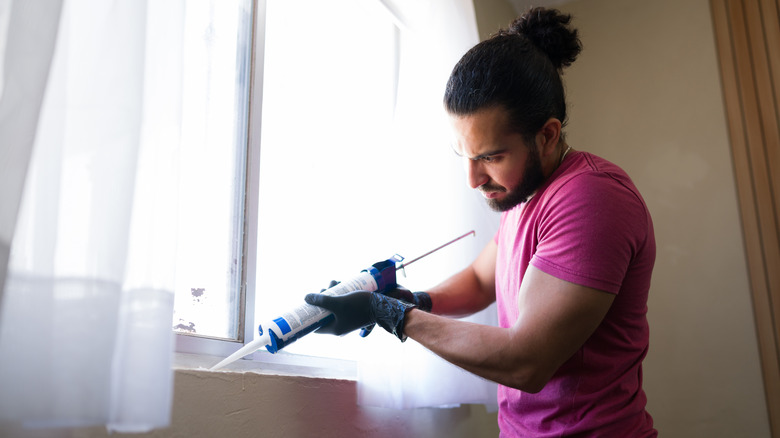
The spiders are small enough to fit through small cracks and gaps, so you have to be thorough with sealing entry points. Caulk small cracks in the baseboards and foundation, and pay particular attention to gaps around doors and windows. If you're storing boxes in the attic or basement, make sure to seal them, because they provide a favorite hiding place. You also need to inspect items you carry into the house, like grocery bags, firewood, and potted plants, to make sure you aren't inadvertently bringing them in.
Just as important as sealing your home is cleaning it to prevent spiders from making it their winter home. The cleaner you keep your home, the fewer hiding places there are for spiders. Vacuum and declutter, and don't forget to remove existing cobwebs with a broom. Like other spiders, brown recluses and related species weave webs, but unlike other spiders, brown recluses don't use them to trap other insects. They use them as retreats, so you have to be careful, because where there's a web, there could well be a spider. Wear gloves and keep your distance.
Insecticides can be useful, not to control the spiders themselves, but to kill the insects on which they feed. If you spray the foundation and baseboards with a long-lasting insecticide, and vacuum up dead insects whenever you see them, you'll deprive any brown recluses that may be lurking outside of an incentive to come inside.