

What To Do If You Find A Cicada Killer Wasp Nest In Your Yard
We may receive a commission on purchases made from links.
For many people, wasp nests are unwelcome findings around yards. Not only do certain wasps pose dangers to unsuspecting victims who encounter them, but their nests can also be unsightly. Cicada killer wasps (Sphecius speciosus) are one such insect that can understandably cause concerns due to their large size, as they can grow more than 1½ inches long! Preventive measures are the best ways to stop them from building nests, but what if there is already a nest? While leaving the nests alone is ideal, you might need to consider getting rid of them if there are multiple or if you have young children or pets.
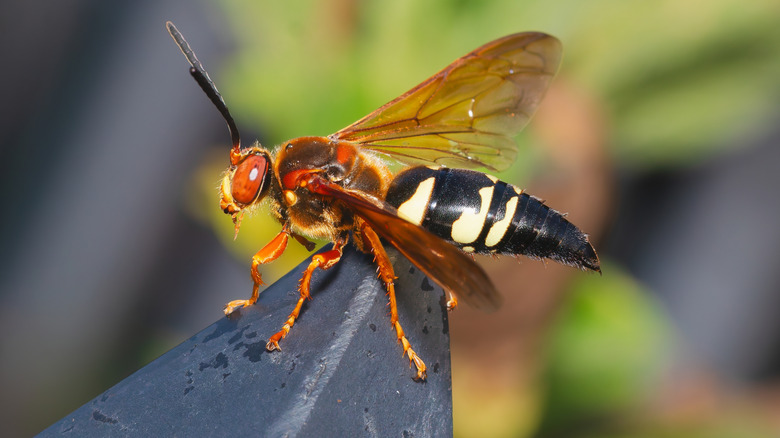
Aside from their size, these cicada killer wasps are identifiable by their red colored heads and large yellow and black stripes on their bodies. Also simply known as "cicada killers," their name is derived from the larvae's preference for eating cicadas. Once they become adults, cicada killer wasps eat nectar from flowers. While the female wasps can cause painful stings when threatened, this only occurs when handling or disturbing them.
First, it's important to know what cicada killer wasp nests look like. Unlike paper wasps, which tend to build visible nests around structures, cicada killers build their nests in the ground. They prefer areas of bare soil so they can easily burrow. Examples include lawns with bare spots or landscape beds lacking mulch. Once a female cicada killer wasp starts burrowing, she may dig up to 10 inches into the ground. One tell-tale sign of this type of wasp nest is a small U-shaped mound of dirt with a large entrance hole in its center.
When to consider removing cicada killer wasp nests (and how)
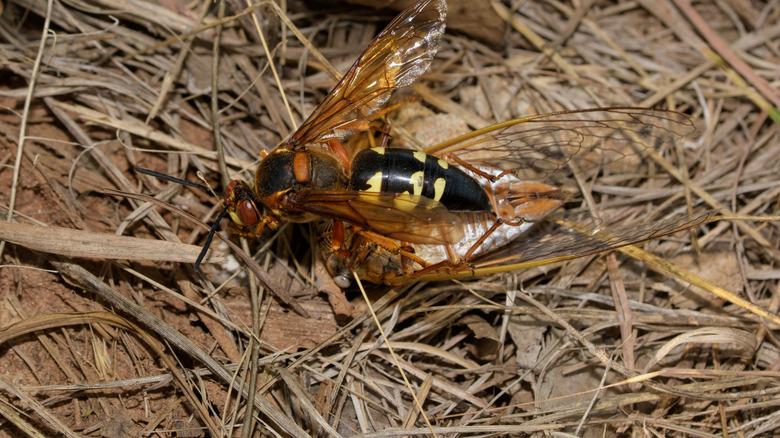
Despite their intimidating appearance, cicada killer wasps don't typically pose a danger to people. In fact, these solitary wasps are considered beneficial for the ecosystem at large, especially with cicada control. This is why most university extensions advise against getting rid of these insects. Nevertheless, it can be daunting when you're faced with cicada killer wasp nests in your yard (especially if there's more than one). And even though they don't actively seek out people or animals to attack, the fact that the females can sting might be reason enough to eradicate the insects and their nests from your property.
Pesticides are generally a last resort, as they can harm other beneficial insects in the area. Carbamate-based pesticides such as Sevin Dust may be applied directly into the nest tunnel, but be sure to follow all product instructions carefully before use. For widespread cicada killer wasp issues, you might consider working with a professional pest control company to resolve the problem.
Know that even if you are successful in getting rid of a cicada killer wasp nest, this won't necessarily stop future wasps from burrowing in your yard if they find favorable nesting conditions. To that end, you can deter burrowing cicada killers by maintaining a healthy yard. Ensure that there are no bare spots in your lawn or landscape beds by reseeding grasses, planting ground covers around trees, and mulching, as appropriate. A properly irrigated lawn can also help during the summer nesting season — just be careful to avoid overwatering.