

This Easy-To-Grow Flower Attracts Hummingbirds & Smells Like Fresh Baked Cherry Pie
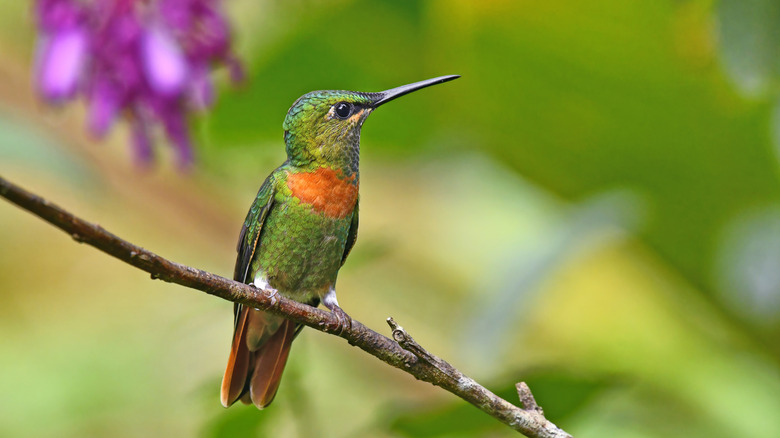
With their fluttering wings and vibrant feathers, hummingbirds are a stunning sight to behold. If you'd like to spot these magnificent creatures more often, you can bring more hummingbirds to your garden by planting one sweet-smelling flower. Heliotropes (Heliotropium arborescens), also known as cherry pie flowers, are incredibly fragrant and smell like freshly baked cherry pie or cooked cherries. Hummingbirds are more focused on the way flowers look than how they smell, of course, but the nectar inside heliotropes is enough to attract these gorgeous birds alone. Cherry pie flowers are also a favorite of other pollinators, including butterflies, moths, and bees.
Though there are many flowers that attract hummingbirds, cherry pie flowers are fairly simple to grow and take care of. They can be perennials when grown outdoors in USDA zones 9 and 10, but they're more often planted as annuals: With blooms in shades of blue, white, purple, and sometimes pink, heliotropes make for beautiful summer decor for your outdoor space. As annuals, they're hardy to USDA zones 3 to 10.
Some varieties of heliotrope flowers have more of a vanilla or almond-vanilla aroma, but, either way, the blossoms are renowned for smelling delicious. Despite this inviting aroma, however, it's worth knowing that heliotropes are poisonous to people if eaten. For this reason, be sure to keep your cherry pie flowers away from curious children.
Caring for cherry pie flowers to encourage hummingbird visits
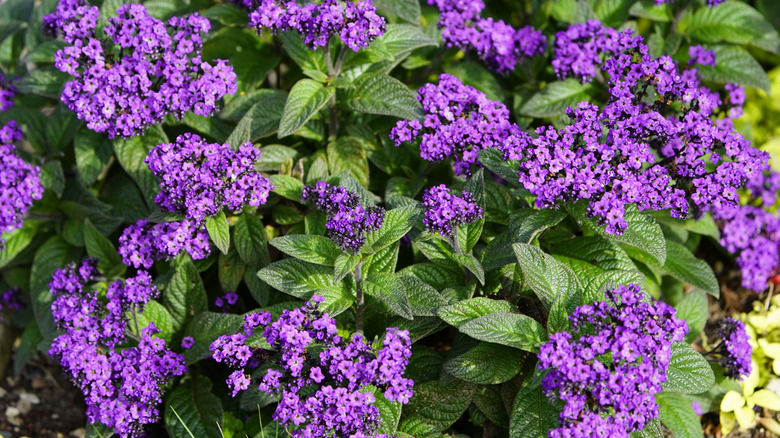
Heliotropes are tropical and temperate shrubs that thrive in heat and drier conditions, making them great flowers for attracting hummers in summer. Besides being somewhat resistant to drought, cherry pie flowers prefer moist soil. If your plant is potted, water the flowers frequently so that the soil doesn't completely dry out between drinks. When planting heliotropes in your garden or a container, be sure that the soil is rich in nutrients. Place your flowers in a location that gets bright direct sunlight for about six hours a day, particularly in the morning. In places with hotter temperatures, heliotropes prefer shade in the afternoons. Fertilize your plant once a month while it's flowering.
An easy-to-grow, hummingbird-friendly flower, heliotropes typically bloom in the middle or the end of the season. To encourage your plant to grow even more blossoms, prune the main stem. Deadheading spent flowers will keep your heliotropes blooming for longer, which could entice the hummingbirds to stick around for a while longer, too.
These flowers work well both in the garden or as potted plants, and containerized heliotropes can be moved indoors to overwinter them; heliotropes tend to do well as houseplants. When planted in the garden, however, these adorable flowers usually won't make it through the frost. Planting your cherry pie flowers in pots should allow you to use the same flowers to bring hummingbirds back to your space every season.