

Say Goodbye To Wasps With A Few Common Kitchen Ingredients You Already Own
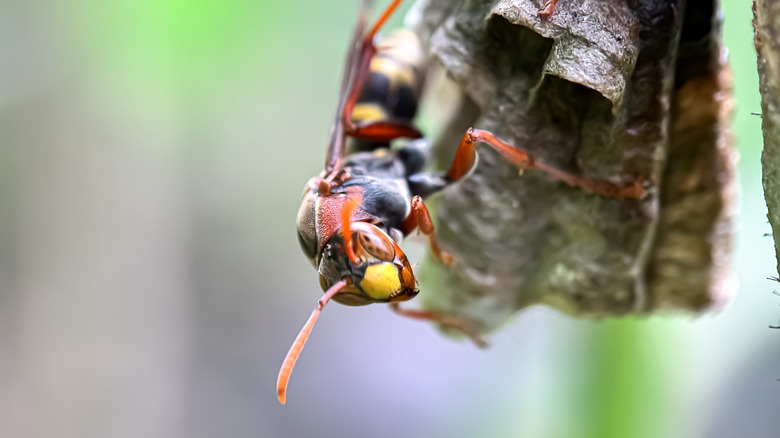
While they are beneficial to the environment in many ways, there is no denying that having wasps in your yard is not an enjoyable experience. Apart from buzzing around your food and trash bins, wasps are incredibly aggressive and will sting multiple times. This can be especially dangerous for people with bee-related allergies. While commercial wasp killers are effective, there are many who prefer a more holistic, chemical-free approach. If this is you, there are a few common kitchen ingredients you already own that could help you say goodbye to wasps.
One of the easiest ways to make a homemade trap for yellow jackets or wasps is to cut the top of a soda bottle off and invert it into the bottom half of the container that's filled with a concoction of sugar, water, and apple cider vinegar. The sugar draws the wasps into the trap, and the water/vinegar solution eventually drowns the wasps. Perhaps the most important ingredient here is the apple cider vinegar, which bee expert Peter J, Irenicus explains to Homes and Gardens is "much better than sugar water alone" because the sickly sweet smell draws them in.
Irenicus also recommends adding dish soap, as it will break the surface tension and draw the wasps into the trap faster. A Redditor on the Calgary board shared a picture of a container of this exact mixture filled with drowned wasps. By all accounts this natural approach appears to be an effective method. However, it only works if you use the correct vinegar.
Ridding your yard of wasps depends on what vinegar you use
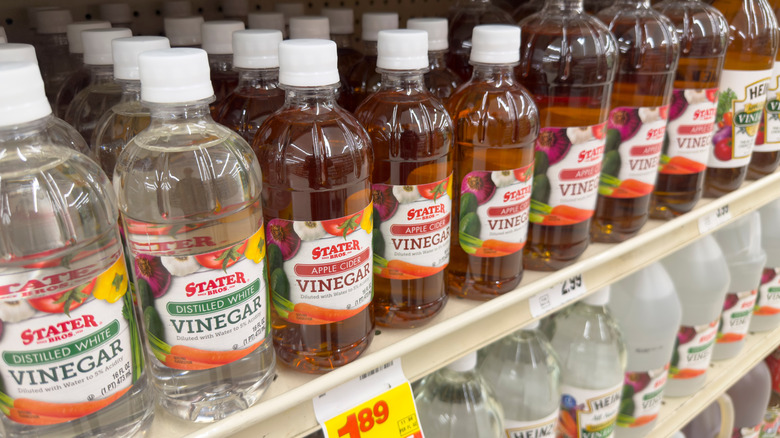
White vinegar is a common ingredient in many DIY bug sprays and repellents, and with good reason. The high levels of acetic acid present in the vinegar is highly repulsive to wasps because of their keen sense of smell. The acid burns them as they draw it in through their soft exoskeleton, and they flee as a result. So, if you want to keep the wasps away from you summer picnic, a spray made with white vinegar is going to be effective.
However, it is important to understand that you should never seek out wasps and spray them directly with vinegar. Since the vinegar can't kill them, they'll just get angry and be more incensed to attack you. Instead, spray the vinegar solution around places you know the wasps will be, like the grill or picnic table.
While the white vinegar will be great as a natural wasp repellent, it doesn't actually get rid of them. In this case, apple cider vinegar would be better. Owing to the fact that there are natural sugars present in the apple cider vinegar, the wasps will be naturally drawn to it. This then, essentially, tricks them into the trap. So, your choice in vinegar depends on whether you want to kill wasps, or just repel them. Either way, it'd be worthwhile to test either method and see which one works best for you.