

Neither Crabgrass Nor Spurge Weed: The Overlooked Weed Quietly Destroying Lawns
Achieving and maintaining a healthy lawn requires key practices that promote healthy grass and weed control. You might already be on the lookout for some of the most common weeds that grow in home lawns, including crabgrass, spurge weed, dandelion, and thistle. These all have different characteristics and timeframes for when they can pop up and take over a lawn. Another weed you might not be as familiar with is creeping Charlie (Glechoma hederacea), but it's important to be aware of this invasive plant and to know how to identify and manage it before it's too late.
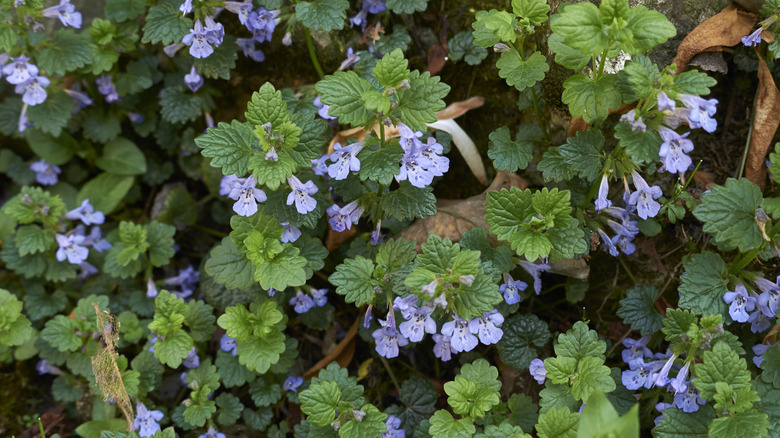
Also commonly known as ground ivy, creeping Charlie is an herbaceous perennial plant originally from Europe. Today, creeping Charlie can be found in most parts of the U.S. where it's considered an invasive weed. Like other members of the mint family, creeping Charlie can thrive in lawns, thickets, and along roads alike. It's identifiable by its one-foot tall foliage that grows low to the ground, with scalloped-shaped green leaves that are about an inch in size that also smell minty when they are crushed.
Creeping Charlie also produces fragrant, tubular-shaped flowers in the spring that can be blue, lavender, or purple in color. Don't let these pretty flowers fool you, though. Once it gets going in your lawn, creeping Charlie can quickly take over and leave your property with mostly weeds instead of turf. True to its name, creeping Charlie rapidly spreads in a creeping-like manner and spreads via its stolons, seeds, and rhizomes. Needless to say, unless you want a lawn full of creeping Charlie, year-round management and prompt eradication are crucial to success.
What to do about existing creeping Charlie in your lawn
Due to creeping Charlie's preference for moist soil and part sun, you're most likely to see this weed starting in the spring months. It doesn't thrive as well in heat, so you might notice it goes dormant during the summer. With these growing conditions in mind, you can take steps to prevent this weed from taking hold in your yard by making sure your grass gets adequate sunlight and drainage, and to reseed areas where the grass is getting thinner. Regular mowing can help improve grass density so weeds like creeping Charlie cannot take root as easily. You'll also want to resist overwatering grass during the spring, and know when to fertilize your lawn.
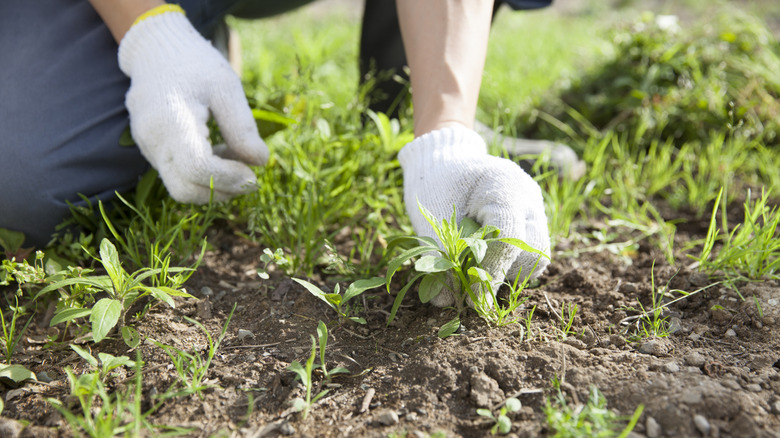
Once you see creeping Charlie in parts of your lawn, your mission is to remove it before it spreads and destroys your yard. If you only see a few plants, you may be able to hand-pull them by the roots. However, larger patches may require the use of a dethatching tool, followed by grass re-seeding. While you may try different ways to kill creeping Charlie without weed killer, know that herbicides are historically the most effective measures against this problematic plant. Look for a post-emergence herbicide, such as those containing sulfentrazone or triclopyr, and be sure to follow all package instructions carefully before use. These are best applied during the fall months.
Be aware that it might take several seasons to completely eradicate creeping Charlie from your lawn. In the most severe cases, homeowners might have to make the hard decision to treat the entire lawn and reseed grass from scratch.