

Keep Flies Away All Summer With An Easy-To-Grow Flower They Can't Stand

Flies are among the summer's most irritating insects, and they can quickly ruin a BBQ or picnic — while possibly transmitting diseases in the process. At the same time, you might not want to use short-term chemicals to repel them. Certain hacks can keep flies away from your home and patio, and natural methods of fly control are often a desirable alternative to insecticides. To that end, you might consider using strong-smelling plants to your advantage. In particular, flies are said to dislike the smell of scented geraniums (Pelargonium spp.).
Geraniums are some of the all-around easiest flowers to grow. Popular in home gardens, many varieties can add both visual appeal and a pleasant fragrance to your outdoor spaces. That fragrance comes from the natural oils located in the plant's foliage. While humans might enjoy the smell of popular species such as lemon geraniums or peppermint geraniums, however, certain insects might not. That said, while scented geranium flowers are certainly fragrant, it's worth knowing that they're not as potent as the leaves themselves; the best way to release that fly-repelling odor is to burn sprigs of the plant or crush the foliage.
These plants are perennials in USDA hardiness zones 9 to 12, but they can be grown as annuals outside of these areas, too. Just make sure all frost danger has passed in your area before planting. Be warned, too, that the plant's leaves can be toxic to humans and pets, especially when eaten in large quantities.
How to grow scented geraniums to help deter flies
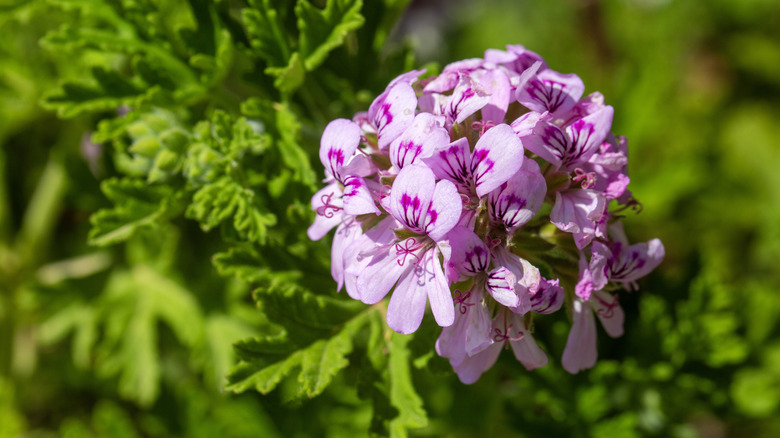
You can plant scented geraniums in containers or directly in the ground — just make sure the desired spot gets at least six hours of direct sunlight every day. Expect each plant to grow up to 1 to 2 feet tall and wide. Scented geraniums will start blooming in late spring and continue throughout the summer, and sometimes through early fall. You'll need to deadhead your geraniums occasionally; removing dead flowers will keep them blooming, allowing you to enjoy their benefits for longer.
Know that scented geraniums can be finicky about their water intake. Too much water can lead to problems with root rot, while excessively dry soil can lead to withered leaves and blooms. For best results, allow the soil to dry in between each watering session. You'll also want to check your plants regularly for common geranium pests such as whiteflies and spider mites.
And remember — planting scented geraniums might help to control summer flies, but you shouldn't rely on this method alone. Consider adding a variety of other flowers and pungent herbs that might help, such as basil and lavender. Also, make sure to remove any items around your yard or garden that might be drawing flies in. Ensure your trash cans are sealed, pick up any fallen fruit from trees and bushes, and clean up food promptly after eating outdoors. You can also control both flies and mosquitoes by removing sources of stagnant water on a regular basis.