

Keep Carpenter Ants From Destroying Your Deck With An Easy DIY Solution
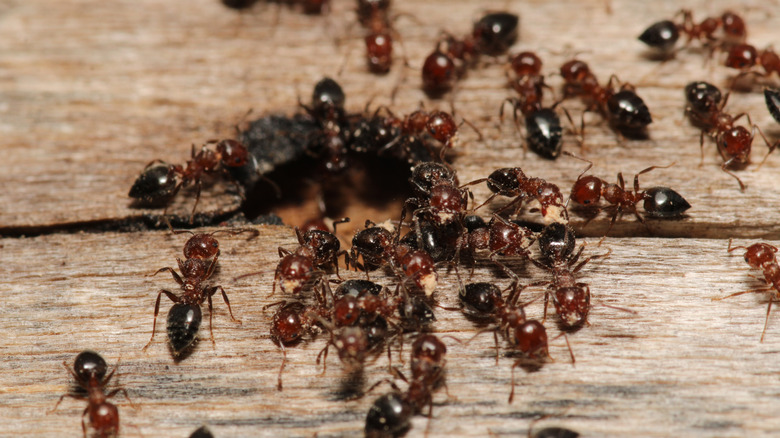
You never want to see carpenter ants crawling along your wooden deck. Different from black ants in size and shape, carpenter ants chew through soft wood to create tunnels in which they nest and build colonies. If not caught quickly enough, they can cause enough damage to seriously harm your deck's structural integrity. Thankfully, there are some easy DIY solutions that will help keep carpenter ants from destroying your deck, such as replacing affected or rotted boards and sealing up any entry points.
Because an outdoor deck is exposed to the elements, it's an easy target for carpenter ants. The thing they look for most is moisture, because it softens up the wood and makes it easier to chew. Moisture could be affecting your deck in numerous other ways, too, such as cracking the deck boards or facilitating the growth of mold. Clogged gutters or poor drainage could also cause pooling water, and older boards might be starting to rot. If you catch this early enough, however, you can replace your boards before the carpenter ants get to them.
It's important to know that moisture rot can occur even in pressure-treated lumber. If left unsealed or unpainted, cracks will appear over time and moisture can easily get inside. The wetter your wood, the more likely it'll rot — and the more probable a carpenter ant infestation becomes.
How to replace rotting wood and seal gaps to repel carpenter ants
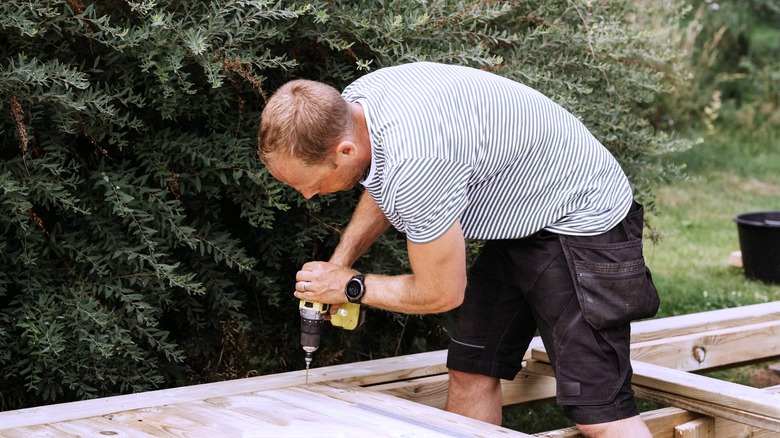
Getting rid of carpenter ants is all about timing. Small piles of wood dust on your rotted deck boards are a clear early indicator that carpenter ants are present. Depending on how pervasive the problem is, you may have to replace all your deck boards. If you catch it early enough, however, you will only have to replace a few affected boards at a time, which is easy enough to do.
Using a hammer and cat's paw nail remover, take out the nails from the rotted boards and remove them from the deck frame. Replace these with new, pressure-treated lumber boards that have been measured and cut to size. As a preventative step against further rot, give the whole deck a coating of sealant or paint. This will improve its lifespan and make it harder for destructive insects like carpenter ants and carpenter bees to drill into your deck.
You'll also want to check for any gaps, cracks, and entry points where the ants may have been getting in. These can be sealed using exterior grade caulking or expandable spray foam. It might be a good idea to give this same treatment to other outdoor structures – and be sure to trim away any overhanging branches or plants that might help the ants gain access to your deck.