

Not Baking Soda, Not Vinegar: The Chemical-Free Way To Kill Crabgrass For Good
We may receive a commission on purchases made from links.
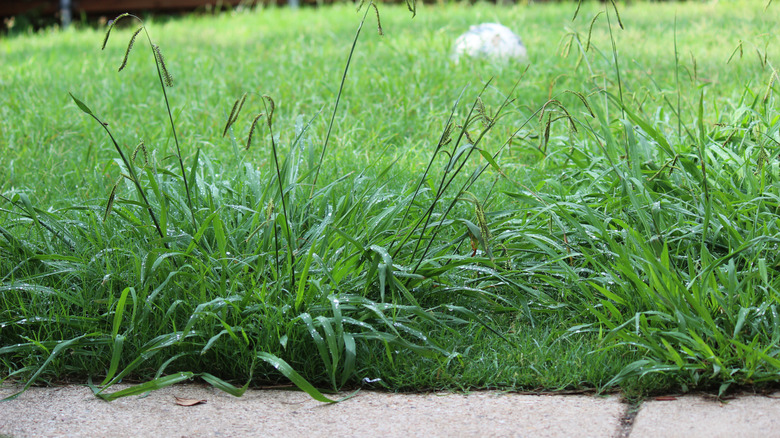
If you've gone all in on having a perfect green lawn, nothing is more frustrating than seeing it taken over by pesky crabgrass. No matter what type of lawn you have, it likely isn't immune to those unattractive clumps of long, thick-leaved invaders, which, if left untreated, will grow together to form large mats, marring your neatly mowed aesthetic. If you have crabgrass growing on your lawn, you're not getting rid of it easily. One plant can put out thousands of seeds, which then survive for years in the soil. You can mow and dig it out, or even spray the clumps with herbicide or homemade vinegar weed killer, but that crabgrass will keep coming back, slowly taking over your lawn. When this happens, it may be time to go nuclear. The best way to get rid of crabgrass for good doesn't involve harmful chemicals or back-breaking labor — instead, you can use the sun to help rid your lawn of this unwanted weed.
Solarization is the practice of using the sun's rays to remove weeds. The heat from the sun is concentrated into the soil through a plastic tarp or sheet spread over the area you want treated. After a few weeks of sunny weather, the heat works its magic to heat up the soil to a degree at which plant life, including any seeds, simply cannot survive. Most solarization is done on larger garden beds or lawn patches, where plastic sheeting can be spread. It can be extremely effective at killing off crabgrass, and it can also be used to prep an area of soil before you plant a new lawn.
How solarization works, and when to do it
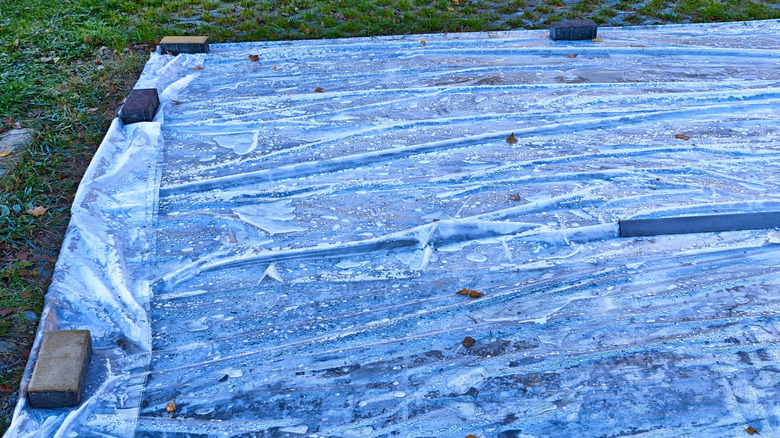
Summer is when you want to put solarization to work eliminating crabgrass. You can buy sheets of clear plastic tarp (ideally 2 to 6 millimeters in thickness) like this one from Frost King, and cut it to the length and width needed for your weedy area. Make sure not to buy cheap, thin plastic, or it will disintegrate. Mow your area of lawn short, including the crabgrass, before spreading out your sheeting, and water it after – the moisture helps conduct heat into the soil.
You'll need to use lawn staples, sandbags, bricks, rocks, or boards to keep your plastic in place, although you can also dig a trench around the area you're treating and bury the edges of the sheet. The key is to create a tight seal, or your plastic will work like a greenhouse and you may get even more weeds growing underneath. Repair any tears quickly, and leave the sheet in place for four to six weeks of warm, sunny weather. Solarization works best during hot days with minimal wind.
Remember that solarization will kill everything under the plastic, not just the crabgrass — so, if you're treating a patch of lawn, be ready to re-establish your turf after you've finished solarizing it. Keeping crabgrass from returning will depend on you maintaining a healthy lawn; make sure to use a turf species ideal for your growing area, and mow and fertilize it properly.