

The Affordable Way To Give Dated Orange-Toned Furniture A Stunning Natural Wood Look
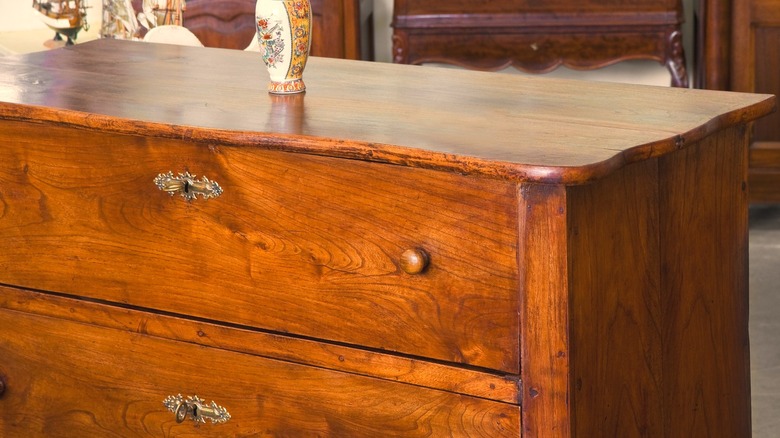
"Why is my furniture orange looking?" I've heard that complaint many times. Wood stained in lighter tones or wood with just a clear natural finish will often develop an orange tone over time. This happens as the clear film-coat begins to turn more and more amber as the finish ages, which, sadly, many folks find to be less than lovely. As a professional woodworker, I am often asked what can be done to make that orange tone go away and restore a more natural look to the wood, and the solution I typically offer is a wash coat.
What's a wash coat? It is an affordable and easy way to apply a pigment layer (usually in the form of a diluted paint) over the surface of an existing finish, a great alternative for anyone concerned about the cost, skill, or effort involved in refinishing wood furniture. That thin layer of pigment significantly modifies the wood's color but leaves the figure beautifully visible. By selecting specific colors of paint to dilute and use, the results are completely in your hands.
Going darker (by using diluted black paint, for example) is sometimes called black washing, while going lighter allows you whitewash wood and other materials. Many folks prefer to lighten their furniture's orange hue. Personally, I usually use a taupe or beige color when going lighter rather than a stark white paint. I find it creates a depth of color that effectively modifies the orange hue to a more organic wood tone and looks wonderful. The cost is only a quart can of paint (around $15 to $30), so it's much more affordable than a home-based refinishing effort or sending your furniture off to a professional, which could end up running a few hundred dollars.
Applying a wash coat to remove that orange wood tone
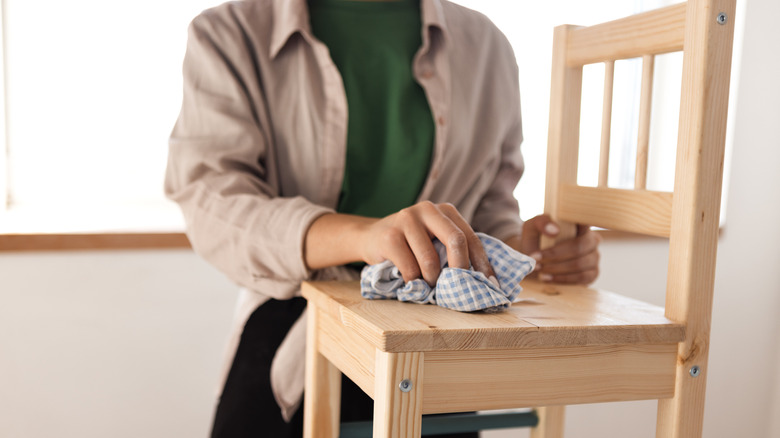
The first thing that needs to be done if you are applying a wash coat is to prepare the surface. To start, you can use TSP to clean the wood, removing any and all surface contaminants. If there are significant scratches or dents, address those before rubbing down the whole surface with a synthetic abrasive pad to create a uniform surface. If there are upholstered or leather components to the furniture, remove them or mask them off carefully.
You have a basic choice at this point: Do you want the hue to lean lighter or darker? Either direction will remove the orange hue. I recommend using latex paint thinned with water. I start with the ratio of one part paint to three parts water. Be sure to test your mixture on a hidden area of the furniture before committing to the entire thing.
The paint washing process is easy. Saturate a cloth with the mixture, flood it onto the surface, and then wipe it off with a second cloth before allowing it to dry. (If you don't like the look, use soap and water to remove the wash coat before it dries.) Once the wash has dried, it will leave a more matte sheen than you had before the wash coat. I recommend applying a coat of paste wax to seal and protect the surface, provide a bit of shine, and give it a silky-smooth feel. To put a more durable finish over the top of the wash coat, I apply a coat of shellac from an aerosol spray can, followed by a wipe-on coat of waterborne (rather than oil-based) polyurethane. You can choose among the various types of polyurethane finishes to get a sheen to suit your taste.