

What The Best Colors Are For Your Birdbath (And Why It Matters)
We may receive a commission on purchases made from links.
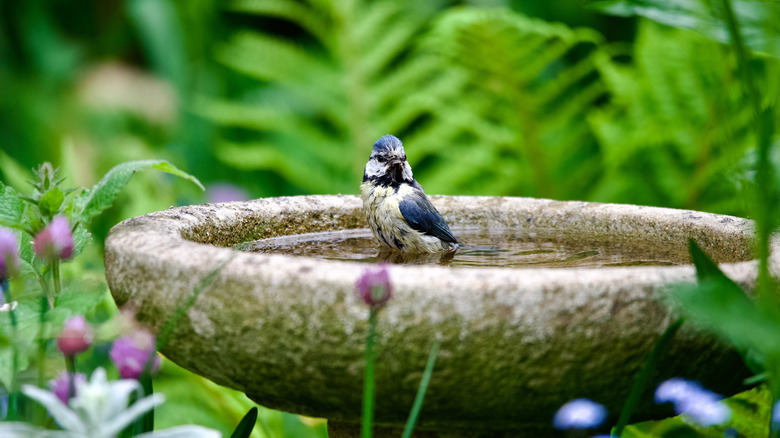
There are many aspects to consider when picking the perfect birdbath for your garden. Size, depth, and texture are all important elements if you want a bath that birds actually use. Putting your birdbath in the wrong spot also matters. These elements do not tell the whole story, however. When it comes to choosing a birdbath to place in your outdoor space, color is not an insignificant feature. Blue and certain shades of red and orange are the best colors for your birdbath as they're the most likely to attract these feathered friends, though it's often species-dependent.
Your color choices are an important element to creating a bird-friendly garden at home. Most non-nocturnal species of birds have incredibly complex color vision — called tetrachromatic vision — that lets them see a wide range of colors, including ultraviolet light. In simple terms, this means birds are capable of viewing more colors than most animals — humans included. For birds, color is information. Color tells birds if an object is safe, if it is edible — or if it might eat them.
For reasons that aren't yet fully understood, most birds are attracted to the color green — more so even than brown. Birds also tend to be attracted to the color silver, which is different enough to catch their attention, but doesn't signal danger. For birdbaths specifically, a blue one, such as the Arcadia Garden Blue Fiberclay Birdbath, is a good choice because it looks like natural water. Nectar-eating species tend to be attracted to the bright colors of their favorite fruits and flowers. Red birdbaths, such as the Alpine Corporation Red Metal Birdbath, are a good choice for attracting hummingbirds while orioles tend to be drawn to the color orange.
Avoid colors that make birds wary
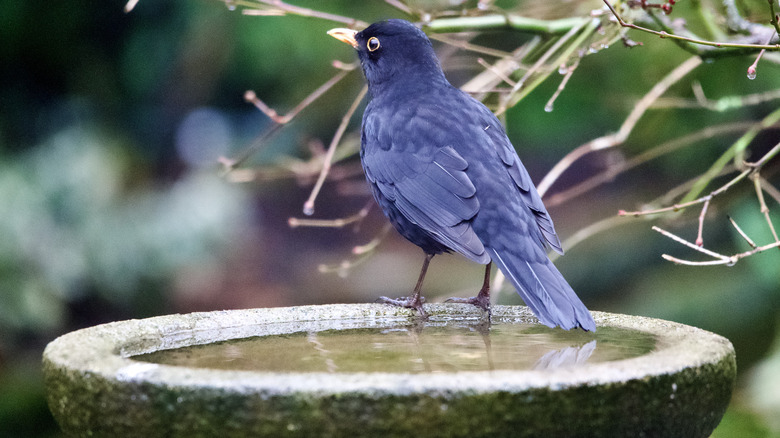
While the right colors can draw birds in, it's even more important to know what colors to avoid. Many birds tend to shy away from the color white, for example, which often indicates a threat. In nature, showing white plumage is a "startle signal" for many species of birds. These birds use white to communicate danger with other members of their flock. White (and dark colors such as black) can also make depth perception difficult. Many birds are reluctant to venture into water that might be too deep.
Bright yellow is also often a deterrent for most birds — though a handful of species (such as hummingbirds, warblers, and goldfinches) do prefer it. Many birds are also afraid of bright red because it's often a warning color in nature. Metallic or shiny finishes also keep birds from visiting your birdbath because they tend to reflect movement in a way that can be disorienting. A poorly chosen birdbath can also cause several problems, from attracting snakes and cats to becoming a breeding ground for mosquitos; without the right precautions, you may want to think twice about adding a birdbath to your yard.