

An Antique Shop Owner's Tips For Spotting Valuable Le Creuset While Thrifting
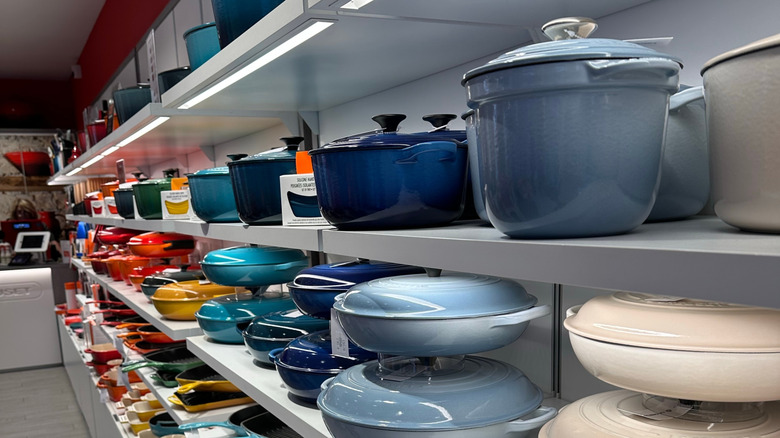
If you already know what your Le Creuset color says about your personality and love vintage pieces, you might also be looking for a few tips for spotting valuable Le Creuset while thrifting. Hunker spoke exclusively with Willow Wright, owner of Urban Redeux, an antique shop in Alexandria, Virginia, for some tips on how to spot premium pieces to add to your collection.
Color, she says, is a key thing to keep in mind when thrifting. "While I haven't seen an official list of discontinued colors by the company, they do phase out colors over time," says Willow. "When that happens, those pieces become sought after as people try to complete or expand their collections." Her other tips include looking for pieces without chips or notable flaws and watching out for those with patterns, which tend to be rare.
Many Le Creuset fans are also so loyal to the brand and seek it out because of its durability, happily sharing that they are still using their Dutch ovens over 30 years later — even after extremely heavy use. "It's a high quality enamel cookware that last decades if treated well," Willow shares. "It's extremely durable and that means it can often outlast its original owner and end up selling at an estate sale or a thrift store. These pieces carry a higher than average original sales price, meaning that they retain more value and can have high resale value." This durability is likely due to the way the craftspeople attach enamel to the cast iron. They apply multiple coats, making it quite thick and strong, so it holds up well.
What qualities make Le Creuset valuable on the resale market
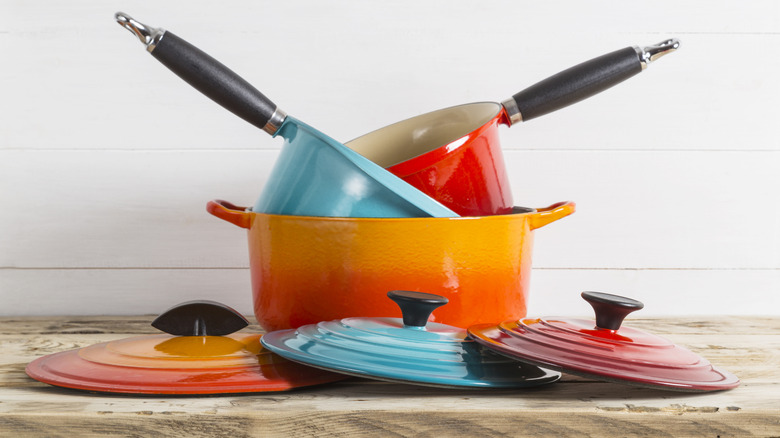
When thrifting for a valuable, vintage Le Creuset find, Willow advises in her exclusive interview with Hunker that discontinued colors are always going to give you great value for money due to their rarity. For example, one rare discontinued Le Creuset set to look for at thrift stores and estate sales is in Elysees Yellow. Popular in the 1950s, the buttery yellow was even a favorite of Marilyn Monroe. Her collection sold for $25,000 in 1999. Other retired colors that fans miss are Coral, which was bright pinkish red, as well as Orange Blossom, which looks like a shade of dreamsicle. You can use social media, like Reddit and Facebook groups, to get a better idea of what colors people are really searching for.
In addition, while the brand makes a large array of kitchenware, there are certain pieces that only get parted with due to death or downsizing, making them more valuable to secondhand shoppers. "Dutch ovens, skillets, and covered casserole dishes show up more regularly in thrift stores and at estate sales," Willow shares us, advising readers on what type of pieces to keep their eye out for. "These pieces [are] foundational pieces of cookware and people were most likely to have invested in these types of cookware and to have held on to them for so long."
What price points can you expect when thrifting Le Creuset
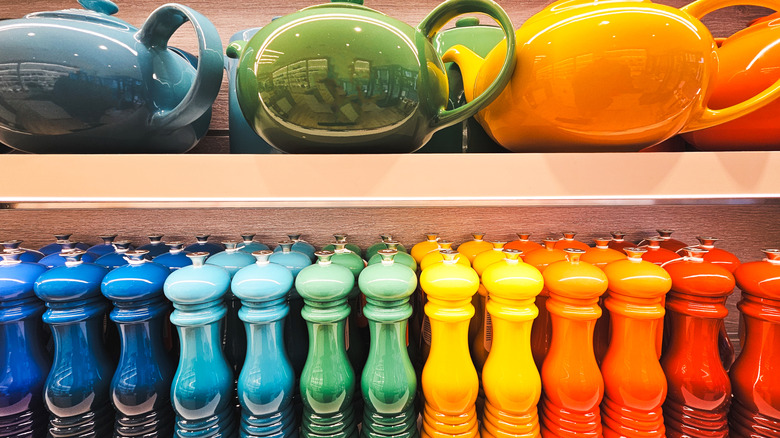
Not every Le Creuset is going to sell for as much as Monroe's. Sometimes, you can get pieces pretty cheap when buying second-hand. The price depends on the condition. "The resale range for Le Creuset can be as low as $20 to $30 for a heavily used piece or one missing a lid, up to several hundred — or even into the thousands — for rare, discontinued, or patterned pieces," says Willow in her exclusive interview with Hunker. One key point to determining the price is the condition of the kitchenware enamel. "Chips can expose the cast iron underneath, potentially leading to rust," she warns. "Damaged pieces are best used for decor, but there's definitely still a buyer for them."
If you aren't sure if a piece you want to buy is priced fairly, Willow suggests looking online to double-check what the market rate currently is. "You can get a sense of current resale value by looking at sold listings on places like eBay or Replacements, Ltd.," she tells Hunker. If you've found a piece at a flea market, you might even be able to use this online information to get an in-person discount. But at the end of the day, what you can expect to pay hinges on many varying factors, making pricing unpredictable. "Values really come down to condition, color, and market trends," Willow concludes.