

Not Basil, Not Mint: Plant Peppers By This Herb For Fewer Pests & Healthier Plants
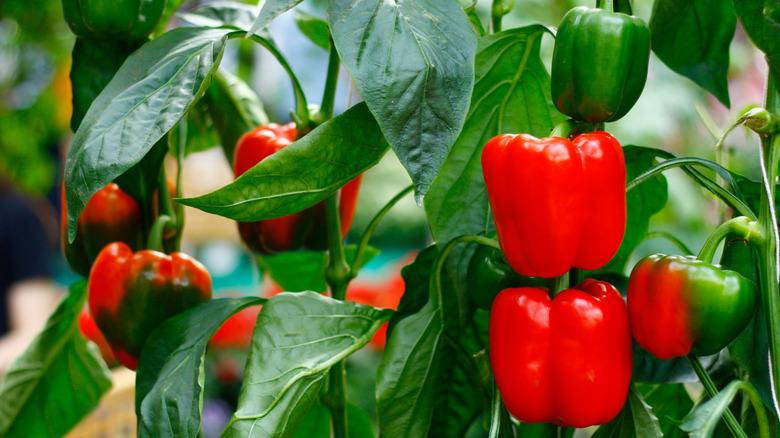
Companion planting is a great technique that allows plants to help each other grow and thrive, and there are some combinations you might not expect. Pepper plants (Capsicum spp.) can grow well on their own, but planting a rosemary plant (Salvia rosmarinus) nearby will offer it several benefits. If you're tired of dealing with bugs eating your pepper plants, but aren't fond of mint or basil, getting a rosemary seedling might be the answer you're looking for.
Any plants with compatible care requirements can be grown together, but not all of them make great companions. Part of what makes rosemary such a good companion for peppers is that it attracts beneficial insects. Pollinators like bees and butterflies enjoy rosemary flowers, and once they're near your pepper plant, they're likely to pollinate it as well. More pollinated flowers mean more peppers for you! However, rosemary also has a strong smell that repels some pests like thrips, lowering the overall population of pest insects near your pepper plants, and helping to protect your peppers from insect damage.
Rosemary can also offer some shade for your pepper plants, depending on their sizes and positioning. Shorter rosemary plants can shade the ground, helping it retain water by slowing the evaporation process. Taller plants may cast a shadow over the entire plant, giving them a respite from the hot sun and lowering the risk of sun scorch. However, you do need to be careful not to arrange them so that the peppers will always be in the rosemary's shadow, as pepper plants do need plenty of sun to grow properly.
Growing rosemary and peppers together
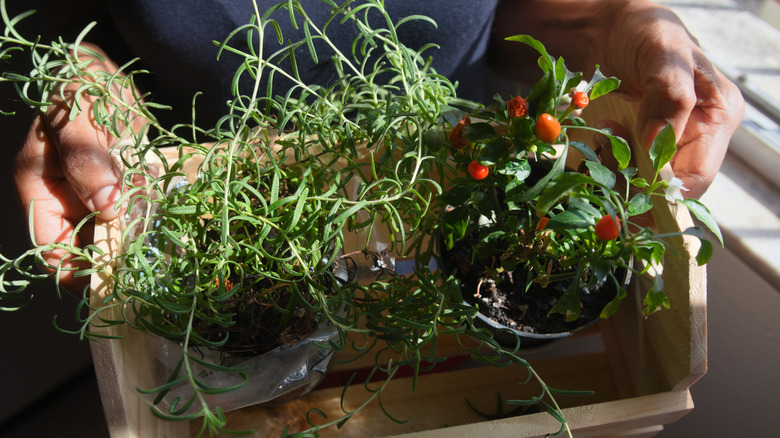
Knowing how to grow peppers and rosemary individually is helpful when companion planting the two. Both need full sun and well-draining soil to thrive, so choose your planting site accordingly. Spacing is important for both plants as well. The rosemary doesn't need to be super close to the peppers to help them, and you don't want to crowd either plant. Leave a couple of feet between the plants so that they have room to grow. Avoid planting them more than a few feet apart, though, as you still want them to be close enough to reap the benefits of companion planting.
An important way that rosemary and peppers differ is that peppers are primarily grown as annuals in the U.S. Pepper plants can be grown as perennials, but only in the warmest states. In zones 8 and above, they can only be grown as perennials if you have a greenhouse or can bring them indoors. However, rosemary is typically grown as a perennial, as it is hardy in zones 7 through 10, so you'll need to know how to overwinter rosemary plants. Shelter it from extreme temperatures and weather with a windbreak and a nice layer of mulch.
An option that may be easier, if you're tight on space or live in a colder climate, is to plant both your rosemary and your pepper plant in containers. If they're in separate containers, you can place them closer together without the risk of crowding them. Plus, you can overwinter one or both of them indoors more easily. If you don't want to attempt overwintering your peppers, you can easily replant them the following spring without worrying about disturbing the roots of your rosemary plant.