

The Common Pantry Item That May Help Keep Squirrels Away From Your Garden
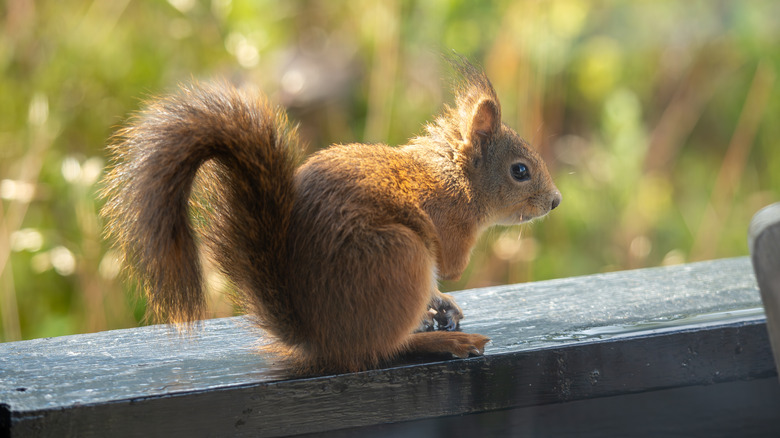
Except for Hawaii, squirrels inhabit every corner of North America, from Alaska and northern Canada to Florida. Of the 65 species scurrying about, the eastern gray squirrel takes the cake for peskiness, but it gets competition from the southern flying squirrel and the fox squirrel. These varmints love to empty your bird feeder, chew on your siding, and build nests in the yard. In the interest of protecting your house and garden, and keeping birds coming to your yard, you may be looking for a way to keep squirrels away. If natural homemade squirrel repellents are your preference, apple cider vinegar (ACV) could be just the ticket.
The secret is the pungent aroma. Squirrels hate it, and they are likely to stay away from any place where they can smell it. To be sure, this isn't the only natural squirrel repellent you can use, and it may not necessarily be the most effective one. However, it's easy and safe to use, and it's inexpensive, especially if you already have some in your pantry. Plus, you can mix it with other natural ingredients to make it more effective.
No concrete scientific evidence exists to support the idea of apple cider vinegar as a squirrel repellent, but environmentalists and gardeners recommend it, so it's worth a try. You might get lucky. If not, there's no harm done, but you must apply it conscientiously, because ACV is toxic to plants when sprayed directly on leaves or on the ground surrounding roots.
How to use ACV as a squirrel repellent
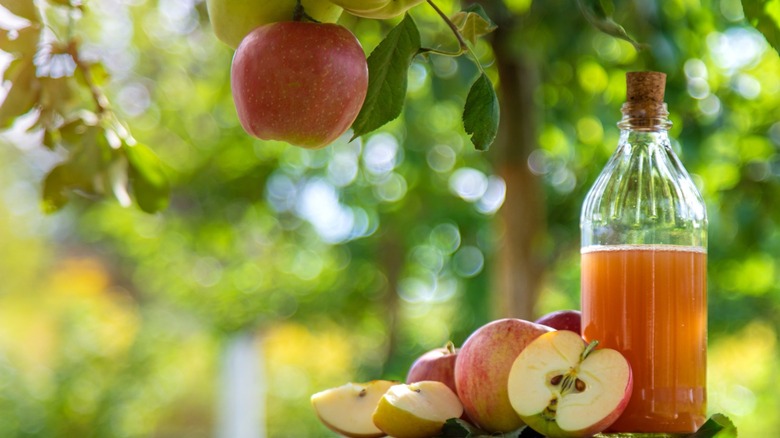
Apple cider vinegar works as a deterrent because it affects the olfactory organs of squirrels and disrupts their ability to forage for food. A recommended way to use it is to pour some into a spray bottle and spray it full strength onto flat surfaces surrounding the areas you're trying to protect. You can spray it on walkways, shelves, ledges, and garden borders, but keep the spray pattern focused to avoid getting it on grass or plants. Choose a calm day to apply ACV to prevent the spray from getting broadcast by the wind. You'll have to reapply it every two to seven days and after each time it rains.
You can increase the effectiveness of ACV by combining it with ingredients that also have odors that squirrels don't like. Cayenne works particularly well; squirrels detest it because capsaicin, the compound that makes peppers hot, irritates their noses. Just mix in two to three tablespoons per spray bottle of ACV. Instead of cayenne, you can also mix in other natural deterrents, such as peppermint oil or garlic. The effectiveness of all of these mixtures fades after a few days, so regular reapplication is necessary.
It can be especially difficult to keep squirrels away from bird feeders. If ACV doesn't do the trick, try feeding the birds safflower seeds, which they love but are too bitter for squirrels. You can also squirrel-proof a bird feeder with an old nursery pot.