

If Your Painted Walls Look Like This, Don't Ignore It — It Could Be Mold
It can be so frustrating to spend all your time choosing the best paint color for your bedroom or kitchen, only to notice that something isn't quite right. Issues like the color not quite matching your vision or clashing with your decor can be fixed with a fresh coat of paint or some new accents. But what if the problem is more serious? If the paint on your walls is warping, bubbling, or peeling, it could be a sign that there's mold lurking underneath.
One of the common causes of paint warping is water damage. Moisture in your walls can interfere with the bond between the wall and the paint in a few different ways. It can dissolve the adhesive itself, form air bubbles through evaporation, or cause the material of the wall to expand or warp so that the paint is no longer able to sit flat against it. While this doesn't automatically mean mold is present, it's important to check. Mold loves dark, moist environments, which means your wall with water damage is the perfect place for it.
While some types of mold are worse than others, you won't want any growing in your walls. Paying attention to where warped paint is occurring can give you some advance notice on where it might show up. Water damage is most common in rooms with naturally high humidity, such as a kitchen or bathroom, but it can still happen in other rooms. Catching it fast can help prevent mold from spreading or even alert you to leaks or other sources of moisture.
What to do it you have warped paint
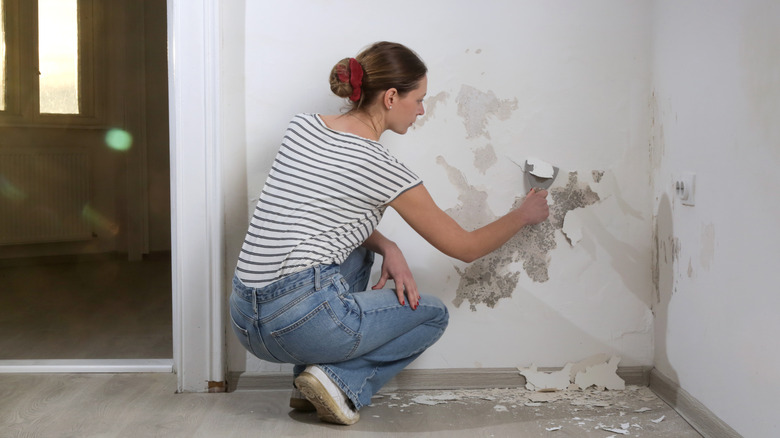
It may be tempting to simply repaint your walls, but that won't fix the underlying issue. You're likely to end up with more warped paint, plus the mold can keep spreading. Start by finding the source of the moisture. It may be as simple as the humidity in your bathroom not dissipating quickly enough, or it could be as complex as a slowly leaking pipe in your wall. It's important to be thorough, since any unresolved problems can cause more mold growth in your home. Generally, you should repair or replace any faulty pipes and improve ventilation in high humidity areas.
Once the moisture situation is under control, you can move on to identifying and cleaning up any mold on or in your wall. Start where the paint is warped, since you already know there's moisture in the area, and move out from there. You can use testing kits, but there are some downsides to home mold test kits. They may not be able to identify mold that is hidden inside the wall or accurately tell you how extensive the mold damage is.
Visually inspect the area where you had warped paint and water damage. If the moisture was coming from inside the wall, such as a leaky pipe, don't forget to check inside the wall for mold growth. You may want to hire a professional to help. If you find any, make sure you clean the mold off thoroughly. Professionals can help with proper cleaning and replacing infected material, as well, especially if you can't tell how far the mold has spread. Only once the mold is gone and the wall is completely dry, then you should repaint your walls.