

What To Do With Your Basil In May To Ensure It Grows Strong All Summer
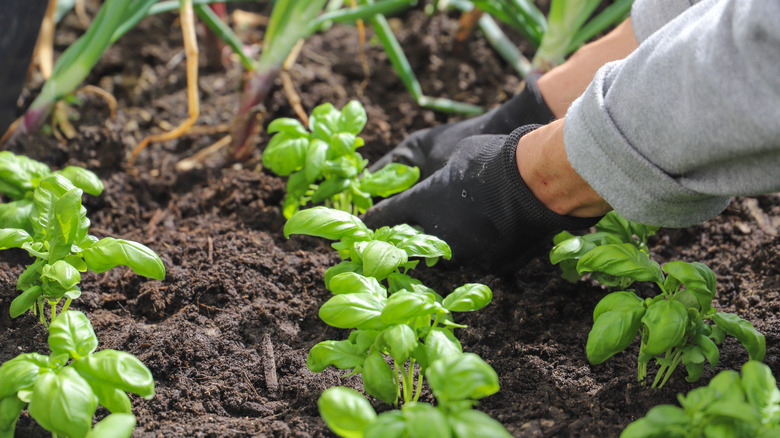
Basil (Ocimum basilicum) is an annual herb you can grow in a container or your garden bed. When it thrives, it produces lots of fragrant, deep green leaves in the summer. The herb can do well on its own. However, giving it some special attention throughout May can help give it a stronger start.
If you're growing basil from scratch, it's important to start seeds indoors at least 4 weeks before your final predicted frost date. This varies depending on what USDA climate zone you live in, but for many, that date is sometime in May. Basil is very cold-sensitive and will die when hit with a frost. So, transplanting a seedling, whether it's one you grew or purchased at a store, needs to be done after the chance of frost has passed.
In terms of where to plant basil, put it in a spot that receives at least 6 to 8 hours of sunlight daily. If you're growing your plant indoors, place the herb on a sunny kitchen windowsill. Basil needs to be planted in rich, well-draining soil and receive about an inch of water per week to grow at its best. Be sure only to water the base of the plant. Wetting the leaves could lead to fungal diseases.
Should you fertilize your basil plants in May?
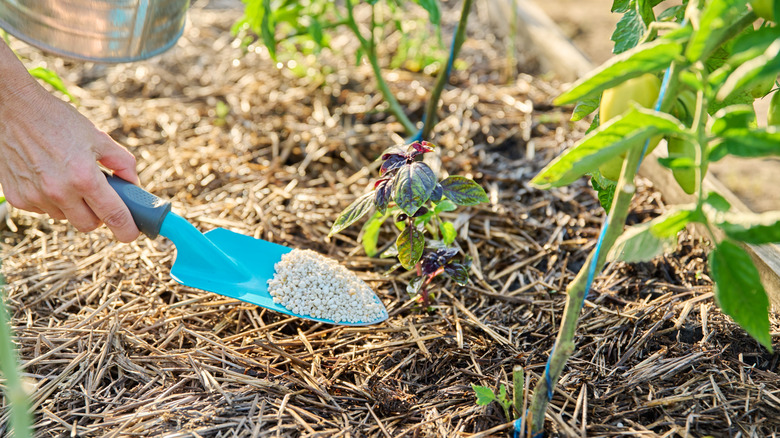
The short answer to the question is: yes, you should fertilize your basil plants in May. Since it's just getting started when you transplant it, the extra boost of nutrients can help it develop and sustain growth. There are a couple of different ways you can go about doing this.
Basil generally needs a balanced, soluble fertilizer designed for all-purpose use. These fertilizers are readily available at garden centers and come in either granulated, slow-release pellets, or concentrated liquids. Always be sure to dilute concentrated liquid fertilizers to ensure you're not overfeeding the plant. Over-fertilization can decrease the herb's iconic flavor and aroma.
If you're growing your basil indoors, it should be getting an application every 4 to 6 weeks, while outdoor plants should be done every 3 to 4. It also matters whether your basil is planted in a container or not. In-ground planted basil responds best to the slow-release granular fertilizer spread in a thin layer around the base of the plant and watered deeply to ensure even root coverage. Use liquid fertilizer for container basil, as it will help keep the soil moist while also adding nutrients.