

What To Do If You Find A Sand Wasp Nest In Your Yard
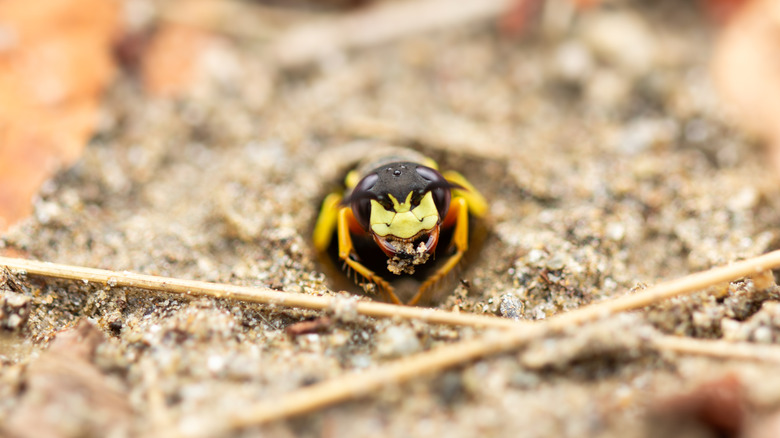
Finding a wasp nest in your yard is an unsettling experience, and seeing these stinging insects flying out of burrows in the ground can be truly petrifying for some. Sand wasps love to nest in areas where it's bare and sandy, digging into the ground to create their nests. You might even stumble across a nest in your children's sandbox or a barren spot in your yard. Depending on where the nest is situated and your situation, you can just leave the wasps alone, try to get them to relocate from your outdoor space, or kill them. Though sand wasps are notorious for flying close to humans and hovering nearby while they're hunting flies, they are solitary creatures and aren't inherently aggressive. In most cases, they won't sting unless directly disturbed or touched.
Because they are solitary, sand wasps won't protect their nest in groups or come after you together like other social species. This makes it easier to leave them in your yard in peace. Plus, sand wasps prey on insects like flies, cutting down on pests in your backyard, making them beneficial insects. Though they don't live in colonies, sand wasps are often found building separate nests side-by-side in the same locations, or creating cooperative nests where it makes sense. In situations where kids or pets could accidentally mess with the wasps or their nests, it's likely best to take measures to get rid of wasps in your yard by repelling or exterminating them.
Dealing with sand wasp nests in your backyard
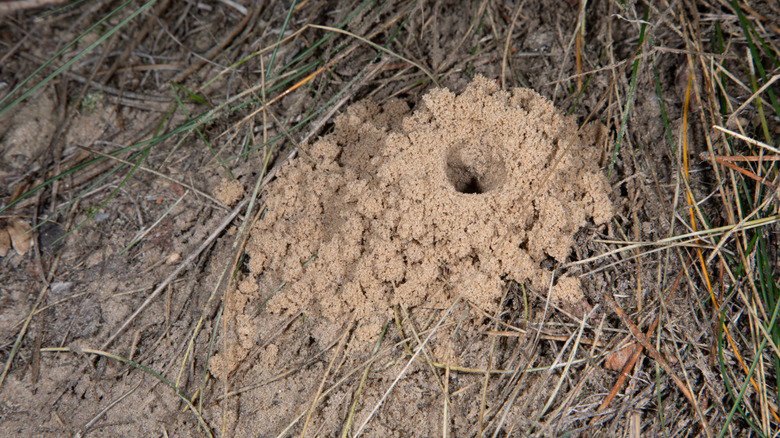
If you're wondering what to do after finding a ground wasp nest in your yard, take a moment to evaluate the situation. With just one or two sand wasp nests on your property, leaving the wasps alone is perfectly safe. You can let the wasps be, especially if they're in an area you don't use often. However, if the sand wasps are in a spot where you frequent or there are a lot of nests in one place, you may want to take measures to get these insects out of your yard. Insecticidal dusts are often recommended to exterminate sand wasps, as they will drag the dust down with them into their nests. Apply the dust around the opening of each nest in the evening or at night when wasps aren't as active. Alternatively, spread dust over the whole section of your yard where the wasps are nesting, and be sure and keep pets and children away from the treated area.
For folks who want to avoid chemical pesticides, there are ways to deter sand wasps and encourage them to move on from your yard, by repelling wasps naturally. Because they are so docile, one option is to try raking the sand fairly often to make the spot less appealing to the wasps (though some pros argue this is only a short-term fix). Alternatively, cover the ground where the nests are located with a tarp. Since these wasps like barren ground and sand, changing the landscaping can help deter them. Adding sod, trying to thicken your grass or planting coverage plants makes your yard more lush and removes bare sandy spots. By eliminating the sand, you'll take away the wasps' habitat and reasons for sticking around.