

Why You Should Think Twice Before Using A Pressure Washer On Vinyl Siding
We may receive a commission on purchases made from links.
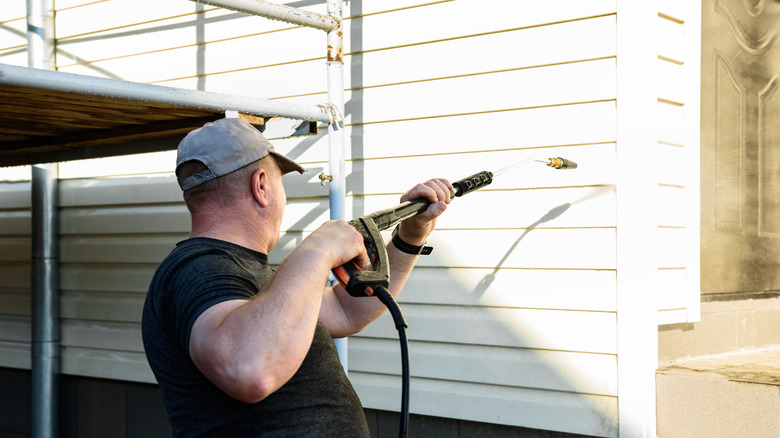
When your vinyl siding is looking sketchier than ever thanks to dirt, pollen, or algae, pressure washing it may seem like the obvious choice. But don't be fooled by all the amazing power-washing before and after photos out there. While a high-powered stream can work wonders on a filthy area rug or badly neglected kiddie pool, power washing your siding can cause serious problems. From damaged window trim to costly moisture issues, there are several reasons you should think twice before using a pressure washer on your vinyl siding.
Thanks to its affordability and versatility, vinyl siding is the most popular exterior material for new homes. Since each non-porous piece offers better water resistance than wood or some fiber cement options, it's easy to overlook the many downsides of vinyl siding. It lacks durability, particularly during bouts of extreme weather. Plus, the material can also be susceptible to moisture intrusion and leaks, especially around seams and joints. This combination can quickly turn into a nightmare scenario if you use a high-powered pressure washer to clean it.
Essentially, the force from a strong pressure washer can not only chip or warp your vinyl siding, but it can also push moisture behind the siding panels and into your home's fascia. This creates the perfect conditions for mildew and rot to take hold. Over time, even the most sparkling clean vinyl siding can be hiding water damage that costs thousands to repair.
Try soft washing or hand scrubbing your vinyl siding instead
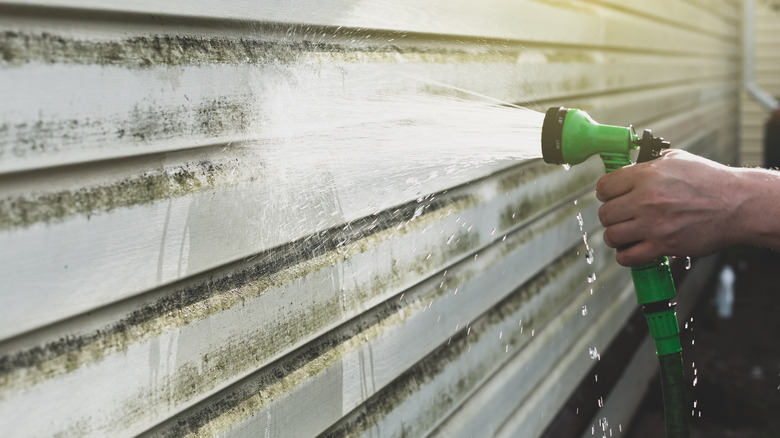
Thinking twice about using a pressure washer on your vinyl siding doesn't mean you're permanently stuck with a grimy situation. You simply need to understand the potential risks so you can approach cleaning your vinyl siding the right way. Instead of blasting the sides of your house with the highest PSI you can find, try soft washing instead. This involves using a low-pressure nozzle on your pressure washing wand, combined with environmentally friendly chemical cleaners that help dissolve stains without damaging the siding or surfaces underneath.
The right cleaning solution will depend on your vinyl manufacturer's recommendations and the type of stains you're dealing with. For instance, trisodium phosphate is often used to cut through everyday dirt and airborne grime, while adding sodium hypochlorite can help tackle mildew. You can also soft wash your vinyl siding with store-bought cleaners like the Simple Green Oxy Solve House Cleaner or hire a professional to take the guesswork out of the process.
The key to avoiding damage with this method is to spray down instead of up into the seams, maintain a gentle sweeping motion instead of a static hard spray, and avoid shooting water into soffits, window seals, or other areas that are prone to moisture penetration. Professionals also recommend using a wide spray nozzle instead of a jet. If you only need to spot treat certain areas, you may not need to use a pressure washer at all. Applying a cleaning solution before using a bristle brush and some elbow grease can be extremely effective. No matter which method you choose, remember to do a quick final rinse with a garden hose to remove any lingering cleaning solution.