

Why Planting This One Flower Near Your Hummingbird Feeder Is A Smart Idea
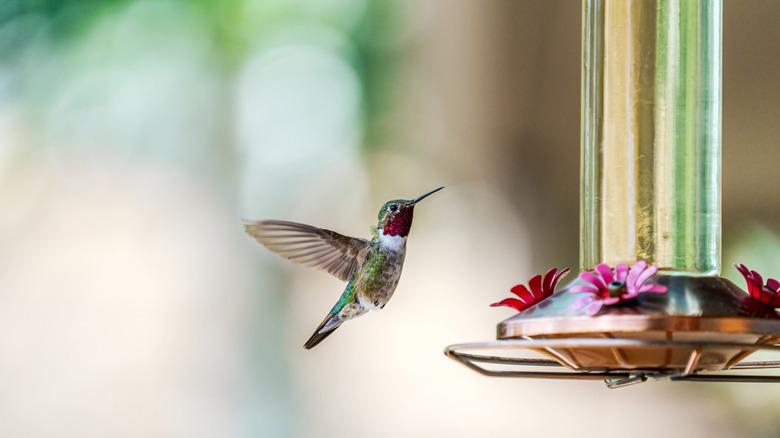
Setting out a hummingbird with homemade sugar-water is arguably the most common way people lure these fascinating birds to their yards and gardens. Yet as the National Audubon Society points out, feeders ought to be used as supplements because native flowers remain the most important sources of nectar for hummingbirds. Planting red flowers is a particularly smart move because these colors encourage more hummingbird visits. One option that checks all of these boxes is trumpet honeysuckle (Lonicera sempervirens), and planting this native plant could even help attract hummingbirds to your nectar feeder with the right care and placement.
There are numerous types of red flowers hummingbirds can't resist, and trumpet honeysuckle is among them. Not only is the deciduous vine native to the eastern U.S., but it boasts pretty red tubular flowers that are particularly attractive to these birds. Hummingbirds are in fact drawn to tubular-shaped flowers like these because they accommodate their long tongues for easy nectar access. As a bonus, trumpet honeysuckle grows quickly to provide both attractive foliage and flowers as well as some privacy. It can even draw other pollinators to your garden, such as bees and butterflies, and its fruits are favored among a variety of songbirds in the fall.
Before you plant any type of honeysuckle in your yard though, it's important that your selection is indeed native Lonicera sempervirens. Some people mistakenly plant Japanese honeysuckle (Lonicera Japonica). Unlike native trumpet honeysuckle though, Japanese honeysuckle is considered invasive and can quickly subdue other plants you might have.
Growing trumpet honeysuckle in a hummingbird-friendly garden
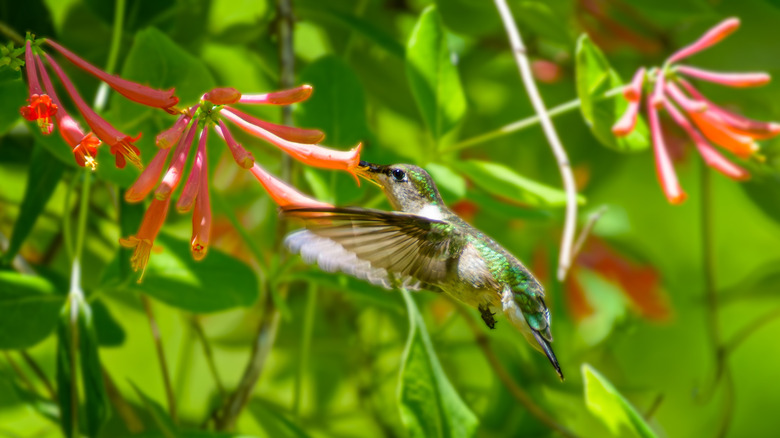
Trumpet honeysuckle is considered hardy in zones 4 to 9. While it's true that hummingbirds will eventually locate a nectar feeder and native plants like trumpet honeysuckle individually, you can maximize the key benefits of both by placing them next to one another. The biggest catch here is that in order to grow trumpet honeysuckle in your yard or garden, it may require either a nearby fence or an added trellis. This helps it to climb and eventually grow between 10 and 20 feet tall. However, some gardeners prefer to plant trumpet honeysuckle as a ground cover, which is another option you can use near your hummingbird feeder. No matter how you grow it, just be sure it is not planted up against your home due to the plant's fire risk.
Whether you're just starting a hummingbird garden or already have a few native plants and a nectar feeder, know that trumpet honeysuckle blooms in spring and attracts hummingbirds the most during this time. To maximize the flower power of trumpet honeysuckle, ensure the plant receives full sun with at least 6 hours of light per day. The plant is not particularly fussy about soil, and should do well with regular potting mix as long as it is well-draining. Avoid overwatering and ensure good air circulation between plants to help prevent problems like powdery mildew. Trumpet honeysuckle generally needs the most water during the first year of planting, and then you can water to keep the soil moist as needed. With these care tips, you can keep trumpet honeysuckle thriving so that hummingbirds will keep visiting during bloom.