

Common Reptiles You Don't Want To Spot Slithering Anywhere Near Your Yard
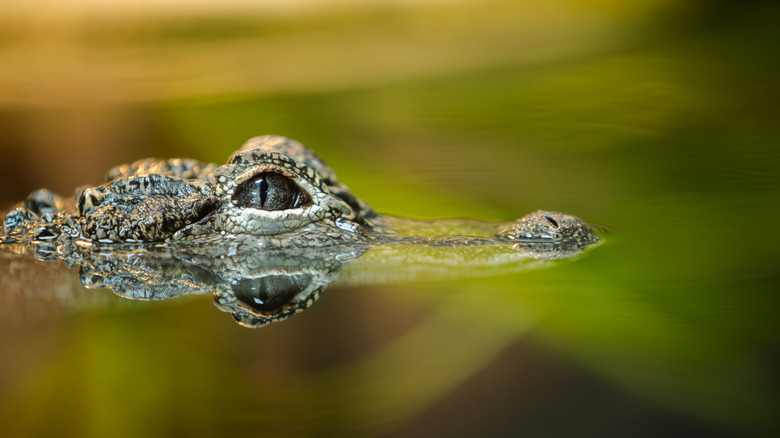
If you love spending time outside in your yard or garden, there are probably a few animals you'd love to see more of. You might be creating a bird-friendly garden to attract more feathered friends or smile every time you see a squirrel. However, you're most likely not going out of your way to grow plants that attract snakes. While most snakes in the U.S. are both harmless and beneficial, many people are still frightened of them. Even if you love snakes, there are a few venomous ones you're still likely wary of. Beyond venomous snakes, there are some reptiles that you'll want to keep a distance from for various reasons — stinky turtles, bloody lizards, and massive-jawed alligators.
Generally, it's a good idea to avoid direct contact with any wild animal you find in your yard. Reptiles in particular can carry salmonella, so you shouldn't pick them up, even the harmless snakes. Not to mention some venomous snakes can look similar to non-venomous ones, and you don't want to make a dangerous mistake! In general, watch wildlife from a distance and only intervene if an animal is obviously injured. If you find a reptile in your yard that's been hurt, contact a licensed rehabilitator or wildlife vet and follow their instructions. Their instructions may include just leaving the creature alone, as removing an animal from the wild should only be done as a last resort. Additionally, if the injured reptile is a venomous snake, avoid handling it directly. Being hurt doesn't make the snake less likely to bite, and may even make it more defensive, so leave it to the professionals.
Rattlesnakes
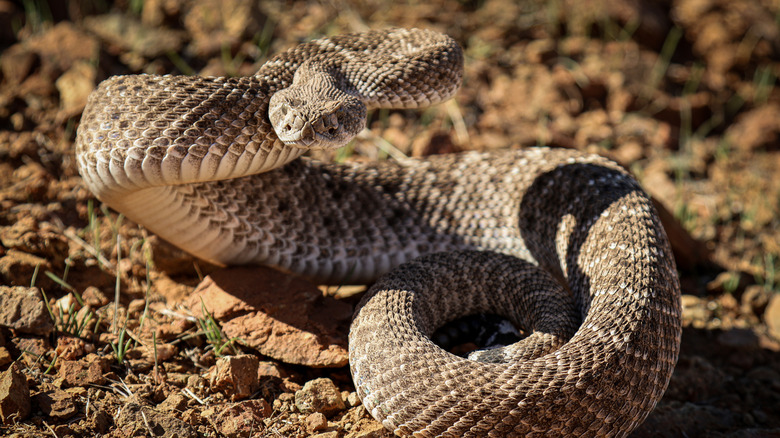
There are many different species of rattlesnake that are native to the U.S., and you won't want to see any of them nearby. All rattlesnakes are highly venomous, and while fatal bites aren't common, they require immediate medical attention. If you see a rattlesnake or hear their rattle, calmly walk away. If it doesn't leave on its own, contact professionals to remove it. Don't try to handle it yourself! Rattlesnakes aren't aggressive, but they will bite if they feel threatened. Avoid attracting more snakes by removing any firewood or brush piles where prey might hide.
American alligators
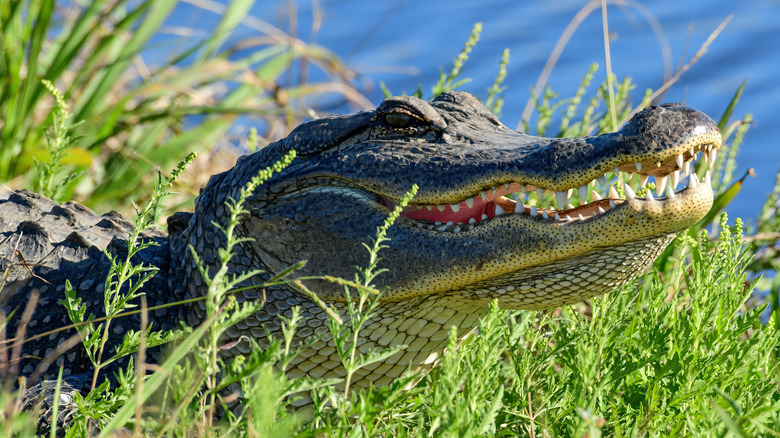
American alligators (Alligator mississippiensis) are native and can be found all across the south eastern U.S., particularly in wetlands and along rivers near the coast. Alligators are generally shy and dislike being around people. However, that doesn't mean it isn't frightening to spot one in your yard! Alligators are carnivores with incredible jaw strength, so avoid getting close. The best thing to do is keep any pets or children indoors and watch from inside your home. It will likely move on without causing problems, but if it doesn't or is in a particularly problematic location, contact a professional for help.
Copperheads
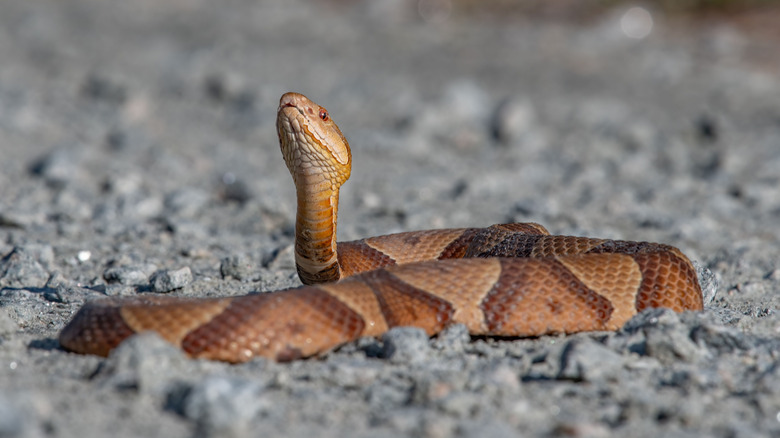
Copperhead snakes (Agkistrodon contortrix) are another common venomous snake native to the U.S. They live across the eastern and south-eastern U.S. and are more tolerant of human activity than other snakes. This means bites are somewhat more common, although luckily their bites are less dangerous. They can still be quite painful though, so you should still avoid them if you spot one near your home and seek medical aid if you are bitten. A professional should be able to help remove the snake, but it may leave on its own if there's no food or shelter in your yard.
Eastern musk turtles
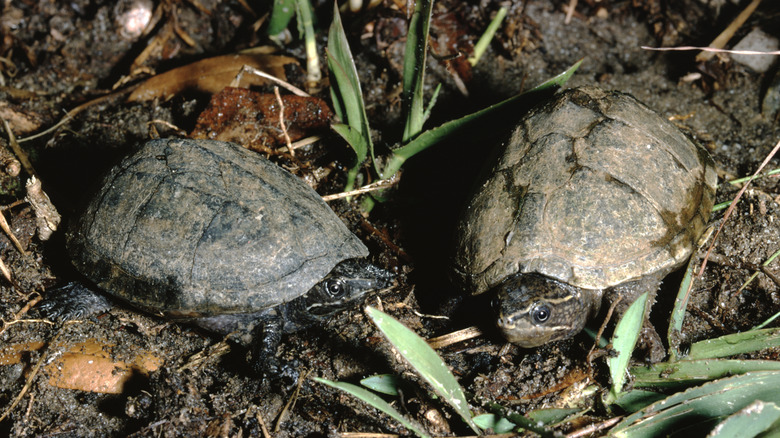
Eastern musk turtles (Sternotherus odoratus) are native and look friendly! However, if you attempt to pick one up or have any pets that try to play with it, you'll find out pretty quickly why you should keep your distance. The other common name for this species is "stinkpot," a name they earn by secreting a noxious smelling liquid when they're bothered. They aren't dangerous, but you may not want to see one nearby if you have a dog that's too curious. It's best to watch from a distance and keep your pets away until it's moved on.
Cottonmouths
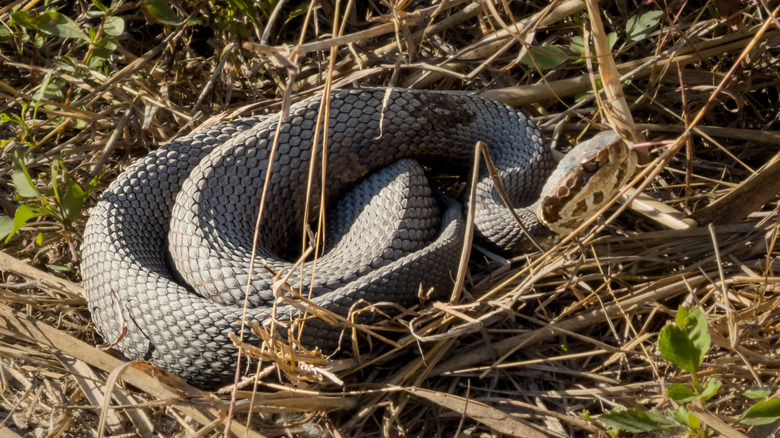
A cousin of the copperhead, cottonmouths (Agkistrodon piscivorus) are venomous snakes often found around water. They're native to the eastern U.S., and if you have a creek or swamp in or running through your yard, you might see one swimming past. Their bites are painful and can be fatal if not treated. Part of the reason you won't want to spot one near your yard is that they have a tendency to flee in random directions rather than directly away from you. That means their escape routes sometimes bring them closer to you at first, so stay well away from them!
Texas horned lizard
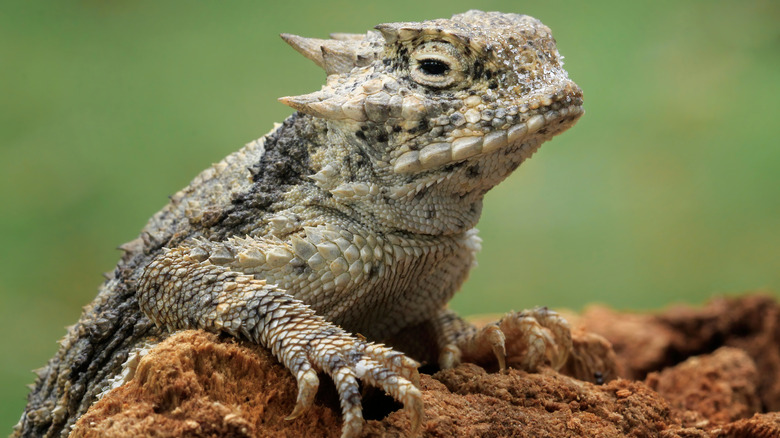
Texas horned lizards (Phrynosoma cornutum) are another reptile that may be exciting or nerve-wracking to spot in your yard, depending on who you are. Observing this native lizard from a distance is a treat, but if you have curious pets or kids that may try to bother it, you won't be quite as thrilled. As a defense mechanism, these lizards shoot blood from their eyes. While the blood itself isn't harmful, it can be frightening and messy. Keep your pets indoors or leashed, and don't let your kids play with them unless you want a blood bath (literally!).
Coral snakes
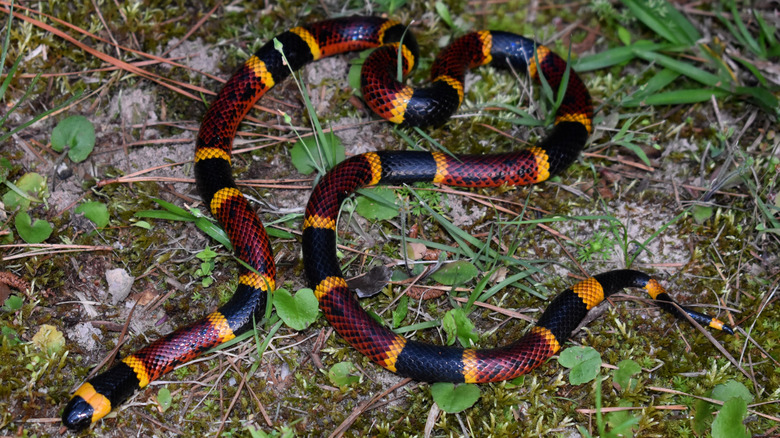
If you've ever heard some version of the rhyme "Red touches yellow, you're a dead fellow," then you'll understand why spotting any of the three U.S. native coral snakes in your yard can be frightening. The venom of the Eastern coral snakes (Micrurus fulvius) is the most dangerous, although the Texas coral snake (Micrurus tener) and Sonoran coral snake (Micruroides euryxanthus) should still be taken seriously. While bites are rare, their venom is dangerous and can be fatal if not treated. Most bites occur when people try to handle these snakes, so it's important to stay away.
Snapping turtles
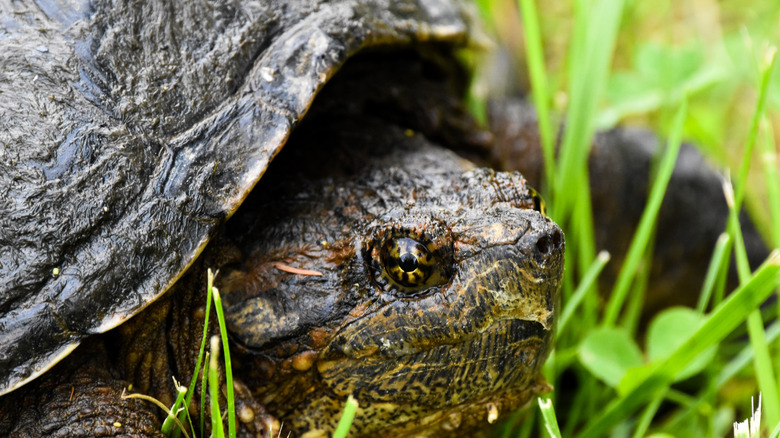
Snapping turtles are among the largest freshwater turtles in the U.S., and they're quite a sight to behold! There are two species native to the U.S., the common snapping turtle (Chelydra serpentina) and the alligator snapping turtle (Macrochelys temminckii). However, you may not want to see either in your yard if you have kids or pets nearby. Careless handling from curious humans or pets can result in a nasty bite. Snapping turtles aren't afraid to live up to their name when provoked, so give them plenty of space and let them wander off on their own.
Burmese pythons
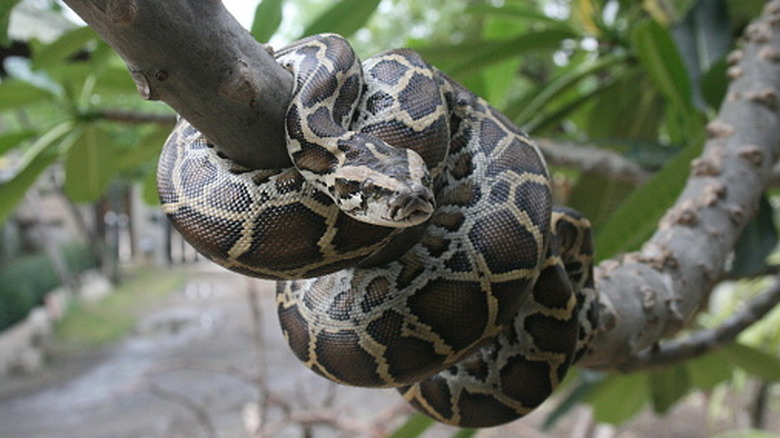
Burmese pythons (Python bivittatus) are native to several Asian countries, but they've become a common sight across Florida and have even appeared in some surrounding states. As an invasive species, you really won't want to spot one in your yard. They have a serious negative impact on the environment, as they eat a wide range of animals including many protected or endangered species. Additionally, Burmese pythons are one of the largest snakes in the world, and they can be dangerous to people and pets. You should keep your distance and report the sighting to professionals.
Tegus
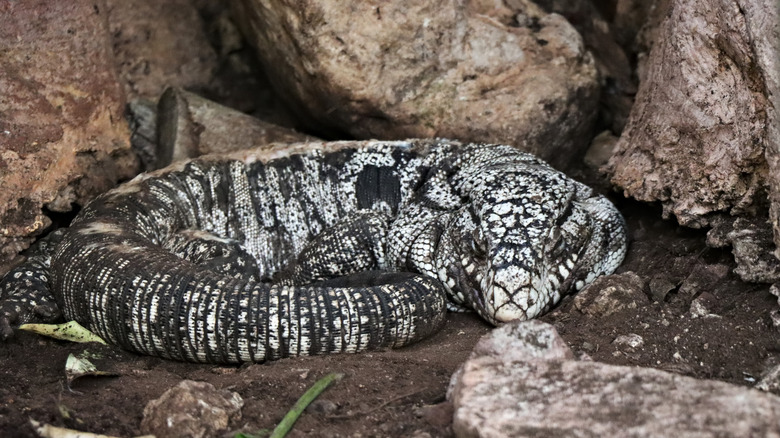
Another large invasive reptile you might see, but definitely won't want to, is the tegu. While the Argentine black and white tegu (Salvator merianae) is more common in the U.S., there is evidence of gold tegus (Tupinambis teguixin) as well. Tegus are primarily found in Florida, but they have begun appearing in surrounding states as well. In addition to plants and small mammals, they eat eggs, and they pose a real threat to native birds and reptiles. Tegus are generally not considered aggressive, but they will defend themselves with their teeth and tail, so it's best to stay away.