

Neither Vinegar Nor Herbicides: The Simple Way To Prevent Weeds In Gravel
We may receive a commission on purchases made from links.
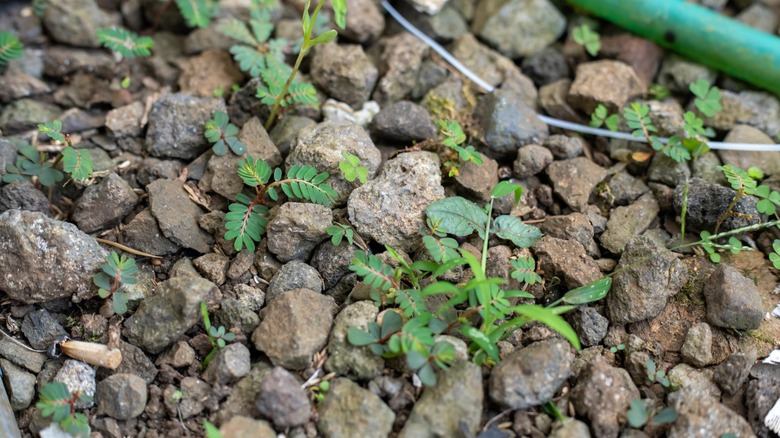
One definition of a weed is any plant that's growing where you don't want it, and when you're talking about gravel, pretty much any plant fits that description. Even if the gravel bed has an underlying layer of landscape fabric, small plants can still get a foothold on organic matter that settles between the stones. Because falling leaves, small twigs, and other natural debris are unavoidable, this organic matter is hard to prevent. It's possible to kill weeds with vinegar, bleach, or an herbicide, but those who don't want to use chemicals can take a tip from Japanese Zen monks and simply rake the gravel regularly to prevent the weeds from getting a foothold.
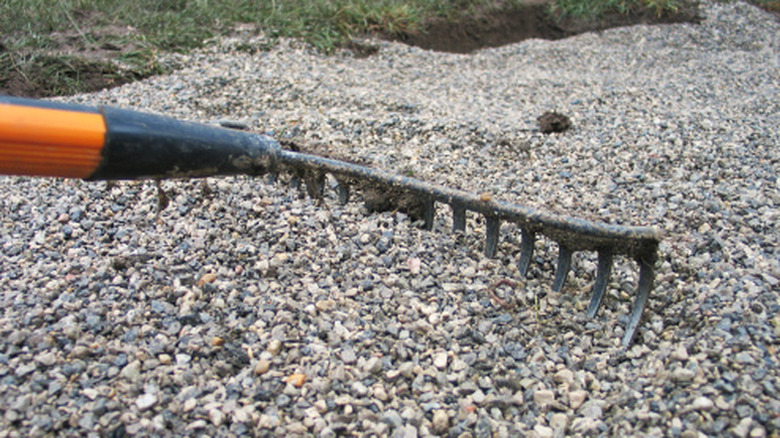
Japanese gravel gardens are pristine for one reason: Monks make raking down the gravel part of their daily meditation. The gravel gardens at Ryoanji and Ginkakuji temples in Kyoto have been weed-free for centuries simply because of this practice. You don't have to adopt a monk's lifestyle to make a difference in your own gravel walkway, patio, or landscape feature, but it is important to rake regularly — every couple of weeks or so — to disrupt shoots and prevent them from rooting.
Preparation and raking technique
Regular raking will prevent weeds from growing, but before you start, you have to deal with the weeds that are already there. Pulling them out by hand, root and all, is the best way to get rid of them. You may need a trowel or weed puller, like the Expert Gardener Steel Hand Weeder, to dig up deep roots. Those you can't pull, you can kill with boiling water. You can also use a tried and true way to kill weeds by scorching them with a garden torch. Neither method uses chemicals, which is a plus for those concerned about herbicide use.
For the actual raking, reach for a stone rake, like this 4-pound 18-Tine Stone Rake from Bully Tools. You need a tool that can handle the weight of gravel, and a plastic leaf rake just isn't up to the job. The goal is to reach the rake as deep into the gravel as you can to bring the stones underneath up to the surface so they can dry out, but not deep enough to puncture any landscape fabric underneath.
Once you've done a deep raking of the entire gravel bed, give the surface a light once-over to smooth it out. You might not be able to make waves in the gravel the way the monks do at Ryoanji without the specialized gravel used in decorative Japanese gardens, but it's fun to try.